





The Vatican’s Plea in a Time of Turmoil
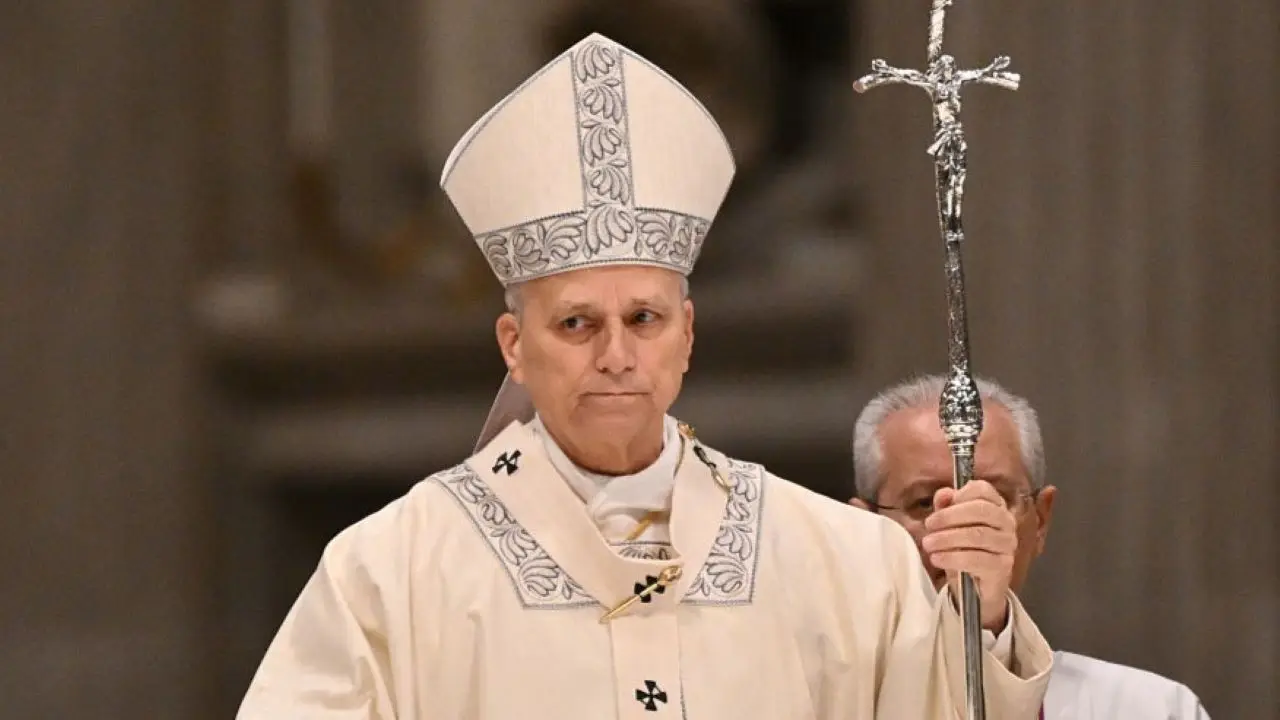
In the heart of a world gripped by escalating conflict, Pope Leo XIV raised his voice on a serene Sunday afternoon at the Vatican, where the sun gently filtered through ancient stone arches and the air carried the faint scent of incense from centuries-old rituals. This wasn’t just another papal address; it was a deeply personal appeal from a man who has spent his lifetime devoted to healing divisions, now confronting one of the modern era’s darkest chapters—the war raging between Iran and its adversaries. His Holiness, with a voice steady but laced with urgency, called for an immediate ceasefire, his words echoing like a beacon in the chaos. “Violence can never lead to the justice, stability, and peace that the people are waiting for,” he declared, speaking not as a distant religious figure but as a shepherd deeply attuned to the suffering of ordinary families across the Middle East. Imagine the worldwide audience—millions tuning in from their homes, some in the conflict zones themselves—feeling a flicker of hope amid the despair. This was Pope Leo’s strongest statement yet on the Iran war, a conflict that has torn apart lives over the past 11 days, with American forces dominating the skies and oil prices surging in response to the uncertainty. As tensions mount, the region braces for escalation, but the Pope urged leaders to step back from the brink, prioritizing dialogue over bombs. His message was simple yet profound: wars waged in fury only breed more sorrow, and the true victory lies in hearts softened by empathy, not hardened by retaliation. For many Catholics, this moment harkened back to the Papacy’s historical role as a moral compass, where figures like Leo stand as voices for the voiceless, reminding us that even in times of geopolitical maneuvering, the human cost—innocent blood spilled—demands accountability and restraint.
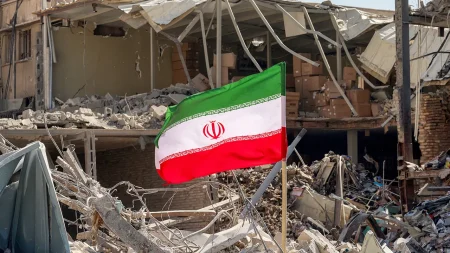
The setting of the noon blessing was a poignant backdrop, a tradition that draws the faithful together in prayer and reflection. Pope Leo XIV, a scholar-turned-spiritual leader who rose from humble beginnings in Argentina to the throne of Peter, has always emphasized compassion over condemnation. His remarks came after deadly strikes that shattered illusions of safe havens, hitting not battlefields but places where life unfolds gently—schools bustling with young dreams, civilian neighborhoods buzzing with daily routines. These attacks have claimed hundreds of lives, their echoes felt in every community that mourns a lost loved one. The Pope, without singling out nations by name, seemed to reference a particularly harrowing incident early in the war: a strike allegedly based on outdated intelligence, which devastated an Iranian school, killing over 165 people, many of them children wide-eyed with wonder at the world. In that moment, he could have pictured their faces—tiny hands reaching out, futures extinguished in an instant. “On behalf of the Christians of the Middle East and all women and men of good will,” he intoned, his plea resonating with those who, like him, see humanity as interconnected threads in a vast tapestry. He urged the conflict’s architects to cease fire immediately, to reopen paths to conversation where missiles now fly. This isn’t just political posturing; it’s a call to rediscover our shared humanity, where mothers in Tehran and families in neighboring lands share the universal fear of losing a child to senseless violence. The Pope’s words carried the weight of history, reminding listeners that the Vatican has long positioned itself as a neutral ground, a sanctuary for dialogue even when diplomats falter. As the news cycle churned on, with reports of U.S. investigations underway, Leo’s stance offered a counter-narrative to the headlines screaming about strikes and retaliations, inviting us to envision a world where empathy trumps enmity.
Delving deeper into the Pope’s appeal, he expressed profound sorrow for the families shattered by these blows, particularly those struck in educational institutions, hospitals, and homes—places meant for nurturing life, not ending it. The strike on the school, where dreams of education and play were obliterated in a blink, paints a grisly picture that no map of airstrikes can capture fully. Parents who waved goodbye to their little ones that morning, perhaps preparing sandwiches or whispered happy thoughts, now grapple with emptiness, their grief amplified by the war’s relentless drumbeat. The Pope, drawing from his own experiences overseeing global church affairs, knows the sting of loss; he’s consoled countless mourners in refugee camps and war zones elsewhere. His mention of this incident wasn’t accusatory but empathetic, a bridge-building gesture aimed at humanizing the dehumanized. He could have easily named names—pointing fingers at the U.S., Israel, or Iranian forces—but instead, he chose silence on specifics, adherence to the Vatican’s tradition of diplomatic neutrality that has spanned centuries. This approach, while frustrating some activists craving direct condemnation, underscores a wisdom born of witnessing world wars and cold ones alike. The Vatican’s refusal to pick sides reflects a belief that entrenched positions only deepen the abyss, whereas open channels foster understanding. As oil markets spiked and regional powers braced for the unknown, Leo’s appeal highlighted the irony: in an era of technological marvels and instantaneous connections, humanity struggles with the basics of stopping violence and starting talks. His voice, amplified by the world’s media, invited everyone—from policymakers in air-conditioned bunkers to everyday people in the line of fire—to reflect: what if we paused the cycle of revenge and chose the path of reconciliation, even if it means peering into uncomfortable truths?
Shifting focus to the broader implications, the Pope voiced acute worry about Lebanon, where the war’s spillover risks unleashing a humanitarian catastrophe. This isn’t hyperbole; aid groups on the ground paint a dire scene of growing shortages, displacement, and fear. Lebanon, already scarred by years of instability, now teeters on the edge as conflict from across the border threatens to flood in. Christian communities in southern Lebanon, vital threads in the region’s multifaith weave, are especially vulnerable; they’ve stood as oases of hope in a predominantly Muslim landscape, their churches and schools beacons for interreligious dialogue. The Vatican sees them as guardians of shared heritage, and the Pope’s concern stems from a paternal instinct—much like a parent fretting over children in danger. He knows stories of families fleeing overnight, leaving behind homes filled with memories, only to arrive at crowded shelters where hope dwindles. The escalating tensions could trigger mass movements, stretching already thin resources and igniting new rounds of sectarian strife. In humanizing terms, consider Fatima, a Lebanese mother in a southern village, who wakes each day wondering if the sky will bring drones or aid trucks. Her community, rooted in ancient traditions of hospitality, now embodies resilience, but the war’s tentacles threaten to uproot it all. Pope Leo’s plea called for urgent intervention, urging global actors to prioritize aid delivery and corridors for dialogue. This isn’t just about geopolitics; it’s about preserving the human fabric that binds us—neighbors sharing bread despite histories of division. As the Vatican monitors developments closely, the Pope’s words serve as a gentle but firm reminder that wars don’t respect borders; they bleed into lives far removed from the original sparks, demanding collective empathy to mitigate the fallout.
Despite the Vatican’s commitment to neutrality, not all voices in the Catholic hierarchy echoed in unison—reflecting the diversity of thought within the global church. While Pope Leo XIV has mostly steered clear of naming the U.S. or Israel directly over the past two weeks, some bishops have departed from this cautious path. Cardinal Robert McElroy, the thoughtful archbishop of Washington, went further in condemning the conflict, labeling it morally unjustifiable in sermons that reached congregations hungry for clarity. He painted a picture of a war that glorifies might over right, where the tools of destruction—be they airstrikes or missile volleys—disproportionately harm the innocent, eroding the very ethical foundations of civilization. Similarly, Chicago’s Cardinal Blase Cupich voiced sharp criticism of the White House for disseminating war-related social media posts featuring video game-esque graphics, arguing it desensitizes the public to real human suffering. These critiques, rooted in theological rigor and personal conviction, highlight a church grappling with modernity: how to uphold peace in a digital age rife with propaganda? Vatican Secretary of State Cardinal Pietro Parolin, ever the diplomat, struck a balancing note, rejecting Washington’s framing of the war as a “preventive” measure but affirming the Holy See’s ongoing dialogues with all parties. “The Holy See speaks with everyone,” he affirmed, envisioning a Vatican as a mediator’s table where solutions emerge from shared insights. This polyphony within Catholicism wasn’t divisive but enlightening, showcasing how faith leaders, like ordinary folks, hold varied perspectives shaped by context—McElroy’s urban pulpit, Cupich’s media-savvy milieu, Parolin’s smoky chambers of diplomacy. For believers, it underscored that seeking justice requires not just prayer but active engagement, humanizing the debate by making it relatable: just as families argue at the dinner table but seek common ground, the church strives for unity amid dissent.
In the end, Pope Leo XIV’s impassioned call for a ceasefire encapsulates a timeless truth: in the theater of war, where strategies are drawn on maps and battles rage across screens, the true casualties are people yearning for normalcy—a father walking his son to school, a community gathering for prayer without fear of interruption. The Vatican’s approach, with its blend of neutrality and nurturing concern, offers a model for healing: fostering open lines while holding fast to moral clarity. As investigations into strikes proceed and aid efforts intensify, the Pope’s message remains a call to action for all, urging us to imagine a future where dialogue replaces destruction. Drawing from centuries of papal wisdom, Leo XIV reminds us that peace isn’t passive; it’s an active choice to value the human story over the geopolitical headline. This moment in Vatican history, amid the echoes of blessings and the shadows of conflict, invites the world to pause, reflect, and rebuild—not through force, but through the quiet power of empathy. As Christians and people of goodwill everywhere listen, they carry hope that such voices can bridge chasms, making the unthinkable—lasting peace—within reach. Thus, the Pope’s words don’t just summarize a crisis; they humanize it, transforming abstract battles into personal stories of loss, resilience, and potential redemption. In humanity’s shared struggle, they beckon us toward a horizon where children play freely, families reunite without borders, and faith in one another prevails.