



Pope Leo XIV Closes Holy Year with Call for Compassion and Kindness Toward Strangers
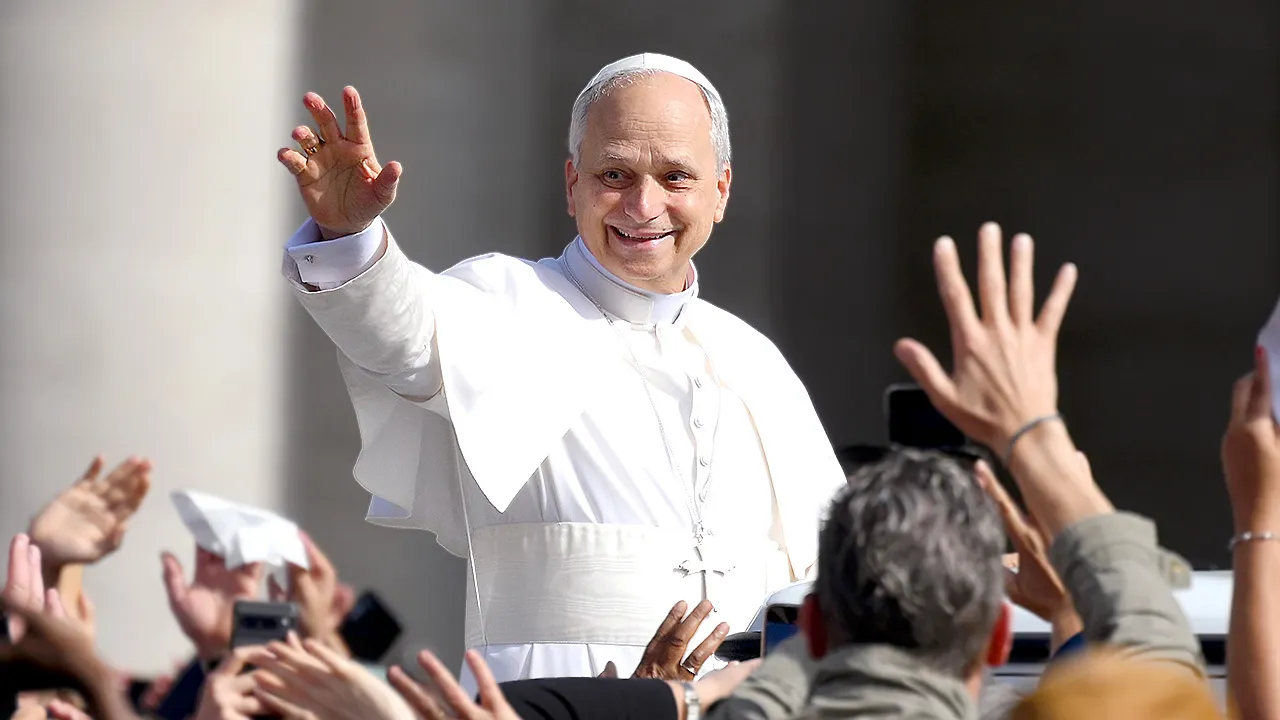
In a powerful ceremony marking the end of the Catholic Church’s Holy Year, Pope Leo XIV urged Christians worldwide to embrace a message of compassion and hospitality toward those in need. The closing ritual, which took place Tuesday at St. Peter’s Basilica in Vatican City, saw the Pope shut the special bronze Holy Door, symbolically bringing to a close a year that attracted a record 33.5 million pilgrims from 185 countries. During his address, Leo, the first American pope in history, emphasized the importance of seeing the humanity in strangers rather than viewing people as mere economic commodities. “Around us, a distorted economy tries to profit from everything,” he remarked, asking the faithful to consider whether this Holy Year had changed their perspective: “Will we be better able to recognize a pilgrim in the visitor, a seeker in the stranger, a neighbor in the foreigner?”
The 2025 Holy Year represented a rare historical moment in the Catholic Church, as it was opened by the late Pope Francis, who passed away in April, and closed by Pope Leo XIV, who was elected in May. This transition marked the first time in over three centuries—since the year 1700, when Innocent XII opened the Holy Year later closed by Clement XI—that such a jubilee has been overseen by two different pontiffs. Holy years typically occur every 25 years and are considered sacred periods dedicated to peace, forgiveness, and pardon within the Catholic tradition. These jubilees invite pilgrims to pass through special “Holy Doors” at Rome’s major basilicas and participate in papal audiences, symbolizing a spiritual renewal and reconnection with the core values of the faith.
Throughout the Holy Year, pilgrims came predominantly from Italy, the United States, Spain, Brazil, and Poland, representing a diverse cross-section of the global Catholic community. The next regular Holy Year is not expected until 2033, which may hold special significance as it will mark approximately 2,000 years since the death of Jesus Christ. Pope Leo XIV, who has committed to continuing many of his predecessor’s progressive initiatives—including welcoming gay Catholics and discussing women’s ordination—used the closing ceremony as an opportunity to reinforce Francis’s critiques of contemporary economic systems that commodify human experiences and relationships.
The Pope’s message resonated particularly strongly in the context of ongoing global migration crises and economic inequalities. By urging Christians to recognize the humanity in foreigners and strangers, Leo continued the emphasis on immigrant care that has been a hallmark of recent papal leadership. His words echo concerns expressed by U.S. Catholic bishops about deportation policies creating widespread fear among immigrant communities. This consistent focus on human dignity over economic value represents a fundamental challenge to societies increasingly defined by market relationships. “Markets turn human yearnings of seeking, traveling and beginning again into a mere business,” Leo observed, suggesting that the spiritual journey of the Holy Year should transform how believers interact with those seeking new beginnings.
For the millions who participated in the jubilee celebrations, the Pope’s closing message served as both a challenge and an invitation to carry the spiritual renewal of the Holy Year into everyday life. The tradition of Holy Years dates back centuries in Catholic practice, designed as periods when the faithful can receive special indulgences and spiritual benefits through pilgrimage and prayer. By framing this ancient tradition within contemporary social concerns, Pope Leo XIV has continued the Church’s effort to remain relevant in addressing modern challenges while honoring its historical roots. The unprecedented number of pilgrims—33.5 million—suggests that despite secularization trends in many parts of the world, there remains a substantial desire for spiritual meaning and community connection.
As the bronze door closed on this Holy Year, it symbolized not an ending but a transition—challenging those who participated to carry forward the lessons of compassion, hospitality, and human dignity into a world often dominated by economic calculation and social division. Pope Leo XIV’s leadership, while still in its early stages, appears poised to continue bridging traditional Catholic values with progressive social concerns, much as his predecessor sought to do. The question he posed to the faithful—whether they will recognize the pilgrim, the seeker, and the neighbor in those who are different—stands as both the challenge and the promise of this concluded Holy Year, inviting Catholics and Christians worldwide to practice their faith through concrete acts of welcome and solidarity toward those most vulnerable in society.