



Trump’s Foreign Policy Vision: A Year of Bold Moves and Strategic Shifts
Asserting American Strength on the Global Stage
As President Donald Trump returned to the White House in January 2025, his administration wasted no time implementing what supporters describe as a transformative foreign policy agenda. According to a comprehensive report by Polaris National Security titled “100 Trump Foreign Policy Wins From 2025 the Media Wants You to Miss,” the administration has pursued an aggressive strategy focused on deterrence, demanding more from allies, and directly confronting adversaries. Cale Brown, chair of Polaris and former State Department spokesperson, argues that Trump has “taken the world stage by storm, reasserting American strength after four years of weakness.” This approach represents a deliberate pivot from previous policies, with the administration’s 2025 National Security Strategy establishing what proponents call the most significant hemispheric reorientation of U.S. foreign policy in decades. The document highlights Trump’s emphasis on protecting American interests through strength rather than accommodation, though critics question whether some diplomatic overtures may ultimately prove counterproductive.
Tackling Narcotics and Regional Security in the Western Hemisphere
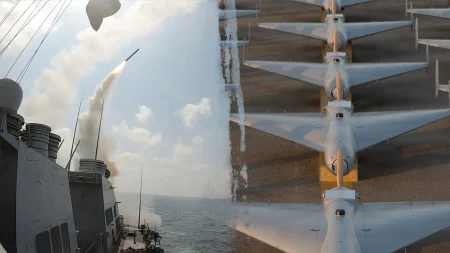
One of the administration’s most notable efforts has centered on Venezuela and broader Western Hemisphere security concerns. Operation Southern Spear, a robust counter-narcotics campaign, has targeted maritime vessels linked to organizations like Tren de Aragua and the National Liberation Army operating near Venezuelan waters. The administration has backed these operations with more aggressive measures, including raising the reward for information leading to Venezuelan President Nicolás Maduro’s arrest to $50 million, with Attorney General Pam Bondi publicly accusing him of central involvement in drug trafficking—allegations Venezuela firmly rejects. The report frames these actions as part of a comprehensive strategy to defend the homeland from the “influx of fentanyl and other illicit drugs ravaging American communities.” The administration appears to be prioritizing what it views as direct threats to American security emanating from the region, signaling a willingness to use both economic pressure and military assets to address these challenges in ways previous administrations avoided.
Middle East Diplomacy: Gaza Ceasefire and Israel’s Security
Perhaps the most significant diplomatic breakthrough highlighted in the Polaris report involves the October Gaza ceasefire agreement between Israel and Hamas, which the administration helped broker. According to the document, this complex agreement “secured an immediate ceasefire and the return of all surviving hostages,” including Americans, with only one hostage reportedly still unaccounted for. The deal also outlined ambitious plans for prisoner exchanges, Gaza’s demilitarization, deployment of an international stabilization force, transitional governance structures, and large-scale reconstruction efforts. The administration further solidified this diplomatic achievement in November when a U.S.-led Gaza resolution passed the UN Security Council by a vote of 13-0, with Russia and China abstaining, providing “an international legal framework for the next phase of the Israel-Hamas ceasefire.” Additionally, the administration prohibited U.S. taxpayer funding for UNRWA, citing concerns over alleged ties between some personnel and Hamas, though UNRWA has consistently denied institutional involvement in terrorism. These actions reflect the administration’s prioritization of Israel’s security while simultaneously working toward regional stability.
Confronting Iran and Reshaping Middle East Alliances
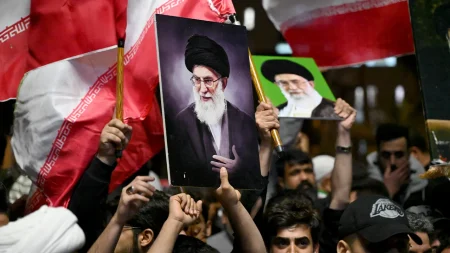
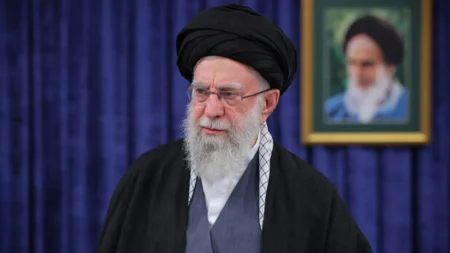
In what may be its most dramatic military action, the report details U.S. strikes carried out in June against Iranian nuclear facilities using B-2 bombers and bunker-buster munitions. The administration framed this operation as clear evidence that the United States “will not tolerate a nuclear-armed Iran,” despite Iran’s consistent denials of pursuing a military nuclear program. Nathan Sales of the Atlantic Council characterized the administration’s regional approach as viewing Iranian influence as “the fundamental source of violence and instability across the Middle East.” The report also highlights renewed momentum behind the Abraham Accords and stronger relationships with regional powers. However, analyst Lisa Daftari offers a more nuanced assessment, noting that while Trump has delivered on several strategic priorities, including strong support for Israel and terrorist redesignations, other diplomatic moves raise concerns. She specifically questions the administration’s overtures to Syria’s president despite recent attacks on U.S. servicemen, and approaches to Turkey and Saudi Arabia that “may exceed what these relationships warrant, potentially squandering leverage on critical issues like the Abraham Accords.” These contrasting viewpoints highlight the complexity of evaluating the administration’s regional strategy.
NATO Reform and European Security
Trump’s approach to transatlantic relationships has centered on dramatically increased burden-sharing within NATO. According to the Polaris report, at the NATO summit in The Hague, alliance members pledged to raise defense spending to an unprecedented 5% of GDP by 2035—far exceeding the longstanding 2% benchmark that many European allies had previously struggled to meet. The document attributes this commitment to “sustained U.S. pressure for fairer burden-sharing among allied nations,” reflecting the administration’s consistent message that European security requires substantially greater European investment. This development represents a significant shift in NATO’s financial structure and potentially its strategic capabilities, though implementation will extend far beyond Trump’s term. The administration appears to be leveraging American security guarantees to extract concrete commitments from allies, fundamentally altering relationships that have defined the post-World War II international order.
Resolving Frozen Conflicts and Global Engagement
Beyond headline-grabbing initiatives, the administration has quietly engaged in resolving long-standing regional disputes. A notable achievement highlighted in the report is the August agreement signed at the White House between the leaders of Armenia and Azerbaijan, aimed at ending the decades-old Nagorno-Karabakh conflict. This declaration includes substantial commitments on border security, regional transit routes, and economic cooperation involving the United States as a guarantor. Such diplomatic efforts suggest an administration willing to engage in complex conflict resolution when it aligns with broader strategic interests. The report frames these and other initiatives as evidence of a coherent foreign policy vision centered on American strength and direct engagement. While supporters view this approach as restoring American leadership after a period of decline, critics remain concerned about specific diplomatic overtures and the long-term sustainability of confrontational tactics with both adversaries and allies. As 2026 approaches, these foreign policy gambits will be tested against real-world outcomes, determining whether Trump’s vision translates into lasting security gains for America and its allies.