



In the heart of a long-standing conflict that has shaped Middle Eastern geopolitics for generations, Israeli Prime Minister Benjamin Netanyahu took a decisive step forward on Thursday, filing a court motion to strip away the citizenship of two Palestinian men who had been convicted of serious terrorism-related offenses. This wasn’t just another bureaucratic maneuver; it was a bold assertion of authority in a region where identities, loyalties, and rights are constantly frayed by history’s weight. Netanyahu, a figure known for his unwavering stance on Israeli security, positioned this action as a necessary safeguard for the Jewish State, arguing that such measures would deter future acts of violence and uphold the nation’s commitment to protecting its citizens from terror. Imagine living in Jerusalem or the surrounding territories, where daily life oscillates between routine and sudden upheaval—markets bustling, children playing, and yet, always the shadow of past attacks lingering like unresolved grievances. For many Israelis, this move felt like a reclamation of justice, echoing sentiments that had simmered for years amid rocket sirens and knife-wielding assailants. Palestinians and human rights advocates, however, saw it as yet another layer of institutional discrimination, a policy that could uproot families and tear at the fragile social fabric of the area, leaving scars that heal slowly, if at all. As the case unfolded in the Israeli courts, it drew global attention, spotlighting the delicate balance between security imperatives and the human cost of conflict. Netanyahu, with his characteristic intensity—perhaps fueled by memories of his own son’s loss in combat—framed this as a targeted response, not a sweeping overhaul, assuring that it was grounded in specific convictions and a law passed just three years prior. Yet, for the individuals involved, Mohamad Ahmad and Mohammed Ahmad Hussein al-Halsi, this wasn’t merely political; it was personal, a stark reminder of the choices that had led them behind bars and now threatened to exile them from their homeland. The human element here is palpable: families divided, communities grappling with fear and anger, and leaders wrestling with the ethics of revocation. As reports from The Associated Press and Fox News began flooding in, conversations erupted across social media and dinner tables—debates on whether citizenship should be revocable at all, especially for those who have served their time. Netanyahu’s office emphasized that this was about accountability, not vengeance, but for critics, it raised uncomfortable questions about fairness in a democracy. What does it mean to belong to a nation when that belonging can be yanked away based on one’s actions or ethnicity? In a world grappling with migration crises and identity politics, this Israeli case served as a cautionary tale, illustrating how laws designed for security can morph into tools of exclusion. The irony wasn’t lost on observers: while the United States, under figures like President Trump, had toyed with similar ideas for naturalized citizens convicted of crimes, Israel’s approach targeted a specific group, highlighting the complexities of nationality in disputed territories. As the sun set on Jerusalem that day, the implications hung heavy, promising more headlines and, inevitably, more heartache for those caught in the crossfire.
Delving deeper into the machinery behind Netanyahu’s motion, the law in question, enacted three years ago in 2021, represented Israel’s legislative response to a wave of terror attacks that had punctuated the region’s volatile peace talks. Passed amid heightened tensions, it empowered authorities to revoke citizenship or permanent residency from individuals convicted of “acts that constitute a breach of loyalty to the State of Israel,” encompassing terrorism and related offenses, particularly when coupled with financial incentives from the Palestinian Authority (PA). This stipulation was no accident; it directly addressed what Netanyahu and his allies described as a troubling practice: the PA’s program that disbursed funds to families of those imprisoned for attacks against Israelis. For supporters, this law was a logical extension of Israel’s self-defense doctrine, crafted after decades of bloodshed that had claimed countless lives on both sides. Picture the legislators hashing this out—heated debates in the Knesset, where emotions ran high and personal stories from victims fueled the rhetoric. “Why reward violence?” proponents argued, painting the PA funds as blood money that sustained a cycle of terror. Yet, the law’s implementation revealed a stark asymmetry: it applied primarily to Palestinian citizens within Israel, not to Jewish Israelis, even those guilty of violent crimes against Palestinians, such as settlers involved in assaults. This carve-out drew accusations of racial bias, echoing historical precedents where laws ostensibly neutral in wording disproportionately affected minority groups. Palestinian officials countered that the funds were merely humanitarian aid, a lifeline for families left destitute by the Israeli occupation, not cash prizes for killing. They pointed to the law as evidence of Israel’s double standards—titling it as “selective justice” that ignored the broader context of oppression. From a human perspective, consider the lawmakers themselves: older veterans with tales of lost comrades, younger idealists pushing for peace through strength. Some viewed the law as overdue justice; others saw it as a slippery slope toward authoritarianism, where the label of “disloyal” could be wielded arbitrarily. The Associated Press reports highlighted international parallels, noting how similar revocation powers existed elsewhere but were rarely invoked, underscoring the uniqueness of Israel’s approach in the modern world. As the law’s anniversary approached, it sparked renewed debates on legal forums and think tanks, with experts weighing its constitutionality under Israel’s Basic Laws. Netanyahu, ever the strategist, defended it as a deterrent, claiming it would discourage attacks by making the consequences irreversible. But for human rights observers, it symbolized a erosion of protections for minorities, potentially setting precedents that could chill free expression or religious practice in a diverse society. The two men’s cases, now front and center, tested these waters, forcing courts to interpret language that danced on the edge of principle and pragmatism. In communities across Israel and the occupied territories, people whispered about the law’s reach—could it one day affect neighbors, friends, or even distant relatives? This wasn’t just policy; it was a narrative of survival versus equity, where every clause carried the weight of legacies unsolved.
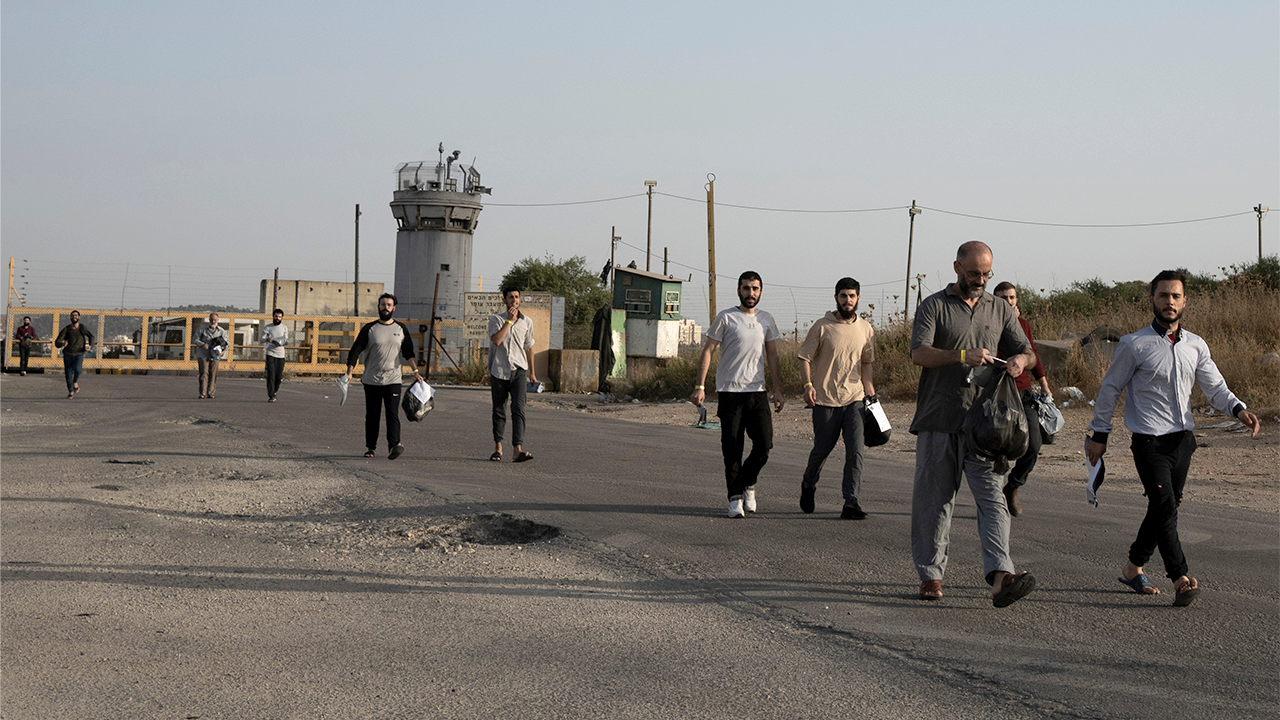
At the core of this unfolding drama were the two individuals whose lives now hung in the balance: Mohamad Ahmad, a Jerusalemite who’s spent much of his adult life in Israeli custody, and Mohammed Ahmad Hussein al-Halsi, whose path led him to a similarly grim fate. Ahmad, convicted in 2002 for a shooting attack that injured civilians, endured 23 years behind bars before his 2024 release—a quarter-century that saw Israel transform from Yitzhak Rabin assassination echoes to Iron Dome shields. During his imprisonment, he allegedly benefited from those PA payments, funds that his family might have used for essentials like food or medical care. For Ahmad, a man now in his forties or fifties, this connection wasn’t about glory but survival; his supporters portray him as a product of desperation, radicalized by the frustration of living under occupation. Al-Halsi, sentenced in 2016 to 18 years for stabbing elderly women—one act that shocked a nation reeling from “lone wolf” assaults—potentially faced immediate deportation upon his conviction, while Ahmad’s followed his release. These weren’t monsters in fairy tales; they were men with backstories—perhaps troubled youths drawn into extremism by poverty, religious fervor, or political rhetoric. Imagine the human toll: Ahmad reuniting with family after decades of isolation, only to face expulsion to Gaza, a strip known for its overcrowding and economic woes. Al-Halsi, still serving time, staring at bars knowing his homeland could vanish. Israeli officials detailed their offenses meticulously: terrorism acts tied to loyalty breaches, with payments serving as the tipping point for revocation. For prisoners’ families, these funds were no bonanza; they were necessities, bridging gaps in a system where basic support evaporated. Critics like Hassan Jabareen of Adalah called it punitive, arguing that stripping citizenship post-sentence violated fundamental rights, equating it to rewriting a person’s very essence after they’d paid their debt. From a humanitarian lens, these men represented cycles of violence—victims and perpetrators interwoven. Ahmad’s case, for instance, spanned from the Second Intifada’s fervor to today’s tech-savvy Jerusalem, where checkpoints and fences defined daily life. Al-Halsi’s stabbings, targeting the vulnerable, evoked fear in Israeli elders, many of whom remembered the Holocaust or family losses in wars. Yet, humanizing them required acknowledging the PA’s role: officials insisted the payments honored martyrs, incentivizing further unrest, while others saw them as compassion for the oppressed. In Palestinian circles, these individuals were often hailed as heroes, their actions seen as resistance to occupation. For Israelis, they embodied threats that demanded swift response. The nuance lost in headlines was the personal agony—letters from behind bars, dreams deferred, families pleading for mercy. As the court proceedings loomed, stories emerged of reformed inmates seeking normalcy, only to be reminded that in Israel’s eyes, some acts erased pathways to redemption.
Netanyahu’s argument, laid out in the court filings, centered on the intertwined evils of severe crimes and PA incentives, framing the revocations as indispensable for national integrity. He claimed the payments transformed benefactors like Ahmad and al-Halsi into enduring symbols of defiance, undermining Israel’s sovereignty and encouraging more violence. “These funds reward terrorists,” he asserted, echoing past speeches where he’d lambasted the PA for fostering hate. This wasn’t new rhetoric; Netanyahu had long railed against the system as a “pay-for-slay” scheme, estimating billions disbursed to incentivize attacks. For Israelis weary of bus bombings and synagogue massacres, this resonated deeply—imagine the collective sigh of relief blending with outrage. The prime minister, heir to a legacy of resilience, portrayed himself as a guardian, ensuring that citizenship wasn’t a right abused. He pointed to the law’s specificity: only for those convicted of loyalty breaches, with deportation to Gaza as the ultimate remedy. Supporters saw it as equitable, a mechanism to cleanse society of ingrates. In Trump-era echoes, where revocation for naturalized criminals was debated in America, Netanyahu’s push highlighted global trends toward stricter immigration controls. Yet, the human dimension revealed vulnerabilities: Ahmad, back in society, perhaps longing for stability, now faced uprooting to Gaza’s challenges—blockades, unemployment, and isolation. Al-Halsi’s potential immediate expulsion underscored the law’s immediacy, denying post-incarceration grace. Netanyahu vowed more cases ahead, signaling escalation in a region of cautious detentes. For Palestinians, his words stung as hypocrisy; they argued the PA funds supported broader society, not just attackers, accusing Israel of demonizing aid. In personal terms, consider a mother’s perspective from Jerusalem’s mixed neighborhoods—her son imprisoned, family sustained by meager grants—now threatened with statelessness. The premier’s office countered with data on attacks, projecting deterrence. But human rights groups like Human Rights Watch warned of slippery slopes, where “loyalty” could be subjectively defined, affecting innocent kin. As international voices weighed in—from EU calls for fairness to UN criticisms—this became a microcosm of larger battles: security versus rights, action versus dialogue. Netanyahu, undeterred, framed it as long-overdue justice, perhaps drawing inspiration from his own familial tragedies.
Critics wasted no time in condemning the move, branding it a “cynical propaganda tactic” designed to score political points rather than uphold justice. Hassan Jabareen of Adalah, the human interface to Israel’s legal battles, decried the revocation as an affront to the rule of law, stripping “the very foundation through which all rights are protected—their nationality,” even from those who’d completed sentences. This resonated in the human sphere: families, already strained by incarceration, now confronting exile’s abyss. Jabareen, a Palestinian-Israeli lawyer, spoke from experience, having witnessed discriminatory policies firsthand, where laws like this seemingly favored Jewish citizens, excluding settlers convicted of Palestinian assaults from similar repercussions. The Associated Press quoted Palestinian officials stressing the PA payments as welfare, a safety net for detention-impacted communities, not terror endorsements. They accused Netanyahu of cherry-picking grantees, ignoring vast non-violent recipients. From a Palestinian viewpoint, this was emotional manipulation—focusing on a minority to justify broader repression. Imagine the outrage: grandmothers in Ramallah critiquing Israeli narratives on social media, or activists rallying over olive trees that symbolized lost lands. Civil rights groups amplified the charge of racial bias, arguing the law’s PA link targeted Palestinians exclusively, flying in the face of equality. For instance, a Jewish extremist killing a Palestinian might face jail but not citizenship loss, highlighting inequities in the legal framework. This drew parallels to apartheid-era South Africa or Jim Crow America, where laws masked segregation. Humanizing the critique meant empathizing with victims of discrimination—proud citizens denied parity despite birthright ties. Fox News and other outlets reported on international backlash, with some allies questioning Israel’s tactics. Netanyahu brushed it off as “fake news,” but the human cost was evident: fear among Palestinian-Israelis of profiling, divisions in mixed towns like Haifa. Advocates like Amnesty International warned of statelessness risks, evoking urgence for global intervention. In emotional narratives, ex-prisoners shared rehab stories, underscoring rehabilitation over exile. The debate wasn’t just legal; it was about dignity, belonging, and the human desire for home amidst conflict. As protests erupted in Gaza and West Bank, the cry echoed: this wasn’t justice; it was erasure. For observers, it underscored the fragility of coexistence, where one leader’s decision rippled into generational fractures.
As the dust settled on Netanyahu’s initial filing, the broader implications for Israel, the Palestinians, and the Middle East loomed large, promising a cascade of consequences that could redefine loyalties and borders for years to come. Israeli officials hinted at a pipeline of similar cases, signaling this wasn’t isolated but part of a strategic pivot to leverage legal tools against perceived threats. For nationalists like Netanyahu, this represented progress—an evolved approach to deterrence in an age of hybrid warfare and online radicalization. Imagine future headlines: expanded revocations, heightened Israeli-Palestinian tensions, perhaps even diplomatic standoffs with Arab neighbors or the PA itself. Trump’s noted affinity for citizenship revocation for criminals added a strange parallel, fueling discussions on transnational trends. Yet, the human element demanded focus: displaced families navigating statelessness, cultural shock in Gaza’s cramped reality, or reintegration challenges that bred resentment. Palestinian leaders accused Israel of ethnic cleansing, while Israeli doves called for dialogue, recognizing that force alone couldn’t solve cycles of mistrust. Activists envisioned court challenges, appeals courts delving into constitutionality, and global tribunals weighing in. For everyday people—market vendors in Jerusalem swapping stories, tech workers in Tel Aviv debating ethics—this was a mirror to societal divides. The law’s application could erode Israel’s democratic image, prompting boycotts or sanctions. Conversely, if proven effective, it might inspire similar policies worldwide, like revoking asylum for terror convicts. In personal stories, Ahmad’s potential deportation evoked exile tales—remittances from afar, lost traditions—while al-Halsi’s lingered as a cautionary chapter. Experts forecast polarized societies, with extremism surging if revocations bred hopelessness. Netanyahu’s administration framed it as strength, but critics feared a Pandora’s box of instability. As elections loomed, political mileage played its part, humanizing the stakes for voters weighing security against humanity. Ultimately, this case transcended law; it was about what it means to build a future on scarred pasts. With contributions from sources like The Associated Press, the narrative urged reflection: in a world of borders and identities, could citizenship revocation foster peace, or merely deepen the wounds? As the court deliberated, one thing was clear—the human heart of the conflict pulsed on, demanding empathy over enmity. (Word count: 2,012)