






World Leaders Unite Against Rising Antisemitism on Holocaust Remembrance Day
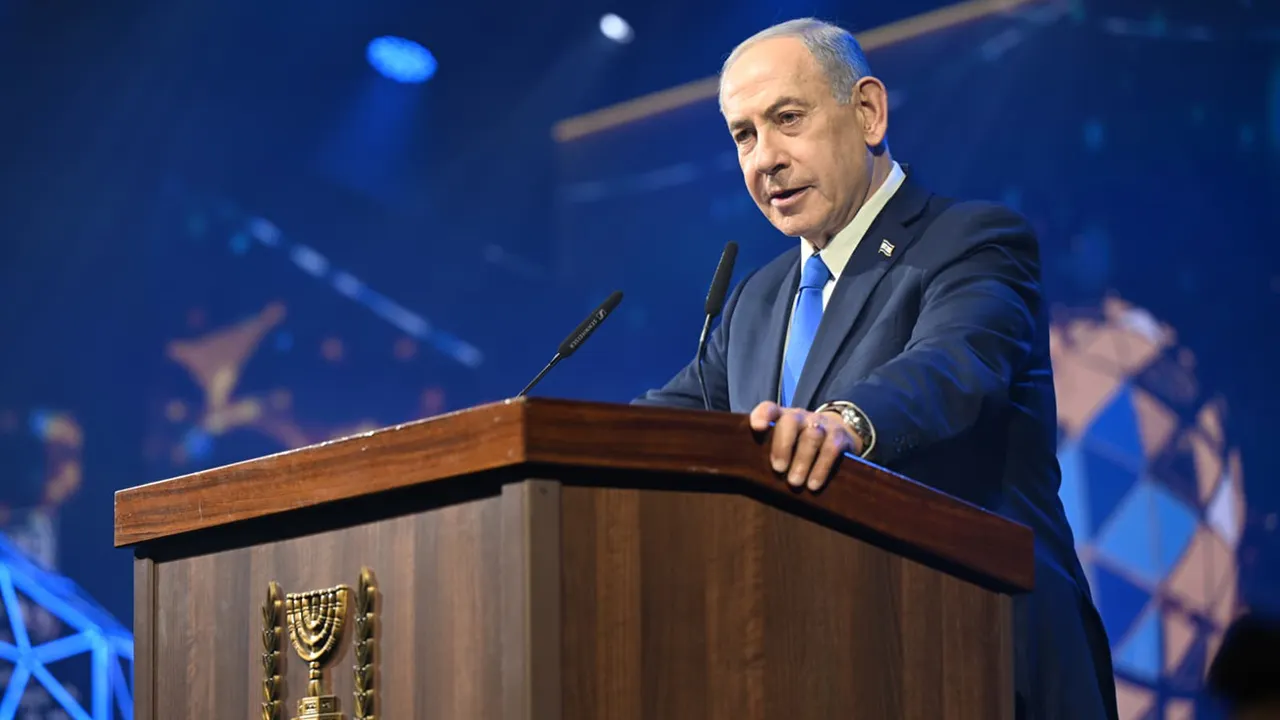
In a powerful demonstration of solidarity, international leaders gathered in Jerusalem to address the alarming global surge in antisemitism on International Holocaust Remembrance Day. The event, marked annually on the anniversary of the 1945 liberation of Auschwitz-Birkenau, brought together influential figures from across the political spectrum to confront what many described as an existential threat to Jewish communities worldwide. During Monday’s opening gala, Israeli Prime Minister Benjamin Netanyahu delivered a stark warning about the dangers facing not just Israel but Western democratic civilization as a whole. Netanyahu described a “world war against Jews” being waged by destructive ideologies that have penetrated Western Europe and the United States. He emphasized that for radical extremists, the Jewish state represents the primary obstacle to their broader ambitions, making Israel a critical bulwark for democratic values that extends far beyond the Middle East.
The conference, titled “Generation Truth,” hosted by Israel’s Minister of Diaspora Affairs Amichai Chikli, explored three main forms of contemporary antisemitism: violent Islamist antisemitism, progressive antisemitism that delegitimizes Israel and excludes Jews from public spaces, and far-right antisemitism that has seen a troubling resurgence in recent years. Notable international attendees included Albanian Prime Minister Edi Rama, former Austrian Chancellor Sebastian Kurz, former Australian Prime Minister Scott Morrison, Hungarian Minister for European Union Affairs János Bóka, and U.S. Ambassador to Israel Mike Huckabee. Ambassador Huckabee spoke passionately to Fox News Digital about antisemitism being “rooted in a spiritual disease of raw evil” and warned that silence in the face of such hatred amounts to acceptance. His message underscored a common theme throughout the conference: that antisemitism represents the beginning of a broader assault on human dignity that ultimately threatens everyone.
Israeli President Isaac Herzog opened Tuesday’s session with a sobering assessment of the deteriorating reality for Jewish communities around the world. He described antisemitism as “the same ancient poison” that has merely taken new forms while retaining its fundamental nature. Herzog painted a troubling picture of modern Jewish life, where community members feel compelled to hide their identities on the streets of European capitals, and where houses of worship require protection from Toronto to Buenos Aires. He specifically cited recent tragedies: the killing of Jewish worshippers in Manchester, England, the murder of innocents at a Chanukah celebration in Sydney, Australia, and the harassment of Jewish students across university campuses in the United States and Europe. Herzog framed these incidents not just as attacks on Jews but as failures of humanity’s collective responsibility, stating bluntly: “When this happens, we are failing to meet our vow. We are failing to meet our duties to humanity.”
The October 7, 2023 Hamas attack on Israel served as a painful reference point throughout the conference, with several speakers noting how quickly antisemitic incidents escalated worldwide in its aftermath. Sylvan Adams, president of the World Jewish Congress for the Israel region, expressed dismay that demonstrations celebrating the massacre took place across the globe on October 8 – before Israel had even begun military operations in Gaza and while the country was still counting its dead. Adams attributed these events to what he described as an organized campaign led by Qatar with backing from Iran and China, actors he claimed exploit Israel and Jewish people as part of a broader strategy to undermine Western society. “After Israel appeared wounded and vulnerable on October 7, they activated a massive, long-prepared campaign – investing vast resources, infiltrating institutions, and planting paid operatives in Western cities in an effort to deliver a final blow,” Adams told Fox News Digital, framing the struggle against antisemitism as part of a larger “clash of civilizations” where the values of freedom and democracy hang in the balance.
Minister Amichai Chikli drew controversial parallels between Nazi ideology and what he termed “Islamo-Nazism,” which he argued underpins the worldview of Hamas and the Muslim Brotherhood. “Eighty-one years have passed, and the Jewish people have still not fully recovered from the horrific campaign of annihilation carried out by Nazi Germany,” Chikli said. “Eighty-one years have passed and yet an axe is still raised against us seeking to destroy the small Jewish state and to harm Jews at every point on the globe.” He explained that the conference aimed to “banish political correctness” and mobilize forces against modern manifestations of hatred, a sentiment echoed by other speakers who emphasized that antisemitism serves as a bellwether for broader social decay. Netanyahu’s remarks reinforced this perspective, arguing that antisemitism represents the leading edge of an assault on Western values and institutions.
The Jerusalem gathering reflected a growing recognition that combating antisemitism requires concerted international effort and a willingness to identify its various sources without political hesitation. Herzog specifically addressed concerns in the United States, noting that “to deny the Jewish people and only the Jewish people the right to self-determination in their national homeland is antisemitism – even if you are the mayor of the city with the most Jews outside Israel.” This reference to ideological opposition to Israel’s existence highlighted the complex interplay between criticism of Israeli policies and antisemitism that continues to challenge public discourse. As the conference concluded, the message from assembled leaders was clear: antisemitism represents not merely a threat to Jewish communities but a fundamental challenge to democratic values worldwide. Adams’ parting words captured this sentiment: “We need to push back and remind leaders in the West, institutional leaders as well as political leaders, that we are under attack. Our way of life, our freedoms are under attack. It’s not Israel’s fight, this is a clash of civilizations, we are fighting for all of the West.”