






Honor Killing in the Netherlands: A Young Woman’s Life Cut Short
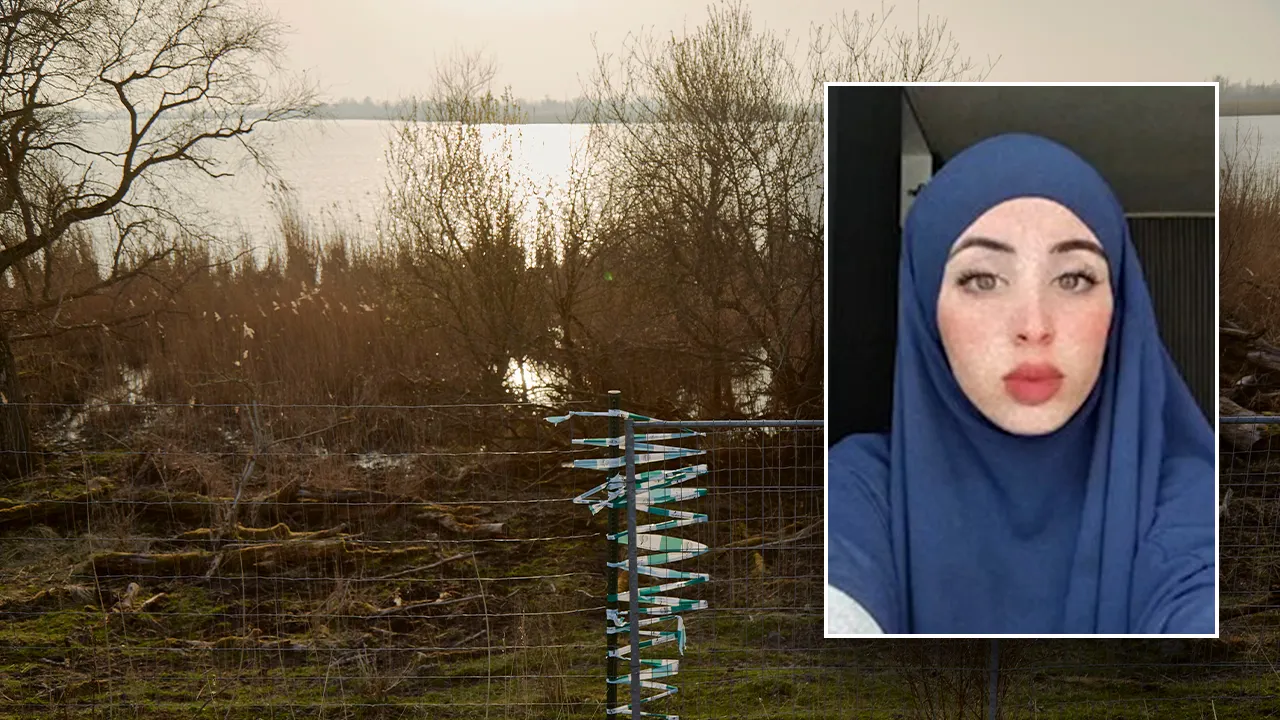
In a tragic case that has shocked the Netherlands, prosecutors are demanding lengthy prison sentences for three men accused of murdering 18-year-old Ryan Al Najjar in what appears to be an honor killing. The young Syrian woman was found dead in a lake near Joure in northern Netherlands on May 28, 2024, six days after she went missing. Her body was discovered with hands and feet bound tightly, marking a horrific end to a life that was just beginning to flourish on her own terms. Dutch prosecutors have charged her father, Khaled Al Najjar (53), and her two brothers, Mohamed and Muhanad (aged 22 and 24 at the time), with her murder. The prosecution is seeking 25 years for the father, who they believe orchestrated the killing, and 20 years each for the two brothers who allegedly participated in the crime.
The motive behind this heartbreaking murder, according to prosecutors, was Ryan’s desire to live a life that her strict Islamic family deemed too “Western.” Ryan had refused to wear a headscarf in public and had chosen to express herself freely. The apparent trigger for her killing was a TikTok video in which she appeared without a headscarf and wearing makeup. To most young women her age, this would be a normal form of self-expression, but for Ryan, it became a death sentence. “They saw Ryan as a burden that had to be removed,” the Public Prosecution Service stated, “Just because she was a young woman who wanted to live her own life.” The family reportedly felt deeply embarrassed by her behavior, which they believed didn’t align with their traditional values.
The details of Ryan’s final hours reveal a calculated plan to silence her permanently. According to prosecutors, upon discovering the TikTok video, her brothers traveled to Rotterdam where Ryan was living. They allegedly convinced her to accompany them to a remote location at Knardijk the night before her murder, where their father joined them. The prosecution believes the young woman was taken to an isolated area where “no one for miles around could have heard her cries for help.” The evidence suggests she was strangled and drowned. Before being thrown into the water, Ryan was bound with approximately 60 feet of tape, and tragically, investigators believe she was still alive when she entered the water. In a particularly damning piece of evidence, Khaled’s DNA was found under his daughter’s fingernails, suggesting she fought for her life against her own father.
In an act described by prosecutors as “cowardly,” Khaled Al Najjar fled to Syria immediately after the murder, leaving his sons to face the consequences alone. “Khaled has completely destroyed his family,” the Public Prosecution Service stated. Adding another layer of complexity to the case, authorities note that extradition may be difficult as Khaled has since married a woman in Syria. This strategic move may be an attempt to avoid facing justice for his alleged role in his daughter’s death. The prosecution’s recommendation of a 25-year sentence for the father reflects the severity of the crime and his role as the alleged mastermind, while the 20-year sentences recommended for each brother acknowledge their participation in this horrific act.
This case highlights the tragic reality of honor killings, where cultural and religious interpretations are twisted to justify violence against women who seek independence. Ryan Al Najjar represents countless women worldwide who face deadly consequences for simply wanting to make their own choices. Her desire to live freely – choosing whether to wear a headscarf, applying makeup, or posting on social media – are fundamental freedoms that many take for granted. Yet for Ryan, these expressions of autonomy became perceived transgressions against her family’s honor. The prosecution’s strong stance reflects the Netherlands’ rejection of such practices, asserting that cultural beliefs cannot justify murder or the suppression of women’s rights to self-determination.
The court is scheduled to issue its ruling on January 5, bringing some closure to this heartbreaking case. However, with the father beyond reach in Syria, full justice may remain elusive. Ryan’s story serves as a painful reminder of the ongoing struggle many women face between cultural expectations and personal freedom. At just 18, her life was cut short not by accident or illness, but allegedly by the very people meant to protect her. As society grapples with balancing cultural diversity and universal human rights, cases like Ryan’s underscore the vital importance of protecting every individual’s right to live authentically, free from fear of violence or persecution. In remembering Ryan Al Najjar, we must reaffirm the principle that a woman’s life and her right to self-determination should never be sacrificed at the altar of family honor or cultural tradition.