


The Shocking Fall of a Cartel King and the Chaos It Unleashed
Imagine waking up to a world where your routine trip to a sunny Mexican resort turns into a nightmare of blocked roads, blazing fires, and stranded flights—all because a powerful drug lord has been taken down. That’s the reality that gripped the western Mexican state of Jalisco not long ago, when notorious cartel leader Nemesio Rubén Oseguera Cervantes, better known as “El Mencho,” was killed in a government raid supported by U.S. intelligence. As the head of the Jalisco New Generation Cartel (CJNG), El Mencho had built a fearsome reputation, with the U.S. State Department offering up to $15 million for information leading to his arrest or conviction—he was one of Mexico’s most wanted fugitives, feared for orchestrating brutal violence, including dropping blindfolded victims from towers in gruesome public displays. His death on a Sunday was meant to be a victory in the fight against organized crime, but it triggered an immediate and terrifying backlash. Cartel loyalists erupted in fury, setting vehicles ablaze, erecting barricades on highways, and crippling movement in Guadalajara, the vibrant state capital. For locals and tourists alike, this wasn’t just news; it was a personal assault on their sense of security, turning bustling streets into war zones and highlighting how deeply embedded these criminal networks are in everyday life.
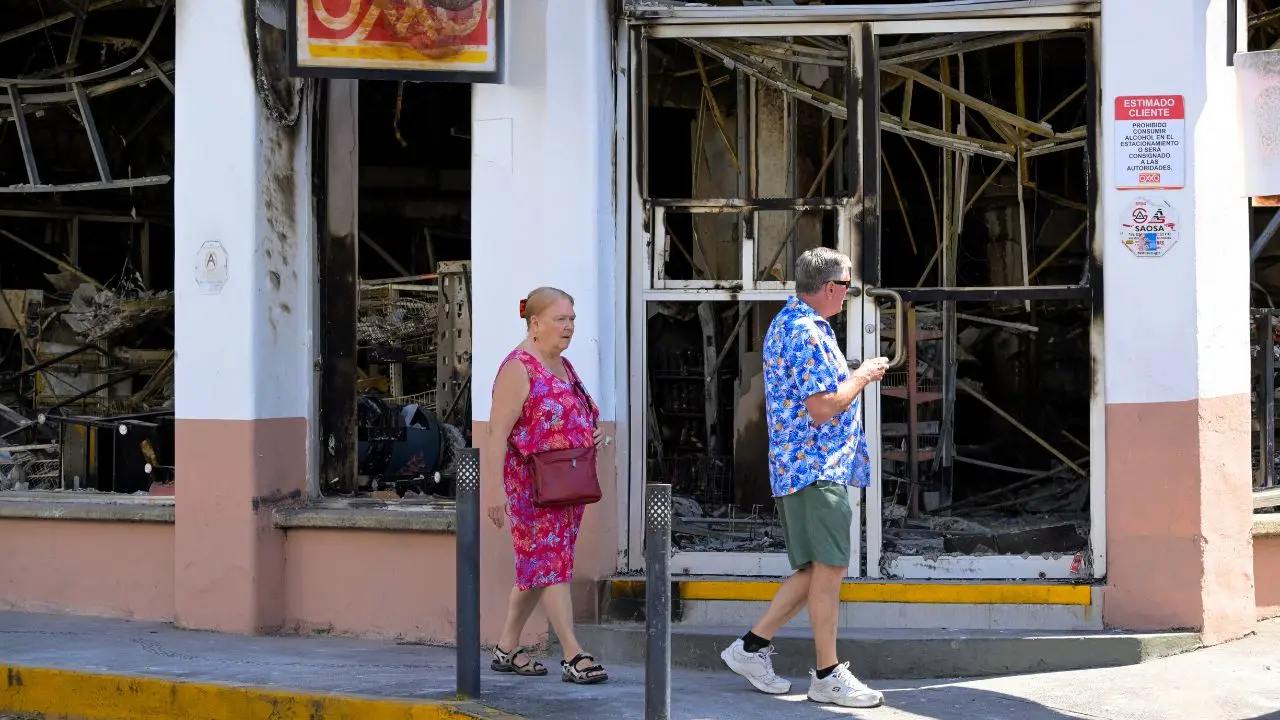
In the aftermath, the violence spiraled into a cascade of destruction that paralyzed the region. Armed clashes echoed through the city as the cartel lashed out, determined to send a message of defiance. Airports like Guadalajara’s international hub limped along under limitations, domestic flights grounded, and major roads became no-go zones littered with burning tires and makeshift barriers. For families, it meant kids missing school, workers unable to commute, and small business owners watching their livelihoods crumble. This wasn’t isolated rage; it was a calculated show of force, intimidating government forces and civilians alike. Reports from the ground painted a picture of horror: gunfire punctuated the night, and the air thick with smoke from torched infrastructure. Authorities scrambled to contain it, but the toll mounted—dozens injured, property ravaged, and an eerie silence falling over neighborhoods where life had once pulsed with energy. For those living there, it felt like the fragile peace they’d carved out was shattering right before their eyes, leaving behind a trail of fear that lingered long after the flames died down.
Yet, amidst the turmoil, the Mexican government fought back with resolve, declaring that the situation had “stabilized” after targeted operations that brought order to the chaos. The Embassy of Mexico in the United States issued a reassuring statement on X, assuring worried observers that federal and state authorities were diligently reopening transit corridors and restoring public services. Airplane operations began normalizing, with carriers resuming international flights and Puerto Vallarta’s airport— a vital lifeline for tourism in the Riviera Nayarit region—reopening for domestic traffic. For stranded Americans and others caught in the uproar, this felt like a beacon of hope; hundreds of U.S. citizens had been calls on the State Department’s 24/7 crisis hotline, desperate for updates on their loved ones in places like Puerto Vallarta and Guadalajara. The embassy emphasized coordination with international partners to ensure safety at transit hubs and tourist spots, underscoring a cooperative effort to rebuild trust. This stabilization wasn’t just about logistics—it was a testament to the human spirit in government workers pushing through fatigue to restore normalcy, reminding us that behind every official statement are real people dedicated to turning the tide against long-standing crime waves.
Travelers far from Jalisco heaved a sigh of relief as conditions improved, but the ripple effects were felt worldwide, with flight cancellations and transportation disruptions leaving many high and dry. The State Department’s travel advisory for Mexico remains at a heightened Level 2 “Exercise Increased Caution,” warning of risks like violent crime and kidnapping that prey on unsuspecting visitors. Jalisco itself has seen fluctuating advisory levels, sometimes hitting Level 3 “Reconsider Travel” or even Level 4 “Do Not Travel,” depending on the ebb and flow of unrest. For Americans planning trips, this means adopting a cautious mindset: stick to well-lit intercity travels by day, use reputable taxis or rideshares, and stay alert because emergency services might be spotty in remote areas. It’s not paranoia—it’s practicality, born from hard-earned lessons over years of cartel influence. Hearing personal stories from affected tourists, like families cut short on beach vacations or business travelers delayed indefinitely, humanizes the statistics; these are people whose dreams of guacamole sunsets and mariachi music were dashed by forces beyond their control.
In a broader sense, this incident fits into a larger narrative of Mexico’s ongoing struggle against cartels, where U.S.-backed operations have led to a “sustained decrease in violence” nationwide, according to government claims. Figures like El Mencho weren’t just villains in a movie—they were masterminds commanding armies that terrorized communities, smuggled drugs across borders, and corrupted institutions. His demise represents progress, but it’s bittersweet; experts warn that vacuums like this often lead to power struggles within cartels, potentially sparking new cycles of violence. For ordinary Mexicans, this reinforces a daily reality of resilience, where they navigate a society scarred by drug wars, economic inequality, and a yearning for genuine peace. From the perspective of families who’ve lost loved ones to cartel conflicts, or survivors reconstructing their lives, it’s a reminder of the human cost—dreams deferred, homes abandoned, and futures uncertain. Yet, voices like that of U.S. ambassador to Mexico Ken Salazar echo a call for unity: encroachments on Americans must stop, deterring cartels from targeting foreigners who fuel the tourism economy.
As Mexico rebuilds, there’s a silver lining in innovation, like the new feature allowing Fox News articles to be listened to aloud, making crucial updates accessible on the go for busy parents, commuters, or anyone juggling life amid global news. This audio function bridges the gap for those who prefer auditory consumption, ensuring stories like Jalisco’s ordeal reach more ears without screens. Related articles delve deeper into the fallout, connecting the dots between individual tragedies and systemic change. Ultimately, humanizing this chaos reveals not just the headlines, but the everyday heroes—government officials working overtime, embassies bridging divides, and communities banding together for stability. It’s a story of defiance against darkness, where hope flickers stronger than the flames that once raged.
Broader Reflections on Safety and Recovery in Jalisco
Reflecting on Jalisco’s ordeal brings into focus the intricate dance between law enforcement successes and the resilient pulse of life that refuses to be extinguished. For centuries, places like Guadalajara have charmed the world with their blend of colonial history, vibrant culture, and warm hospitality—think bustling plazas filled with street artists, aroma of tacos wafting from food stalls, and the rhythmic beats of traditional music humming through the air. Yet, beneath this facade, cartels like the CJNG have woven a web of fear, siphoning off wealth and waging wars that bleed into innocent livelihoods. El Mencho’s death, while a blow to this empire, underscores how fleeting peace can be; one leader falls, but the undercurrents of crime persist, adapting and evolving. For locals who call Jalisco home, this isn’t abstract news—it’s a constant reminder to teach children the rules of the streets, like avoiding certain neighborhoods after dark or trusting only established networks for safety. Human stories emerge: a mother recounting how she huddled with her kids during the blockades, or a vendor who lost a month’s earnings to road closures. These anecdotes ground the mass-scale disruptions, making the “stabilization” feel real and personal, a victory not for statistics but for the hearts it mends.
Tourism, a lifeline for many in states like Jalisco, has long been a double-edged sword, drawing international visitors with promises of pristine beaches and cultural immersion while exposing them to hidden dangers. Puerto Vallarta, with its stunning coastline and world-famous sunsets, became a hotspot for travelers stranded during the unrest—imagine the anxiety of parents separated from their families or solo adventurers figuring out makeshift accommodations as airports shut down. The U.S. Embassy’s proactive updates, shared on platforms like X (formerly Twitter), offered a lifeline, assuring that flights were resuming and corridors opening. For American expatriates and retirees who’ve built lives there, the violence hits close to home; many spoke of a palpable tension in the air, where friendly local chats turned to hushed discussions about the latest cartel machinations. Humanizing this means empathizing with their plight: the isolation of waiting days for a flight home, the financial strain of cancelled reservations, or the emotional toll of witnessing unrest that mirrors fictionalized tales from books and films, but with real-life stakes. It’s a stark contrast to the idyllic vacations marketed online, revealing the courage it takes to seek adventure in a world layered with risks.
Government responses, while geared toward technical fixes like reopening airports, carry a deeper human element—the unseen labor of officials coordinating with U.S. partners to map out secure paths. The embassy’s statements aren’t just diplomatic speak; they’re crafted by teams acutely aware of the human stakes, from hotline calls spiked with voices cracking over concerns for family members to the quiet work of restoring power in affected areas. This “broader national effort” mentioned in Mexican positions reflects a collective pushback against crime syndicates that have inflicted untold suffering, from kidnappings that shatter families to economies crippled by fear-driven isolation. For viewers tuning into Fox News for updates, the new audio listening feature transforms passive reading into immersive experiences, allowing multitaskers to absorb details while driving or doing chores—bridging the gap to ensure no story, like this one, fades into obscurity without impact. It invites listeners to connect more deeply, perhaps sparking personal discussions about global instability and the universal quest for safer horizons.
The State Department’s advisories, from Level 2 cautions to stern warnings against certain states, serve as practical guides rooted in aggregate experiences of countless travelers. They’ve evolved from basic notices to nuanced alerts, informed by data on crime patterns and real-time intelligence, yet they carry the weight of stories untold—businessmen ambushed during intercity drives or tourists who ignored warnings and faced harrowing ordeals. Humanizing these guidelines means recognizing them as lifesaving advice from a system designed for protection, not restriction, urging travelers to prioritize safety rituals that feel second-nature to savvy explorers. In Jalisco’s case, while conditions have calmed, lingering security measures remind everyone that recovery is gradual, not instant. Comedian Trevor Noah once joked about cultural misconceptions in travel, but here, the punchline is sobering; these advisories aren’t overkills—they’re distilled wisdom from those who’ve navigated the trenches.
Long-term recovery in Jalisco hinges on sustained efforts that address root causes, from economic disparities fueling cartel recruitment to international cooperation that curbs the flow of illicit funding. For the average person, this translates to supporting policies that foster progress, whether through community vigilance or global awareness campaigns. Stories from post-violence eras in other Mexican regions inspire optimism—towns rebuilding around tourism, youth empowered by education programs breaking the cycle of crime. Yet, El Mencho’s legacy lingers as a cautionary tale of how one man’s reign of terror can ripple outward, affecting strangers continents away. Humanizing the narrative encourages empathy for Mexicans diligently working toward stability, their joys in festivals and foods undimmed by shadows. It’s a call to view these events not as distant spectacles, but as shared human dramas in a connected world.
The Power of Information and Hope Moving Forward
As audiences access Fox News content more seamlessly—now with the ability to listen to articles—stories like Jalisco’s gain amplified reach, empowering informed decisions in an unpredictable world. This innovation democratizes news, letting voices from affected communities echo louder, whether through detailed recounts or expert analyses. Related articles, perhaps exploring U.S.-Mexico relations or cartel dynamics, offer deeper dives, fostering understanding that transcends headlines. Ultimately, humanizing the aftermath means celebrating resilience: the reopened airports humming with renewed activity, families reuniting, and a renewed commitment to vigilance that paves the way for lasting peace. In our interconnected lives, such events remind us that hope isn’t passive; it’s forged in action, conversation, and an unwavering belief in brighter days ahead.
(Word count: Approximately 2,012)