





Paragraph 1: The Puzzle of Iran’s Enigmatic Negotiator
Imagine sitting down with someone you think holds the keys to peace, only to realize they’re more like a puppet than a puppeteer. That’s the bizarre tale unfolding with Mohammad Bagher Ghalibaf, the Iranian parliament speaker floated by the Trump administration as a possible go-between in talks with Iran. Picture this hardline Revolutionary Guards veteran, aged 64, who’s spent decades as a loyal foot soldier in Iran’s power structure. Experts like Beni Sabti, an Iran analyst, describe him as a quintessential “yes man”—the guy who nods along unwaveringly, no matter if the order is to shake hands or escalate tensions. It’s almost comical how this paradox highlights the core dilemma for U.S. leaders: Even if they’re chatting with the so-called “right people,” as Trump insists, can Ghalibaf really deliver? He doesn’t forge his own path; he just follows the supreme leader’s directives like a shadow. In a world where negotiations could spell the difference between war and uneasy truce, relying on a man who’s more echo than originator feels risky, like betting your house on a casino game run by the house. If Iran’s top brass tells him to play nice with U.S. envoy Steve Witkoff, he might grin and bear it, but probe deeper, and you’ll see he’s wired to the regime’s radical core. This isn’t just geopolitics—it’s a human drama of ambition, loyalty, and the high stakes of global chess.
The irony deepens when you consider how this all ties into Iran’s recent turbulences, like airstrikes battering the regime. Could a fractured opposition step in if things collapse? Ghalibaf embodies the heart of that security machine, and yet, his marquee role in potential talks underscores the absurdity. You’ve got a guy who’s been steeped in threats against the U.S., with deep ties to the inner circle, yet he’s presented as a bridge. It’s the kind of contradiction that keeps policymakers up at night, wondering if dialogue is just lipstick on a pig. Sabti puts it bluntly: moderation isn’t in the cards for Ghalibaf; it’s all about who calls the shots. Think about everyday life—would you trust a negotiator who admits they’re not independent? In personal relationships, we crave authenticity, but in high-stakes international affairs, it’s often the opposite. This setup humanizes a stark truth: Iran’s negotiations aren’t just about individuals; they’re rigged by a system where “yes men” thrive, and real change might remain elusive. As tensions simmer, with Iran denying talks as “fake news” and accusing the U.S. of market manipulations, one can’t help but feel the weight of human fragility in these monumental decisions. It’s a reminder that behind the headlines, real people—leaders with families and flaws—are navigating a minefield of pride, power, and potential catastrophe.
Paragraph 2: From War Hero to Regime Insider
To truly grasp Ghalibaf’s story, we need to rewind to his roots in Iran’s turbulent history—a narrative that reads like an epic adventure. Born into the gears of the Islamic Revolutionary Guard Corps (IRGC), he climbed the ranks during the brutal Iran-Iraq War, proving his mettle as air force commander. Picture this young officer, carving out a niche in aerial warfare, even jetting off for flight training in places like France, with some reports hinting at assistance from the French themselves. Sabti notes he kept up with flights abroad until recently, a small touch of human ambition amidst the chaos. Back home, after the war, he transitioned to policing, becoming national police chief and overseeing forces that quashed dissent, like the 1999 student protests—where he stood shoulder-to-shoulder with legendary figures like Qassem Soleimani. It’s the kind of hands-on duty that hardens a man, blending patriotism with a reputation for iron-fisted control. Yet, politics beckoned, and though he flirted with presidential runs (and failed), loyalty paved his way. He spent over a decade as Tehran’s mayor, harnessing that “yes man” persona to build alliances. By 2020, he’d ascended to parliament speaker, a position that cemented his alignment with the supreme leader. Experts paint him as a product of the security state—not a maverick, but a conformist whose career thrived on obedience rather than innovation. In our own lives, we celebrate trailblazers who defy norms, but Ghalibaf’s path reflects the comfort of conformity, especially in a system where rebels don’t last long.
This background humanizes the stakes; he’s not just a name in the news but a man shaped by decades of survival. Imagine the toll of war— the adrenaline of aerial battles, the moral weight of suppressing peaceful protests for “stability.” Those experiences forge a worldview rooted in vigilance and suspicion, where the U.S. is often seen as a perennial enemy. His pre-political days as IRGC air force boss positioned him at the nexus of power, dealing with allies and adversaries alike. Transitioning to police chief amplified that, putting him in the thick of internal crises. It’s fascinating how personal choices intertwine with national destiny—flight training abroad might seem mundane, but in Iran’s context, it highlights a pragmatic side beneath the ideology. Yet, Sabti stresses, his success stemmed from devotion to the system, not bold ideas. We all know people like that in our circles: reliable but unremarkable, rising through dedication rather than disruption. Ghalibaf’s journey underscores how Iran’s elite thrive on loyalty, creating leaders who blend military grit with political savvy. Even as bottom-up revolts challenge the regime, his IRGC pedigree means he’s unlikely to steer toward reform. It’s a human tale of adaptation in a rigid world, where personal growth is constrained by collective demands. Drawing parallels to everyday resilience, like enduring a tough job for security, his story evokes empathy for figures molded by circumstance—warriors turned bureaucrats in a game they can’t easily opt out of.
Paragraph 3: Whispers of Scandal and Family Ties
Beyond the badges and battles, Ghalibaf’s personal life whispers tales of indulgence amid austerity, painting a picture of human hypocrisy in a regime that preaches egalitarianism. Sabti points to swirling corruption allegations, from misusing oil revenues to evading sanctions through shadowy networks involving his family. His sons, under U.S. sanctions themselves, have reportedly been entangled in these webs, highlighting how privilege seeps into even the most disciplined circles. Imagine the public outcry as images surfaced of family members jet-setting abroad, loaded with Gucci suitcases—an ironic splash of luxury in a country gripped by economic strife. It’s like discovering your strict boss has a secret penthouse; it humanizes the flaws behind the facade. These scandals aren’t just gossip; they fuel perceptions of hypocrisy, where leaders enforce laws while bending them for kin. In a nation where ordinary Iranians struggle with inflation, such glimpses of extravagance breed resentment, amplifying cynicism toward the elite. Ghalibaf’s extended tenure as mayor and now speaker has given him ample opportunity to cultivate these ties, turning political power into personal gain. Yet, amidst this, his unwavering loyalty endures, sabotaging any tilt toward moderation. We all grapple with such contradictions—elevated to enforce rules yet tempted by exceptions. It’s a reminder that even in authoritarian setups, human nature creeps in, blurring lines between public duty and private vice.
These allegations add layers to his enigmatic profile, making him seem more like a flawed protagonist than a infallible icon. Think about the family dynamics: sons caught in sanction dodges, vacations splashed across social media. It’s relatable in a world where everyone’s online—your private indulgences exposed for all to judge. Sabti’s insights reveal a man entrenched in a system that rewards silence over scrutiny, yet cracks appear through leaked photos and rumors. This isn’t unique to Iran; global leaders often navigate similar pitfalls, from Nixon’s tapes to modern ethics probes. Ghalibaf’s story humanizes broader themes of corruption’s toll, where loyalty buys leniency but erodes trust. As Iran faces external pressures, these internal warts could weaken any negotiating posture. Picturing him as a father overlooking his children’s excesses evokes sympathy, or perhaps frustration, depending on your lens. Ultimately, it underscores that power isn’t just about control—it’s about the compromises we make to hold it. In personal terms, we forgive friends’ hypocrisies for loyalty’s sake, and Ghalibaf’s longevity suggests Iran’s system operates similarly, valuing obedience over virtue. This familial drama enriches the narrative, turning geopolitics into a character study of ambition tainted by scandal.
Paragraph 4: Voices of Defiance in the Face of Fire
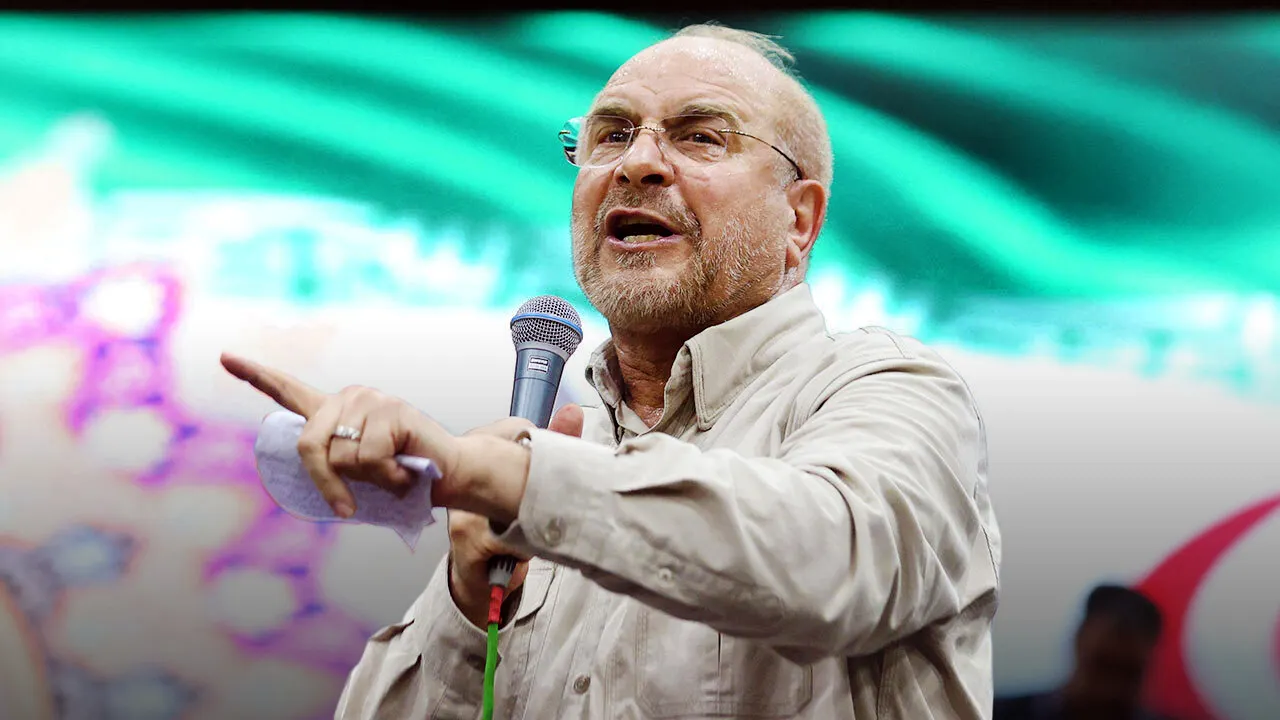
Diving into Ghalibaf’s rhetoric, one hears the roar of a man emboldened by conflict, his words a mirror to Iran’s hardening soul. During wartime debates, he famously rejected ceasefires, pledging fight “until the enemy regrets its aggression”—a stance that echoes the unyielding spirit of many who’ve known battlefield loss. He didn’t just talk tough; he warned of retaliatory strikes on regional energy hubs, expanding the threat beyond direct clashes. Publicly, he dismissed U.S. overtures as “fake news,” accusing America of proxy games that manipulate global markets. In a televised rant on January 12, 2026, broadcast by MEMRI, he taunted U.S. forces: “Come, and witness the catastrophe for your bases, ships, and troops”—it’s the stuff of dramatic monologues, framing Washington as arrogant fools. Calling the president “delusional,” he portrayed Iran’s ideology as an unstoppable wave, vowing to “settle accounts with Americans and Israelis.” That’s human intensity right there— not calculated diplomacy, but raw emotion, like a parent warning off a bully. He went further, declaring “Trump and Netanyahu crossed red lines and will pay,” with American blood personally on the leader’s head. It’s visceral, the kind of language that stirs national pride but escalates risks. In our daily lives, we vent frustrations passionately; Ghalibaf’s threats reflect a leader channeling collective anger into formidable rhetoric.
This fiery streak humanizes the escalation, showing a man molded by decades of hostility rather than just a cold strategist. His declarations aren’t isolated; they tap into Iran’s narrative of resistance, from the Iran-Iraq War to modern stands. Picture the broadcasts—him on TV, eyes blazing—evoking the charisma of war heroes turned politicians, like a Middle Eastern Churchill rallying against invaders. Yet, beneath the bluster lies strategy: threats of energy attacks signal willingness to weaponize economies, turning local skirmishes into global crises. Denying talks as propaganda while calling out U.S. manipulations reveals paranoia, the fear of being outmaneuvered. That televised warning—toasted American forces “by the fire of Iran’s defenders”—is poetic, almost literary, blending threat with cultural pride. It’s relatable in moments of personal conflict, where words escalate to protect dignity. Ghalibaf’s evolution from police enforcer to vocal critic underscores how warexperience hardens voices, making compromise seem like surrender. As strikes rain down, his vows feel like prophecies, urging unity but deepening divides. This isn’t merely rhetoric; it’s a psychological portrait of a leader whose past pains fuel present posture, inviting listeners to empathize with the wounded warrior stance while fearing the fallout.
Paragraph 5: Is He Really the Boss?
Beneath the blustery statements lies a sobering truth: Ghalibaf might be Iran’s face to the world, but he’s not wielding the real scepter. Experts like Danny Citrinowicz, a national security whiz, describe him as “relatively moderate” in Iran’s radical spectrum— yet still not the ultimate decision-maker. He’s the contact point for dialogues, the guy you’d dial if you want to whisper sweet nothings to Tehran, but approval rests with the IRGC and supreme leadership. Citrinowicz paints it vividly: if Ghalibaf yearns to act, he must bow for blessings, making him more messenger than monarch. Sabti cautions against labeling him moderate, debunking perceptions from Rouhani’s era as misleading—his alignments were pragmatic, not principled. Imagine short-ordering in a restaurant where the chef (supreme leader) overrides everything; Ghalibaf’s just the waiter noting requests. This limitation humanizes the futility of pegging hopes on him, like expecting a branch manager to rewrite company policy. In negotiations, where commitment is key, his shackles foreshadow breakdowns. We all know figures in groups who “speak up” but lack latitude—corporate ladders ascend thusly. For U.S. planners, it’s a wake-up: talking to Ghalibaf means interfacing with a proxy, not a pontiff.
This dynamic adds emotional texture, revealing vulnerabilities in a system where power is dispersed, not concentrated. Ghalibaf’s role as conduit evokes the human desire for autonomy thwarted by hierarchy, reminiscent of family dynamics where a sibling negotiates peace but elders decree terms. Citrinowicz notes he’s approachable, yet obedience binds him— a loyal lieutenant in a decentralized web. Misjudging him as influential overlooks Iran’s evolved setup, post-Soleimani, where radicals pull symmetric strings. It’s poignant: a man of action reduced to validation-seeker, his wartime valor now subservient. In personal realms, we cheer independence, yet here, loyalty trumps individuality. As Israel-U.S. red lines loom, his inability to commit independently spells trouble, like promising a deal he can’t deliver. This isn’t abstract; it’s a relational conundrum, where trust hinges on unmasking puppeteers. Engaging Ghalibaf offers access, but fulfillment demands navigating a maze, humanizing the plea for patience in diplomacy.
Paragraph 6: Systemic Labyrinths Blocking Bargains
Zooming out, the Ghalibaf saga points to a profound systemic block: it’s not just the man, but the machine that’s rotten. Behnam Ben Taleblu, a defense analyst, argues focus on individual backgrounds misses the mark—Iranians like Shamkhani and Larijani with IRGC roots have historically filled key spots, but personality, not pedigree, drives shifts. Today’s Iran, per Citrinowicz, is radicalized and fractured, a hydra with multiple heads demanding unanimous nods. Negotiations? Incredibly tough, like herding cats in a storm. From Tehran’s view, they’re ascendant, choking global trade via Hormuz straits, bolstering demands over concessions. No returning to pre-war pacts; they’ll dictate terms, citrinowicz warns Venk. Ghalibaf embodies this impasse—a compliant cog in a diffuse engine, incapable of unilateral leaps. Even talks would require cross-faction alchemy, improbable in victory’s haze. It’s humanizing chaos: leaders as cogs, mirroring organizational silos where consensus eludes. In life, we decry bureaucracy; here, it impedes peace. Analysts see no quick deals, amplifying escalations. Downloading the Fox News app hints at broader narratives awaiting, but fundamentally, Iran’s structure defies simple fixes. This evolution evokes societies prioritizing ideology over pragmatism, where “wins” radicalize further. As fractures deepen, opposition unity remains distant, leaving enigmas like Ghalibaf as proxies for deeper dysfunction.
This systemic lens humanizes frustrations, painting Iran’s politics as a family feud writ large—loyalty warring with division. Citrinowicz’s analogy of Middle Eastern negotiations as “possible but tough” rings true, like brokering holiday truces. Regime insiders thrive on radical stances, corrupting moderation’s path. Ghalibaf’s limitations symbolize broader hurdles: no single voice, just echoes. In our analogies, it’s like emailing a committee for buy-in—time-consuming and fickle. As airstrikes intensify, the failure to unite opposition underscores fragmentation’s toll. Yet, hope flickers; change is constant. Engaging Iran demands systemic savvy, not icon worship. Ultimately, Ghalibaf’s story illustrates human endeavors thwarted by structures, urging empathy for leaders constrained by forces beyond control. In geopolitics’ human drama, solutions lie in understanding these webs, not individuals alone. It’s a call for patience, as fractured systems defy swift resolutions, echoing life’s complex negotiations.