

Venezuela’s Political Upheaval: A Nation at a Crossroads
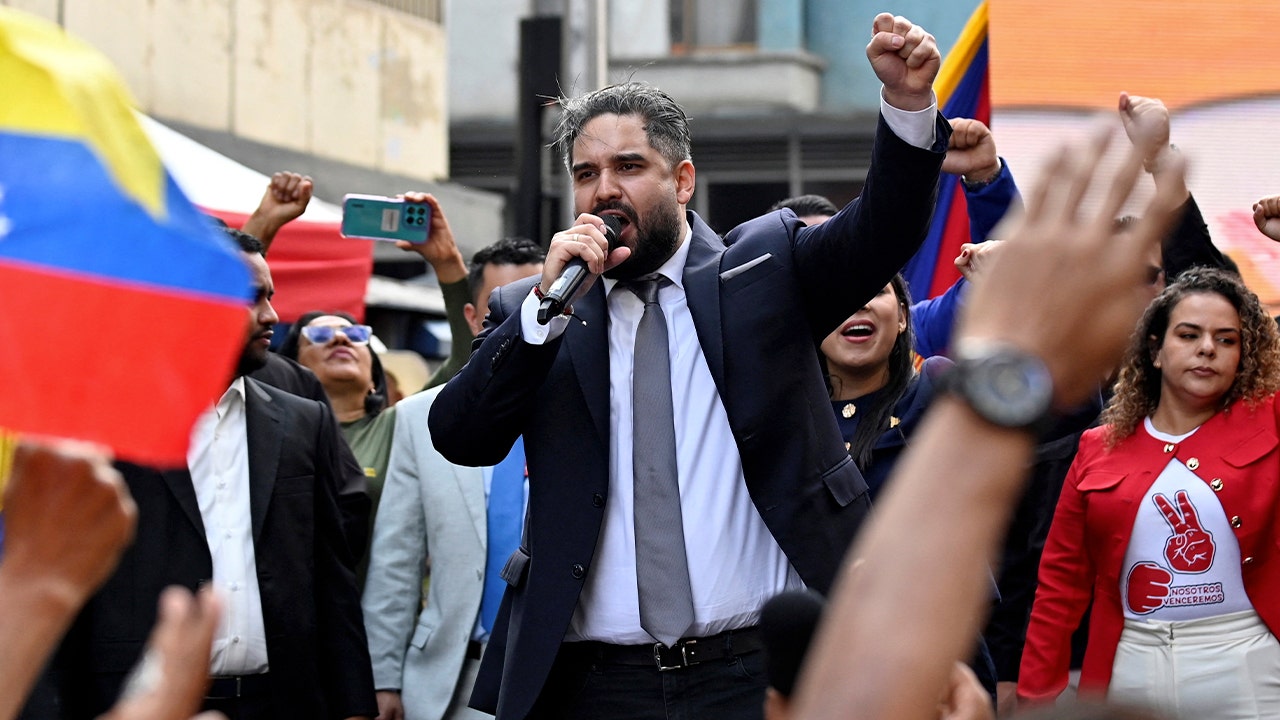
In a dramatic turn of events that has sent shockwaves through international politics, Nicolás Maduro Guerra, son of deposed Venezuelan dictator Nicolás Maduro, has publicly pledged his “unconditional support” to interim President Delcy Rodríguez following his father’s capture by U.S. forces. During his first public appearance since the operation that led to his father and stepmother Cilia Flores being extradited to New York, the younger Maduro, often called “Nicolasito,” addressed his fellow lawmakers with a mixture of defiance and familial loyalty. “Count on me, count on my family, count on our firmness in taking the right steps at the forefront of this responsibility that is now yours,” he told Rodríguez, who until recently served as his father’s vice president. The statement came during a National Assembly ceremony where lawmakers were being sworn in for a term set to last until 2031, representing an attempt at continuity amid unprecedented political turmoil.
Maduro Guerra’s public condemnation of the U.S. action against his father revealed deep concerns about sovereignty and international precedent. Characterizing the operation as a “kidnapping,” he warned that “no country is safe” if such actions become normalized in global politics. “Today, it’s Venezuela. Tomorrow, it could be any nation that refuses to submit,” he cautioned, framing the issue not merely as a Venezuelan problem but as “a direct threat to global political stability.” His words reflected the regime’s longstanding anti-imperialist rhetoric but also touched on genuine questions about international law and the boundaries of U.S. military intervention. Meanwhile, Delcy Rodríguez’s ascension to the interim presidency has placed her in a precarious position—balancing loyalty to the Maduro regime while facing pressure to chart a new course for Venezuela’s future, possibly including working with the Trump administration despite her objections to the military operation that removed her predecessor.
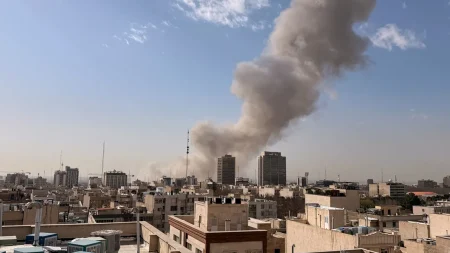
The capture of Nicolás Maduro and his wife Cilia Flores early Saturday morning at their home in Caracas marks a watershed moment in Venezuelan history and U.S. foreign policy. U.S. forces conducted what officials described as “large-scale” military strikes targeting the Venezuelan government before successfully apprehending the couple, who now await trial in New York on narco-terrorism charges. This unprecedented operation against a sitting head of state—regardless of disputed legitimacy—has sparked intense debate about its legal justification and potential consequences. The international community remains divided, with China and Russia condemning the action as a violation of sovereignty, while others like Argentina have applauded the move as necessary for regional stability. The operation represents the culmination of years of escalating pressure against the Maduro regime, which has been accused of election fraud, human rights abuses, and facilitating drug trafficking throughout the Western Hemisphere.
Venezuelan opposition leader Maria Corina Machado, who was awarded the Nobel Peace Prize in 2025 for her persistent advocacy for democratic restoration in Venezuela, has characterized the capture as a momentous achievement for justice and freedom. “It’s a milestone, and it’s not only huge for the Venezuelan people and our future, I think it’s a huge step for humanity, for freedom, and human dignity,” she remarked during a television appearance. Machado, who has spent over a year in hiding from government persecution, envisions a transformed Venezuela emerging from this political earthquake—one that serves as “a security ally, dismantling the criminal hub of the Americas” while simultaneously developing into “the energy hub of the Americas.” Her optimistic vision includes the return of millions of Venezuelan refugees to help rebuild their homeland under the principles of rule of law and open markets, contrasting sharply with the economic collapse and humanitarian crisis that intensified during Maduro’s rule.
The transition of power to Delcy Rodríguez presents both challenges and opportunities for Venezuela’s domestic politics and international relationships. Rodríguez, who has served as vice president since 2018, acknowledged the traumatic circumstances of her ascension, noting that she comes “with sorrow for the suffering inflicted upon the Venezuelan people following an illegitimate military aggression against our homeland.” Despite this characterization, her statement contained hints that she might pursue a more pragmatic approach than her predecessor, possibly including dialogue with the Trump administration. This potential opening comes at a critical juncture when Venezuela’s economy remains devastated by years of mismanagement, corruption, and international sanctions. The country has seen its oil production—once the backbone of its prosperity—collapse to historic lows, while hyperinflation and shortages of basic necessities have driven over seven million citizens to flee the country in recent years, creating one of the world’s largest refugee crises.
As Venezuela enters this uncertain new chapter, multiple competing visions for its future have emerged. The Maduro loyalists, represented by figures like Nicolasito and the newly installed interim president, seek to maintain the revolutionary socialist project initiated by Hugo Chávez while adapting to the shock of Maduro’s removal. The democratic opposition, embodied by Machado and her supporters, envisions a clean break with the authoritarian past and a rapid transition to democratic governance and market reforms. Meanwhile, ordinary Venezuelans, long suffering under economic collapse and political repression, remain cautiously hopeful that this dramatic development might finally open a path toward recovery and reconciliation. The international community’s role will be crucial in the coming months, as various powers exert influence over Venezuela’s transition and economic reconstruction. Whether this moment represents a genuine opportunity for democratic restoration or merely another chapter in Venezuela’s prolonged crisis depends largely on the actions taken by Rodríguez, opposition leaders, and international stakeholders in the critical days and weeks ahead.