


The Capture of Maduro: Echoing the Fall of Noriega 36 Years Later
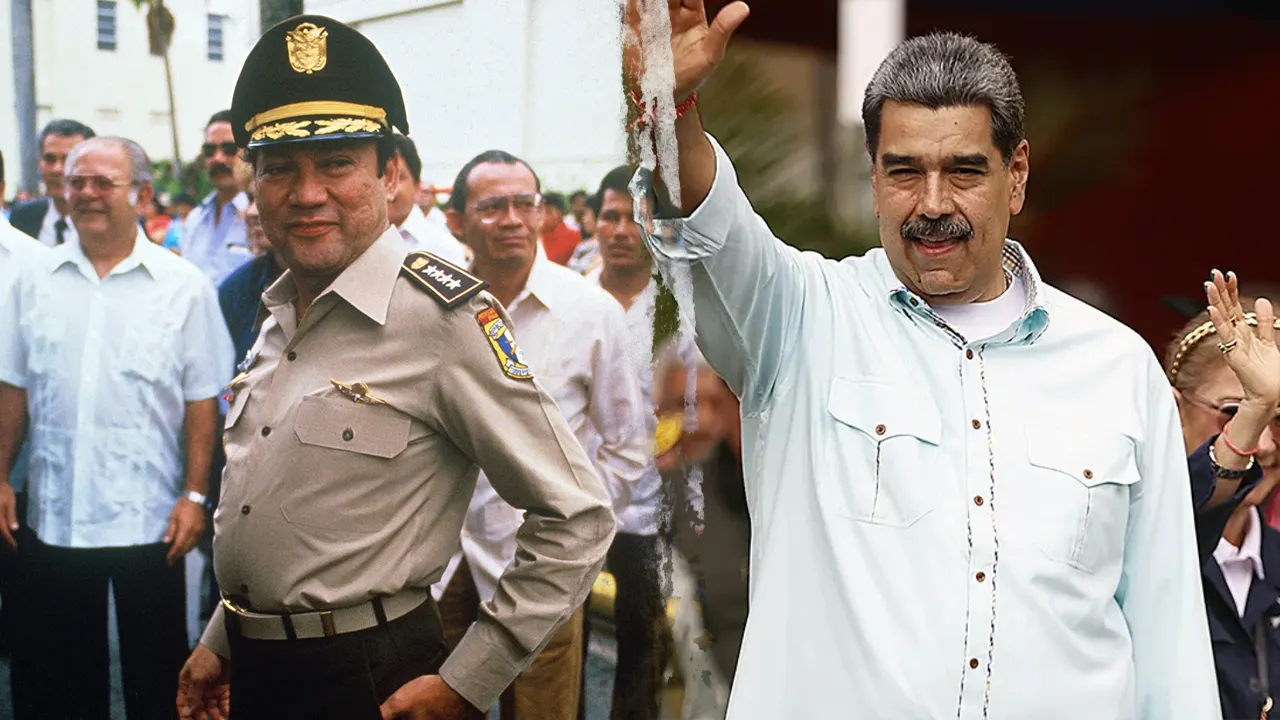
In a stunning turn of events that has drawn immediate parallels to a similar operation decades ago, the United States captured Venezuelan leader Nicolás Maduro and his wife on Saturday, January 3rd. This dramatic operation has revived memories of the 1989 takedown of Panamanian dictator Manuel Noriega, which, in a remarkable historical coincidence, concluded exactly 36 years earlier to the day. Both operations represent extraordinary examples of American interventionism in Latin America, undertaken without explicit congressional approval, and both targeting leaders accused of corruption, drug trafficking, and undermining democratic institutions in their respective countries.
The capture of Maduro came as part of “Operation Absolute Resolve,” announced by former President Donald Trump on Saturday. According to reports, Maduro and his wife were apprehended and flown out of Venezuela in a swift operation that caught many international observers by surprise. The timing is particularly notable as Maduro had reportedly met with Chinese envoys just hours before his capture, adding a layer of geopolitical complexity to an already sensitive situation. The U.S. government has indicated it will temporarily “run” Venezuela until “a safe, proper and judicious transition” can be implemented, suggesting a period of American oversight before power is transferred to new Venezuelan leadership. This intervention follows months of U.S. military operations targeting suspected drug vessels allegedly linked to the Maduro regime in the Caribbean Sea and Eastern Pacific, part of a broader campaign against what American officials have described as state-sponsored narcotics trafficking.
Looking back to December 20, 1989, the parallels become even more striking. Under President George H.W. Bush, U.S. forces launched Operation Just Cause, a surprise invasion of Panama aimed at removing Manuel Noriega from power. The operation was justified on multiple grounds: Noriega faced accusations of conspiring with drug traffickers to transport cocaine into America, manipulating Panama’s 1989 presidential election, and generally operating as a dictatorial figure who threatened both regional stability and American interests. According to the U.S. Army’s official account, the operation represented “the largest and most complex combat operation since the Vietnam War,” with the dual objectives of restoring the democratically elected government of Guillermo Endara and apprehending Noriega on drug trafficking charges. Like the Maduro operation, this military intervention proceeded without explicit authorization from Congress, raising questions about presidential war powers that continue to resonate today.
The Noriega capture, however, differed from Maduro’s in its extended timeline and ultimate resolution. While Maduro was reportedly apprehended in a single day, Noriega evaded immediate capture by taking refuge in the Vatican embassy in Panama City, leading to a standoff that lasted several weeks. U.S. forces employed psychological warfare tactics in an attempt to force his surrender, most famously through “Operation Nifty Package,” which involved military vehicles with loudspeakers blasting rock music—including songs by The Clash, Van Halen, and U2—at deafening volumes around the clock. The psychological pressure eventually worked, and Noriega surrendered to U.S. forces on January 3, 1990—creating the remarkable 36-year symmetry with Maduro’s capture. The human cost of the Panama intervention was significant: 23 U.S. service members died and 320 were wounded, while approximately 200 Panamanian civilians and 314 Panamanian military personnel lost their lives, according to Pentagon estimates reported by the Associated Press.
The aftermath of Noriega’s capture offers potential insights into what might await Maduro. Following his surrender, Noriega was flown to the United States to stand trial on drug trafficking charges. His 1992 conviction in a Miami federal court resulted in a 40-year prison sentence, though he was granted special prisoner-of-war status that allowed him certain privileges, including housing in a separate bungalow away from other inmates and permission to wear his Panamanian military uniform and insignia in court. After serving 17 years in U.S. custody, Noriega was extradited first to France and later to Panama, where he died in 2017. This precedent suggests Maduro could potentially face prosecution in the United States on similar charges of drug trafficking and corruption, though the specific legal approach has not yet been announced. The U.S. Department of Justice had previously indicted Maduro on narco-terrorism charges, with particular focus on the expansion of the Maduro-backed Tren de Aragua (TDA) gang into American cities.
As the international community processes this dramatic development, questions remain about the long-term implications for Venezuela, U.S.-Latin American relations, and the broader geopolitical landscape. The Washington Post has reportedly characterized Trump’s Venezuela operation as an “unquestionable tactical success,” but the strategic outcomes remain uncertain. The capture of Maduro represents the most significant American intervention in Latin America in decades, with potential ramifications for regional stability, Venezuelan sovereignty, and the complex power dynamics between the United States, Russia, and China in the Western Hemisphere. As with the aftermath of Noriega’s removal, the true measure of this operation’s success will likely be determined not by the immediate capture, but by what follows: whether Venezuela can achieve a peaceful transition to democratic governance, whether the country’s humanitarian crisis can be alleviated, and whether the regional ripple effects strengthen or undermine American interests and values in Latin America.