






Venezuela’s Maduro Isolated as Plea to OPEC Underscores Regime’s Desperation
In a telling sign of his growing isolation on the world stage, Venezuelan President Nicolás Maduro has made a desperate appeal to oil-producing nations for support against what he terms “U.S. direct aggression.” According to Latin American energy expert Francisco J. Monaldi, this plea reveals just how precarious Maduro’s position has become as his country grapples with an estimated $150 billion in debt. The dictator’s letter to OPEC Secretary-General Haitham Al Ghais, published by Venezuelan Foreign Minister Yvan Gil, claimed that U.S. actions were “undermining Venezuela’s energy sector” and “threatening global oil stability.” Maduro urged oil-producing countries to “help stop this aggression,” framing the conflict as one centered around oil resources rather than his regime’s widely condemned human rights record and economic mismanagement.
However, Monaldi believes this appeal is merely symbolic posturing, with little chance of success. “OPEC is unlikely to get involved,” he told Fox News Digital, noting that Saudi Arabia, the organization’s key player, “will not want to confront the Trump Administration” and traditionally avoids involvement in such political conflicts. The appeal comes amid escalating pressure from Washington, including President Trump’s recent order to close U.S. airspace over Venezuela—a move that further restricts the regime’s international operations. The U.S. has imposed various sanctions targeting Venezuelan government officials, state-run industries, and financial transactions in response to widespread concerns about corruption, trafficking, and human rights abuses under Maduro’s leadership.
The stakes were raised even further following a reported phone call between Trump and Maduro, during which the U.S. president allegedly told the Venezuelan leader to step down and leave the country. This direct push for political transition highlights the Biden administration’s determination to address what it sees as a destabilizing force in the region. “A regime change is something that the U.S., if they can achieve it, would consider a positive outcome,” Monaldi explained. Yet he emphasizes that Washington’s goals extend beyond merely accessing Venezuela’s vast oil reserves—the country has become a significant security concern for the entire Western Hemisphere.
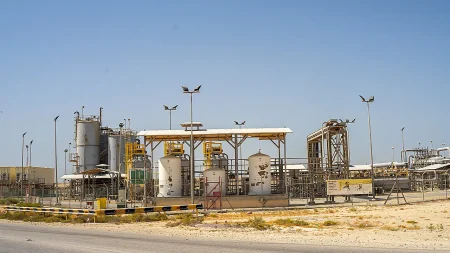
Venezuela’s potential as an energy powerhouse remains tantalizingly unrealized under Maduro’s rule. According to Monaldi, the country “could once again become a major oil producer and produce about 4 million barrels a day in less than a decade, significantly quadrupling their current output.” This level of production would generate approximately $90 billion annually in revenues—comparable to Venezuela’s earnings during its most prosperous periods. However, achieving this potential requires a fundamental shift in governance: “The country could increase production if the oil sector is opened fully to private foreign investment, and that requires regime change.” Such revenues could theoretically allow Venezuela to address its massive debt burden and begin economic recovery, though reaching that production level would take years of concerted effort and investment.
The contrast between Venezuela’s potential wealth and its current reality couldn’t be more stark. “Now Venezuela is a country that is broke and has $150 billion of debt,” Monaldi observed. This economic collapse has occurred despite Venezuela possessing the world’s largest proven oil reserves—a devastating indictment of the Maduro government’s economic mismanagement and corruption. Years of socialist policies, combined with international sanctions and plummeting oil production, have created a humanitarian crisis that has forced millions of Venezuelans to flee their homeland. What was once Latin America’s wealthiest nation now struggles with widespread poverty, food shortages, and a collapsed healthcare system.
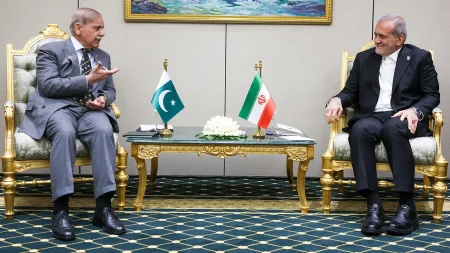
Beyond energy considerations, the United States has broader geopolitical concerns driving its approach to Venezuela. “The U.S. has priorities to preserve the Western Hemisphere as a region in which geopolitical rivals are not strong,” Monaldi explained. Venezuela’s alignment with countries like Russia, China, and Iran has raised significant security concerns in Washington. Additionally, the destabilizing effects of Venezuela’s collapse extend throughout the region, with Monaldi noting that the U.S. “wants to reduce crime and drug trafficking in the region and the negative effects that Venezuela has had” on neighboring countries. The mass exodus of Venezuelan refugees has strained resources across Latin America, while criminal organizations have flourished amid the chaos. For these reasons, Washington sees addressing the Venezuela crisis as not merely an energy or human rights issue, but a fundamental matter of regional stability and U.S. national security interests in the Western Hemisphere.