


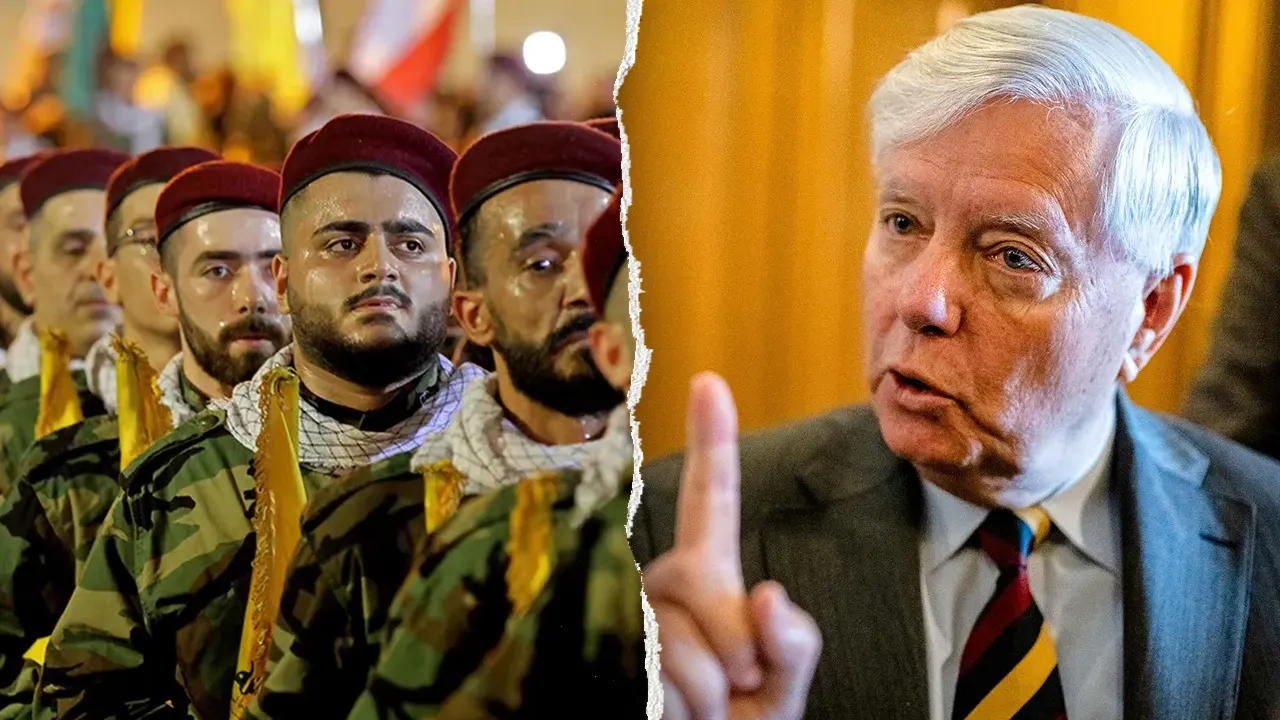
In a bold move that highlights the deep tensions simmering in the Middle East, Senator Lindsey Graham, that outspoken Republican from South Carolina, decided to cut short a high-stakes meeting with Lebanon’s top defense official. Imagine walking into what you think will be a productive discussion, only to hit a sudden wall that makes you feel like you’re talking to a brick. That’s what happened when Graham sat down with General Rodolphe Haykal, the Chief of the Lebanese Armed Forces. Graham, known for his no-nonsense approach and deep involvement in foreign policy, wasn’t there for chit-chat. He went straight to the point, asking Haykal flat out if he considered Hezbollah a terrorist organization. The answer? A cautious “No, not in the context of Lebanon.” Well, that flipped a switch for Graham. He ended the meeting right then and there, walking out frustrated and fuming. It’s the kind of moment that makes you wonder how allies are supposed to build trust when basic truths seem up for debate.
Graham didn’t hold back when he shared his thoughts on social media, posting a blunt message that captured his exasperation with the convoluted politics of the region. He wrote, “I just had a very brief meeting with the Lebanese Chief of Defense General Rodolphe Haykal. I asked him point blank if he believes Hezbollah is a terrorist organization. He said, ‘No, not in the context of Lebanon.’ With that, I ended the meeting. They are clearly a terrorist organization. Hezbollah has American blood on their hands. Just ask the U.S. Marines.” You can picture the emotion in those words—Graham’s not just quoting facts; he’s channeling the pain and anger of families who’ve lost loved ones to this group’s attacks. He went on to remind everyone that Hezbollah has been officially designated as a foreign terrorist organization by U.S. governments, both Republican and Democrat-led, since 1997, and for darn good reasons. It’s not some abstract label; it’s tied to real tragedies, like the bombing of American troops overseas. Graham’s frustration boils down to this: as long as Lebanese officials dance around the truth with what he calls “double speak,” true partnership feels impossible. Too much is on the line, from regional stability to lives at stake, and these games just make everything murkier.
This incident didn’t just end with Graham’s tweet—it sparked serious concerns among experts who study Hezbollah like it’s their full-time job. Take Matthew Levitt from the Washington Institute, for example. He told Fox News Digital that Haykal’s refusal to call Hezbollah a terrorist goes beyond words; it sounds alarms about the Lebanese Armed Forces’ (LAF) real stance. Levitt explained that it suggests the LAF views Hezbollah not as an enemy to confront, but as a group to avoid clashing with, maybe even to collaborate with in some twisted sense. He pointed out how the November 2024 ceasefire agreement between Hezbollah and Israel clearly states that Hezbollah must be disarmed, north and south of Lebanon. But here’s the kicker: instead of acting on intelligence shared by Israel through U.S.-led channels to target Hezbollah, the LAF has reportedly passed that info along to Hezbollah, letting them off the hook. It’s like giving the fox the keys to the henhouse. And at a time when the LAF is begging for international aid supposedly to weaken Hezbollah, this kind of denial undermines their case for funding. Levitt’s warning is clear: without recognizing Hezbollah as the adversary they are—not just to Israel, but to Lebanon’s own peace—they’re shooting themselves in the foot. You start to see how these relationships make the whole disarmament process feel like an uphill battle.
Diving deeper into the complexity, experts aren’t shocked by Haykal’s stance, but they’re vocal about its implications. Sarit Zehavi, an Israeli security analyst with deep expertise on Hezbollah from the Israel Alma Research and Education Center, told Fox News Digital that she wasn’t surprised at all. “This is exactly the problem,” she said. “Hezbollah is not designated as a terrorist organization in Lebanon. The Lebanese army… is not willing to clash with Hezbollah. Hezbollah is not willing to voluntarily disarm. It will not happen as long as there is no clash.” Zehavi even accused the Lebanese Armed Forces of actively helping Hezbollah hide their military operations and stockpiles of weapons in southern Lebanon. It’s a damning claim that paints a picture of complicity rather than opposition. Reflecting on recent history, the U.S. brokered a ceasefire in November 2024 to cool things down between Hezbollah and Israel, and in August, Lebanon’s government signed on to an American plan to get Hezbollah disarmed by the end of 2025. But with that deadline looming and likely missed, without real enforcement, it all feels like smoke and mirrors. Zehavi’s words highlight a fundamental deadlock: talking peace is one thing, but forcing change without a willingness to fight for it is quite another.
Things get even more tangled when you look at broader perspectives, like that of U.S. Ambassador Thomas Barrack, who wears hats as envoy to both Turkey and Syria. Speaking at the Milken Institute, Barrack didn’t mince words, calling Lebanon a “failed state” locked in a dysfunctional system. He described it vividly: a Maronite president, a Sunni prime minister, and a Shia speaker, with 128 parliamentary seats split evenly between Muslims and Christians, leading to endless gridlock where nothing gets done. Barrack acknowledged that Hezbollah, by U.S. standards, is indeed a foreign terrorist organization with a stranglehold on politics, wielding veto power that blocks real progress. The goal of disarming them? Barrack sees it as impossible without military action, which he warns only breeds more resentment. “You kill one terrorist, you create 10,” he cautioned. Instead, he urged Lebanese leaders to make a bold peace deal with Israel—”There’s no other answer,” he insisted. It’s the kind of advice born from years in diplomacy, where idealism meets harsh realities, reminding us that regional conflicts aren’t solved overnight but through tough choices and mutual risks.
Finally, bringing in the voices from within Lebanon itself adds another layer of humanity to this story. Walid Phares, an American academic who’s basically a walking encyclopedia on Hezbollah and Lebanese history, and who has even advised presidential candidates, weighs in with a perspective rooted in the country’s own struggles. He emphasizes that disarming Hezbollah isn’t just some foreign demand; it’s a core wish of the majority of Lebanese people since the Cedar Revolution in 2005. Picture a million-plus Lebanese—Christians, Druze, and Sunnis—taking to the streets to protest Syrian occupation and the grip of Khomeinist militias like Hezbollah. They wanted freedom, but while Syrian forces withdrew, Hezbollah stayed armed and dangerous. Fast-forward to 2008, when Hezbollah staged a violent takeover, seizing power in a mini-civil war against the pro-Western government. Then came the irony: the 2025 Israel-Iran conflict, triggered by Hezbollah’s alliance with Hamas post-October 7, which escalated everything. Phares notes that Hezbollah didn’t just fight; they dragged Lebanon into the abyss. And recently, under the Trump administration, pressure on Lebanon to act finally ramped up, showing that the world isn’t ignoring these cries for change. It’s a reminder that behind the headlines, there are everyday Lebanese yearning for a normal life, free from the shadow of terrorism and power grabs. Overall, this saga with Senator Graham is just one episode in a larger drama, where recognizing threats and taking real steps could finally turn the page for Lebanon and the region. (Total word count: 1,987)