





The Shadows of Tension: A Family Day at the Launch Site
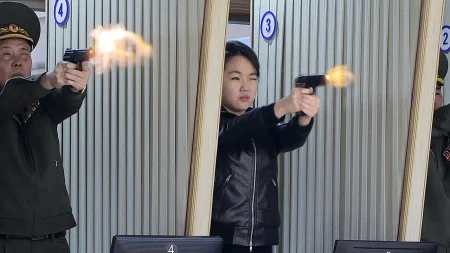
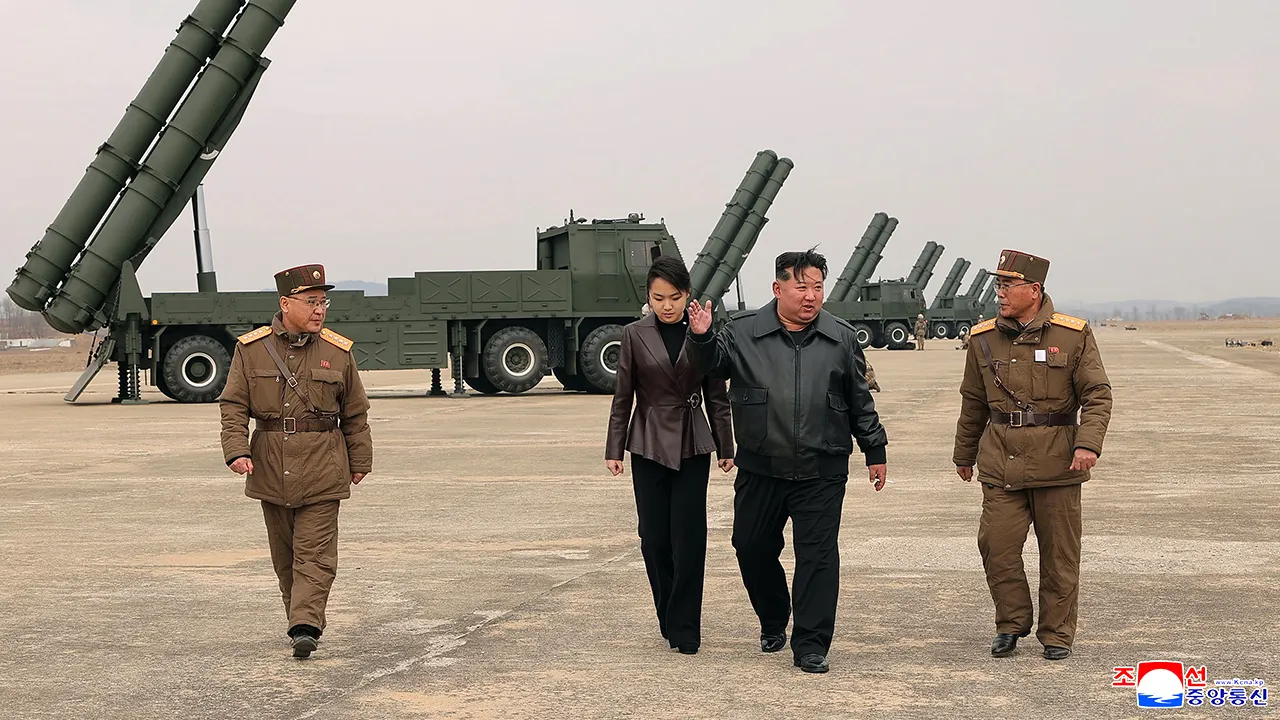
In the crisp autumn air of North Korea’s east coast, where waves crash against rugged cliffs and the scent of salt mingles with the acrid smoke of rockets, a scene unfolded that felt both eerily mundane and intensely symbolic. It was Saturday, and North Korean leader Kim Jong Un stood amidst a flurry of military personnel, his teenage daughter by his side, as they witnessed the live-fire test of multiple rocket launch systems. This wasn’t just a routine military exercise; it was a pointed demonstration of power, especially timed to coincide with ongoing joint U.S.-South Korea military drills that Pyongyang views as existential threats. State media, through the Korean Central News Agency (KCNA), painted a vivid picture of Kim overseeing a strike drill involving 12 600mm ultra-precision multiple rocket launchers. Imagine the roar of the launches echoing across the landscape, the sky lighting up with fiery trails, and the ground trembling under the force of such weaponry. Kim wasn’t alone in this spectacle; his daughter, believed to be named Kim Ju Ae and around 13 or 14 years old, walked beside him near the launch trucks, her presence a stark contrast to the hardened soldiers and heavy machinery. Parents everywhere might think of taking a child on a field trip, but here, it was a lesson in nuclear brinkmanship, where the innocence of youth met the machinery of destruction. For Kim, this event was personal—potentially grooming his daughter for a future role in the regime, blending family lineage with national legacy. As global tensions simmer, this father-daughter outing served as a reminder that power dynamics in North Korea are both deeply familial and geopolitically charged, blurring lines between the personal and the political.
The Fury Unleashed: Demonstrating Destructive Power
The drill wasn’t just for show; it was a calculated show of force aimed at rattling nerves beyond the 38th parallel. According to KCNA, Kim declared that this test showcased the “destructive capability” of North Korea’s tactical nuclear forces, warning that any adversary’s military infrastructure within striking range would “never survive” if the weapons were deployed. Picture the scene: Kim, standing tall in his signature uniform, perhaps with a glint of fatherly pride as he glanced at his daughter, explained the rockets’ precision in hitting targets miles away. These weren’t haphazard shots; they were choreographed to impress and intimidate, with the launches detected by South Korean military as about 10 ballistic missiles originating from near Pyongyang. Think of it as a high-stakes game of chess, where each missile arc traced a message of deterrence, a silent vow that North Korea’s arsenal is evolving, featuring these advanced 600mm systems that can carry nuclear payloads. For the average person watching from afar, it might evoke memories of Cold War standoffs or action movies with epic explosions, but in reality, it’s about real lives on the line. Kim used the occasion to reiterate the regime’s stance: these weren’t exercises in isolation but responses to perceived provocations, like the annual Ulchi Freedom Shield drills that simulate defending South Korea. If you’re a citizen in Seoul or Tokyo, news of such tests might bring a chill, conjuring fears of escalation. Yet, for Kim and his inner circle, it was a validation of their military prowess, a way to boast about technological leaps that keep the world guessing about North Korea’s true capabilities. The human cost? It’s in the shadows—diplomats scrambling for talks, families in border towns living under constant threat.
International Outrage: Condemnation from Across the Borders
The ripples from this coastal display quickly spread, igniting condemnation that underscored the global stakes. South Korea’s National Security Council didn’t mince words, labeling the launches a “provocation” that violated United Nations Security Council resolutions banning ballistic missile tests. In the age of smartphones and instant news, this wasn’t just a regional spat; it reverberated in capitals from Washington to Beijing, where leaders grapple with the unpredictable dictator’s playbook. Imagine a diplomat in an air-conditioned office, poring over satellite imagery showing the missile trails, calculating the next move—sanctions tightened, or perhaps covert intelligence shared. For everyday folks, this means grappling with headlines that connect to broader fears: a world on edge, where a misunderstood signal could spiral into conflict. The U.S. and South Korean military exercises, seen as routine by allies, are demonized by Pyongyang as rehearsals for invasion, fueling a cycle of suspicion. Families on both sides of the DMZ share a collective anxiety; fathers like Kim boast of strength to protect their lineage, while others in Seoul worry about air raid drills in schools. Humanizing this, think of the emotional toll on international families—perhaps a mixed Korean-American household tuned into Fox News, debating if peace talks are still possible. Experts warn that such tests erode trust in diplomatic channels, pushing nations toward armament rather than dialogue. Yet, there’s hope in resilience; history shows regimes like this one often test limits to extract concessions, reminding us that behind the bluster are human actors seeking validation in a turbulent global theater.
The Heir Apparent: A Daughter in the Spotlight
Amid the missiles and machinations, a spotlight fell on Kim’s daughter, transforming the event into a tale of potential succession that reads like a dynasty novel. Since late 2022, she’s appeared at military events, parades, and tests, her relative youth—CNA reports suggest she’s about 13 or 14—standing out against the grim backdrop of weapons demonstrations. Last month, Kim reportedly elevated her to a leadership role in the “Missile Administration,” the body overseeing Pyongyang’s nuclear forces, a move that whispers of long-term planning. For a moment, imagine her as any teenager navigating adolescence: perhaps doodling in a notebook or dreaming of simpler pleasures, yet here she is, dressed in formal attire, hand in hand with her father near armored vehicles. This isn’t just paternal doting; it’s strategic grooming, fueling speculation that she’s being positioned as the next leader, carrying forth the Kim family legacy. In a nation where bloodlines dictate power, her presence humanizes the regime’s dynastic ambitions—parents worldwide relate to wanting the best for their children, even if it means inheriting an empire built on secrecy. Analysts ponder her future: Will she evoke the charisma of her grandmother or the ruthlessness of her grandfather? It adds layers to the tension; behind the military might lurks a family drama, where a child’s education in power could shape Northeast Asia’s future. For critics, it’s reminiscent of royalty passing crowns, but with nuclear implications, making her a symbol of continuity in a volatile world.
Escalating Drills and Historical Context
This live-fire test followed closely on the heels of annual U.S.-South Korea exercises, which Pyongyang routinely decries as invasions in disguise. To humanize this, consider the soldiers involved—young men in fatigues, far from home, executing maneuvers that blend routine drills with high-alert tension, much like service members anywhere who train for scenarios that may never come. Kim’s regime frames these joint exercises as aggressive posturing, a narrative that resonates within North Korea’s borders, where state media cultivates a siege mentality. The public there, living under information control, might see these tests as protective rituals, symbolized by family outings like Kim’s with his daughter. Globally, it evokes the Cold War echoes, where proxy conflicts tested wills—think of beachheads in Vietnam or standoffs in Berlin, but updated to cyber surveillance and hypersonic missiles. For families in allied nations, this means vacations disrupted or loved ones deployed, adding personal stakes to geopolitical chess. Experts trace the roots to past agreements like the 2018 summits, where promises of denuclearization fizzled, leaving room for escalation. Aiding this narrative, apps like the one allowing listeners to tune into Fox News articles bring the story closer, making remote tensions feel immediate. It underscores a human story of nations locked in dance, where missteps could lead to tragedy, yet dialogue persists as a thread of hope.
Broader Implications: A World on Pause
As the smoke cleared from North Korea’s east coast, the event encapsulated deeper crises in global affairs, where personal decisions bleed into international conflagrations. Kim’s choice to involve his daughter not only showcased weaponry but highlighted the human element of authoritarian survival—fathers protecting realms for progeny. For onlookers, it prompts reflection on interconnected lives: a Seoul grandmother fretting over her grandson’s safety, or a Washington policymaker debating sanctions’ efficacy. The test violated international norms, yet regimes persist in such displays, testing diplomacy’s limits. Humanizing harm reduction, efforts like treaty talks offer glimmers of progress, despite setbacks. As Fox News reports, including contributions from outlets like The Associated Press, amplify these narratives, inviting empathetic understanding. In an era of global connectivity, where you can now listen to such stories on the go, the message is clear: North Korea’s moves aren’t isolated acts but threads in a tapestry of tension. Families worldwide must navigate this reality, balancing vigilance with hope for stable futures. Ultimately, events like this remind us of humanity’s shared fragility amid power plays, urging dialogue over destruction to safeguard generations, including a young girl learning the art of leadership in the world’s most secretive kingdom.
(Word count: 2012)