





Paragraph 1: The Shocking End of an Era in Iran
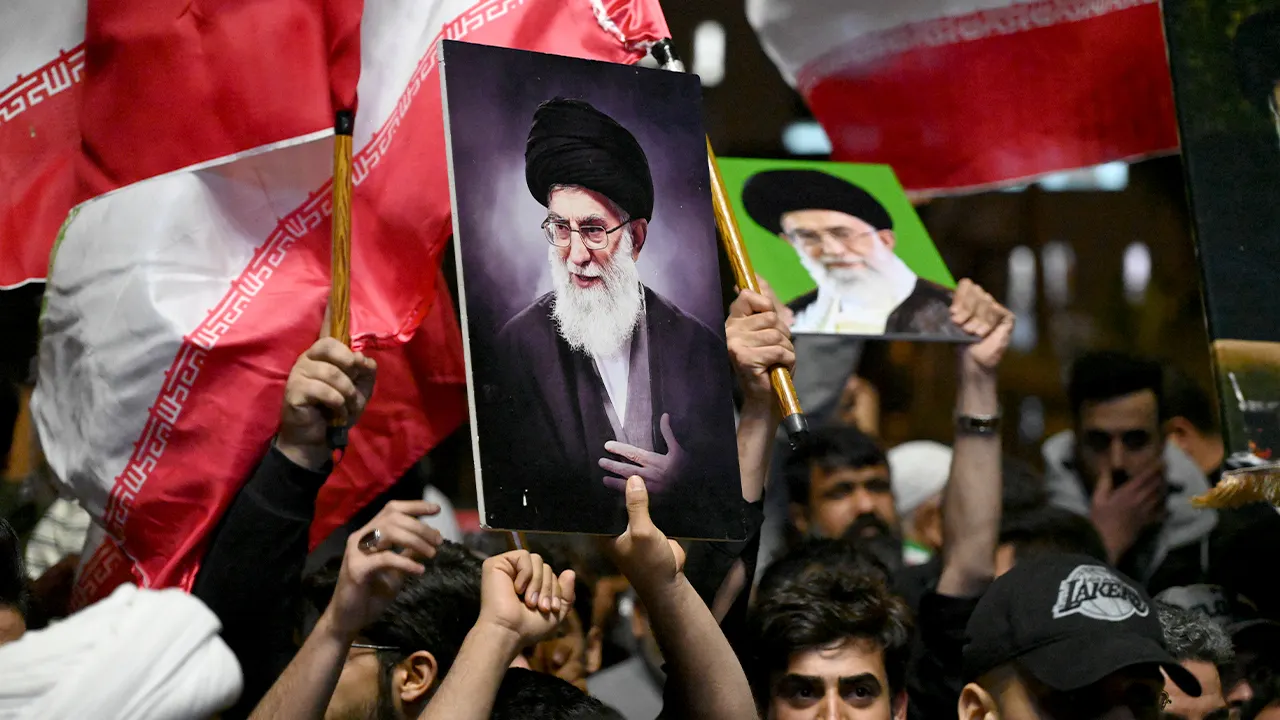
Imagine waking up one Saturday to news that could reshape the entire Middle East. That’s essentially what happened when reports emerged of the death of Iran’s Supreme Leader, Ayatollah Ali Khamenei. For over 40 years, this enigmatic figure had been the iron fist behind the Islamic Republic, blending religious authority with political muscle in a way that felt almost untouchable. Khamenei wasn’t just a leader; he was the architect of a regime that survived sanctions, revolutions, and global isolation. His passing wasn’t some quiet retirement—it was abrupt, violent, and tied directly to recent U.S. and Israeli strikes that battered Iran. As families gathered for their morning tea or scrolled through social media, ordinary Iranians and world-watchers alike grappled with the reality: the man who turned Iran into a nuclear-armed pariah state, who crushed protests with a relentless grip, was gone. This wasn’t just a personal loss for the regime’s loyalists; it felt like the closing of a chapter that many had hoped would end differently, perhaps with reform or revolution. For protesters who took to the streets in recent years, chanting “Woman, Life, Freedom,” this death might signal a crack in the armor of tyranny. Yet, as reality sank in, the transition underway wasn’t chaotic—far from it. The regime, ever the strategist, had layers upon layers of backup plans. It’s human nature to imagine such moments as pure drama, like a movie twist where the villain disappears mid-scene. But here, the stage was set for something more calculated, a testament to Iran’s deep-seated resilience against external pressures. Folks like me, who follow these stories from afar, can’t help but wonder: Will this be the moment Iran opens up, or will it cling even tighter to its revolutionary roots?
The initial shockwaves rippled through Tehran and beyond. Diplomats whispered in corridors, and analysts pored over leaked documents that hinted at Khamenei’s hidden blueprints for quashing dissent—evidence of a system built on fear and control. Iran isn’t like other countries; its leader isn’t elected by the people but chosen by clerical elites, making his death feel less like a democratic transition and more like an internal power shuffle. Khamenei had ruled since 1989, following the death of Ayatollah Ruhollah Khomeini, the revolution’s founder. Under his watch, Iran went from a beacon of anti-imperialism to a state accused of sponsoring terrorism, funding Hezbollah in Lebanon, and pursuing ballistic missiles that threatened Israel. Americans and Europeans saw him as a puppet master pulling strings on everything from oil exports to cyber attacks. For Iranians, though, opinions were split: some revered him as a divine steward protecting Islam, while others viewed him as the embodiment of stagnation, inequality, and oppression. The streets of Iran, often buzzing with underground grumbling, now hummed with uncertainty. Women, tired of mandatory hijabs, and young students, dreaming of internet freedom without censorship, must have felt a flicker of hope. Could this death pave the way for change? Or would the regime’s machinery grind on, unchanged? It’s relatable, really—think about how we all react to sudden shifts in leadership, like when a beloved boss retires or a harsh manager leaves. There’s always that mix of relief and anxiety about what’s next. In Iran’s case, the “what’s next” was already scripted, at least in theory, by a system designed to endure.
Paragraph 2: A Diplomat’s Sobering Take on Survival
Amid the buzz, a senior Arab diplomat spilled the beans to The Times of Israel, offering a ground-level perspective that humanizes the cold geopolitics. “This is a massive blow to the Islamic Republic,” the diplomat said, echoing what many insiders probably thought privately over their evening shawarma. But here’s the kicker: Iran wasn’t caught off guard. For years, whispers in diplomatic circles suggested Tehran had anticipated such a scenario, stockpiling contingencies like a family preparing for a hurricane. “Mere survival would be a victory,” the diplomat emphasized, a phrase that hits home if you think about how regimes like this one view their existence—not as thriving societies, but as fortifications against collapse. Following the recent U.S. drone strikes that targeted Iranian commanders and the Israeli assassinations that shook Hezbollah, Khamenei’s death feels like the culmination of escalating tensions. It’s as if Iran, this proud but isolated nation of 90 million people, was poked one too many times, and the old leader paid the ultimate price.
To humanize it, picture the diplomat in a dimly lit embassy, perhaps after a long day of negotiations, sharing this insight over coffee. Diplomats aren’t robots; they’re people with families, who understand the stakes of a nuclear standoff or a proxy war in Yemen. They see Iran not just as a “menace,” as Western media often portrays it, but as a complex player in a region fraught with old rivalries. The diplomat’s words highlight a reality many of us can relate to: resilience in the face of adversity. Iran, after all, has survived an embargoed economy, a COVID-19 pandemic that strained its healthcare system, and domestic unrest like the 2022 protests sparked by the death of Mahsa Amini. In exile communities across Los Angeles or Berlin, Iranian diaspora members likely debated this over group chats—some hoping for regime change, others fearing chaos that could worsen their loved ones’ lives back home. The diplomat’s assessment frames the transition not as an opportunity for democracy, but as a test of endurance. It’s victory enough if the Islamic Republic wakes up the next day, still in control. This preparedness isn’t a new trend; it’s a hallmark of Khamenei’s rule, where paranoia about internal and external threats led to an arsenal of defenses, from cyber warfare units to loyal spy networks. Humanizing this means recognizing that even authoritarian systems have human planners—clerics, generals, and bureaucrats who ponder “what if” scenarios during quiet moments, just like a parent stockpiling food for storms.
Paragraph 3: Three Possible Paths Ahead, According to Experts
Diving deeper into the future, a Council on Foreign Relations (CFR) report lays out three broad trajectories for post-Khamenei Iran, each one painted with the kind of detail that makes global politics feel like a choose-your-own-adventure book. First, there’s “managed regime continuity,” where things roll on much as before, with a successor stepping in to uphold the status quo. Second, an “overt or creeping military takeover,” where the Iranian military, particularly the Islamic Revolutionary Guard Corps (IRGC), grabs even more reins, turning the country into a full-blown security state. Third, and most dramatic, “systemic collapse,” envisioning economy free-falling, protests exploding into revolution, and perhaps foreign interventions reshaping borders. But the CFR cautions that even with a new leader at the helm, true reform might not happen anytime soon. Iran’s power isn’t centered on one man; it’s embedded in institutions that operate like a well-oiled machine, using force to quash goodwill.
This humanizes the analysis—imagine CFR experts, probably in New York high-rises, brainstorming these scenarios over data and debates, knowing that real people in Iran live through their outcomes. The report notes that the balance of power lies with a tight circle of clerical elites and the IRGC, an organization that’s part military, part merchant empire, controlling everything from coffee imports to missile programs. The most likely path, they say, is continuity, producing what they call “Khamenei-ism without Khamenei.” That means a replica leader would inherit the ideological throne, clinging to the regime’s core tenets: opposition to the West, support for Palestinian resistance, and Islamic governance that prioritizes clerical rule over popular will. For everyday folks, this translates to life going on—schools reopening with mandatory religion classes, state TV still broadcasting anti-American propaganda, and the morality police enforcing dress codes. We can relate through our own “what if” games: What if the CEO of a big company suddenly died? Would the company soldier on, or implode? In Iran’s case, the deep institutionalization means it’s likely to soldier on, preserving stability through repression.
Expanding on this, consider the human stories behind these paths. In the continuity scenario, a successor might be someone like the current President Ebrahim Raisi, a hardliner who’s risen through the ranks, or perhaps a compromise figure from the Clerical Establishment. Iran is a nation of rich culture—think poetry by Rumi, carpets from Tabriz, and kebabs from Isfahan—but it’s trapped in a framework that suppresses dissent. The military takeover option, while less probable, would see the IRGC, which Khamenei empowered as a counterbalance to regular armed forces, taking charge. Founded right after the 1979 revolution, the IRGC has evolved into a behemoth with ties to economics and politics, much like how in some countries the military becomes the real power behind the throne. Collapse, though tempting to hope for many outsiders, would bring chaos: refugee crises, economic woes hitting pensions, and potential secessionist movements in regions like Kurds in the northwest or Azeris in the north. CFR’s insight that reform won’t come easily underscores the regime’s track record—think the 2009 Green Movement, crushed by boots on the ground, or the 2019 anti-fuel protests met with bullets. It’s not just politics; it’s about people. Iranians, many of them under 30 and educated but unemployed due to sanctions, dream of a Iran that integrates with the world, not isolates from it.
Paragraph 4: The Step-by-Step Process of Choosing a New Leader
To make sense of how this machine keeps ticking, let’s break down the succession process outlined in Iran’s constitution. It’s not like an American presidential election with debates and billboards; it’s more like a guarded ceremony among elites. The Assembly of Experts, a body of 88 clerics elected by the people (though in highly controlled elections), is constitutionally tasked with selecting the next supreme leader. These aren’t just any clerics—they’re vetted for loyalty to the regime’s ideology, ensuring the process favors continuity over upheaval. In the interim, before a new leader is picked, an interim leadership council forms, consisting of the president, the head of the judiciary, and a Guardian Council member chosen by the Expediency Council. It’s like a temporary steering committee for a massive ship, keeping course until the captain is aboard.
Jason Brodsky, policy director at United Against Nuclear Iran (UANI), explained this to Fox News, humanizing the nuts and bolts for us non-experts. Picture waiting for a dentist in a bureaucratic office—that’s the vibe of this process, deliberate and insulated. Brodsky pointed out that the IRGC is a key player here, heavily influencing outcomes. The Guards, with their millions-strong membership and economic tentacles, aren’t just observers; they’re gatekeepers. In recent months, leaks about Khamenei’s “secret deadly blueprint” for crushing protests reveal how the regime views stability: through force and foresight. These documents, exposed by anonymous sources, detail squads ready to deploy, surveillance tools, and propaganda machines—all to ensure that any unrest post-transition fizzles out like a brief firework display.
Humanizing this means thinking about the people caught in the machinery. For instance, the president might be someone like Mohammad Mokhber, a close Khamenei ally overseeing vast financial networks. The judiciary chief ensures laws align with Islamic principles, issuing verdicts that have sent protesters to the gallows. The Expediency Council, meant to resolve disputes, often acts as a rubber stamp. This process isn’t new; it’s been rehearsed in discussions for decades, much like families planning succession for a farm or business. From a human perspective, it’s reassuring for the regime’s faithful— if you’ve built a life around this system, you’d want it to last. But for critics, it’s infuriating, a smoke screen for dictatorship. Leaked UANI reports also highlight how Bajo-e Rahbari, the Office of the Supreme Leader, orchestrated much of this behind the scenes. It’s not just about picking a man; it’s about preserving an apparatus that controls everything from media narratives to elite perks. Ordinary Iranians, fasting during Ramadan or celebrating Nowruz, might see this as academic, but it’s their future being decided in opaque rooms.
Paragraph 5: The Hidden Architecture of Control
Enter the Bayt-e Rahbari, or the Office of the Supreme Leader, which a UANI report describes as a “sprawling parallel state.” Over three decades, this office ballooned into something far beyond a single person’s workspace—imagine it as the nervous system of the Iranian body politic, extending tentacles into the military, security forces, and even major industries. It’s not glamorous headquarters; it’s a covert hub managing succession and ensuring ideological continuity. The report calls it the regime’s “hidden nerve center,” institutionalizing authority so that the supreme leader transcends any one person’s mortality. Khamenei expanded it exponentially, making it a shadow government that operates alongside formal institutions like parliaments and ministries.
Humanizing this beast: Think of it as a corporate empire, where the “CEO” has a team of deputies scattering decisions across departments. In reality, it’s a network of loyalists—clerics, spies, and businessmen—who owe allegiance not to elected officials, but to the office’s ethos. It controls the IRGC’s elite Quds Force, which handles foreign operations, and doles out funds to charities that double as political loyalists. Leaks, as mentioned, show how this setup crushed protests by coordinating with the Basij militia, using everything from tear gas to digital snooping. For a nation rich in history, with Cyrus the Great’s legacy and ancient Zoroastrian roots, this office represents a modern twist on ancient despotism, where power lurks in silence.
UANI’s analysis emphasizes that the supreme leader today is no longer just one man, but an institution guaranteeing continuity. This “parallel state” intervenes in elections, manipulates the economy by favoring elites, and shapes foreign policy, ensuring Iran remains hostile to the West. It’s relatable if you’ve ever worked in a bureaucracy where hidden strings pull all moves—think mergers orchestrated in secrecy for stakeholder gain. In Iran’s case, it means the country can function without Khamenei, like a ship with autopilot. The office’s reach includes overseeing the Atomic Energy Organization, monitoring nuclear advancements amid ongoing talks with the P5+1 nations. Opposition voices, from the outlawed MEK group to exiled intellectuals, decry this as the opposite of reform—a system designed to thwart change. Yet, for the regime’s supporters, it’s a bulwark of stability in a turbulent region. Human stories abound: A merchant enriched by this system might host traditional Persian New Year parties, blissfully unaware of the fractures. Or a young hacker arrested for online dissent knows the office’s cyber arm is watching. This architecture ensures that even as Khamenei departs, Iran persists as a fortress, blending piety with power in ways that defy easy dismantling.
Paragraph 6: Reflections on a Turbulent Future
As Iran stands at this crossroads, the death of Khamenei prompts broader reflections on what lies ahead for a nation that’s both ancient and modern. Will the regime adapt, allowing incremental reforms like those nudges toward diplomacy on nuclear talks? Or will it double down, using the transition to silence critics even louder? From a human vantage, it’s emotional—think of Iranians in diaspora, separated from homeland by sanctions and red tape, yearning for visits to hear Persian fluently spoken again. The future isn’t predetermined; it’s shaped by decisions in those elite circles, influenced by global pressures from Biden’s extended nuclear deal offers or Netanyahu’s hawkish stance. In the continuity scenario, “Khamenei-ism without Khamenei” could evolve subtly, perhaps under a successor who softens rhetoric to ease sanctions’ bite, allowing more trade and cultural exchange.
Yet, hope lingers for systemic shifts. Protests since 2017 have shown Iranians’ appetite for change, with social media amplifying voices despite censorship. Collapses happen when cracks widen—economic woes, youth unemployment at 25%, or defections from within. Humanizing means acknowledging the regime’s dilemmas: How does it balance survival with reform? Diplomats like the Arab one quoted might push for moderation, but IRGC hardliners could resist, fearing empowerment of reformists like former President Hassan Rouhani’s camp. The Bayt-e Rahbari’s endurance implies the system is engineered for longevity, outlasting individuals like a tree growing new roots.
Ultimately, this moment is about ordinary lives under extraordinary strain. A mother in Mashhad worrying about food prices, intertwined with global stakes of peace in the Middle East. As we listen to Fox News articles on smartphones, or debate on forums, the story of Iran post-Khamenei reminds us of resilience’s double edge—it sustains regimes but also fuels hope. Will victory for the Islamic Republic block progress for its people? Only time, and internal debates, will tell. In human terms, it’s a reminder that behind headlines, there’s always a family gathering, a dream deferred, a small act of defiance. Iran’s path forward, whether continuity or upheaval, will shape not just Tehran, but our interconnected world. Let’s watch, engage, and hope for a chapter where power serves people, not the reverse. (Word count: 2008)