




Rising Global Terror Threats: Israel Warns of Accelerating Attacks
In the wake of a deadly attack at a Hanukkah celebration on Sydney’s Bondi Beach, senior Israeli intelligence officials have revealed that their warnings to Australian authorities were part of a much broader alert system tracking an alarming global trend. According to these sources, there has been a significant acceleration in attempted terror attacks across Western nations, with targets expanding beyond Jewish communities to include Christians and large public gatherings, particularly during religious holidays. “We stopped a few ticking bombs, the target was on people’s heads,” a senior Israeli intelligence official told Fox News Digital, suggesting that Australia’s recent experience is not an isolated incident but part of a disturbing pattern. These officials claim that recent months have revealed numerous attempted and disrupted plots throughout Europe, North America, and beyond, indicating a sustained global threat rather than random acts of violence. The scale of prevented attacks would be shocking to the public, with one official stating, “If you knew how many terror attacks we exposed and prevented, your jaw would drop.”
The sophistication of these terror networks lies in their deliberate obfuscation of origins and connections. Israeli intelligence reports that extremist and state-linked networks are building global terror infrastructures while carefully masking their sources, particularly Iranian involvement. These networks frequently utilize non-Iranian nationals at various operational stages—from logistics and intelligence gathering to financing and execution—effectively blurring any connection to Tehran. Some operatives are recruited from migrant or refugee backgrounds, while others come from criminal elements or are hired proxies. Communication methods have evolved to evade detection, relying heavily on encrypted messaging and clandestine in-person meetings, sometimes conducted outside the target country. In some cases, instructions are delivered remotely through secure channels that bypass standard telecommunications monitoring, making these networks increasingly difficult for security services to penetrate and disrupt before attacks occur.
The current threat landscape is characterized by a concerning convergence of extremist ideologies. Israeli assessments indicate that jihadist ideology, lone-actor violence, and state-linked activity now coexist in the same ecosystem, fueled by online radicalization and global instability. Many plots are deliberately unsophisticated, making early detection challenging while still maintaining the capacity to cause mass casualties. A senior foreign diplomatic source described this phenomenon as a “global contagion effect,” where attacks are amplified online, celebrated across extremist networks, and rapidly imitated elsewhere. This dynamic creates a self-perpetuating cycle of violence that transcends geographical boundaries. According to Israeli intelligence officials, the threat extends far beyond Jewish communities, with terror cells being exposed “in Germany, Greece, Austria—but not only Europe—also in South America, India and Thailand,” though specific details remain classified for security reasons.
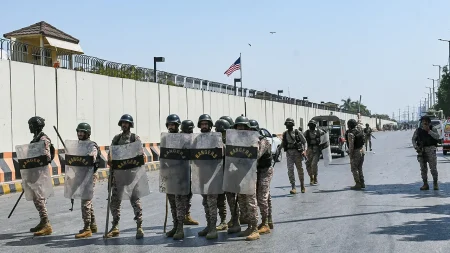
The appeal of these attacks to extremists lies in their relatively simple execution requirements while producing disproportionate psychological and political impact. Christian communities and large civilian gatherings are increasingly vulnerable, particularly during religious holidays and symbolic events that attract crowds. This concern has manifested across Europe in recent weeks, with authorities significantly increasing security at Christmas markets and holiday celebrations amid warnings about seasonal events becoming prime targets. Armed patrols, barriers, and enhanced surveillance have been deployed in multiple cities as officials assess elevated risks tied to jihadist-inspired attacks and lone actors. The threat’s immediacy was highlighted when U.S. federal authorities recently announced they had foiled a New Year’s Eve terror plot, arresting suspects accused of planning coordinated attacks involving improvised explosive devices—underscoring both the scale of the threat and the critical importance of early intelligence intervention.
The broader security environment has deteriorated significantly following two years of conflict in the Middle East, which Israeli intelligence sources say has energized radical Islamist movements globally. Of particular concern is the ongoing instability in Syria, which could create conditions allowing ISIS to regroup and once again project influence beyond the region. “I’m worried about Syria and that ISIS will return,” warned a senior intelligence source, noting that renewed activity there could inspire further attacks across Europe, Australia, and North America. The growing prevalence of lone actors and sleeper cells presents a significant challenge to Western security services, as individuals with minimal resources can carry out deadly attacks that trigger copycat violence. These attacks often require little sophisticated planning or materials, making them harder to detect through traditional counterterrorism methods that focus on complex plots or unusual procurement patterns.
While Australian authorities have not explicitly linked the Bondi Beach attack to foreign intelligence direction, Israeli officials insist the case fits into a wider global pattern of sustained attempts at terrorist violence. Many of these potential attacks never become public knowledge because they are disrupted in their planning stages by intelligence services working largely behind the scenes. “We see it everywhere,” emphasized the senior intelligence official, adding that “most of what we stop, the public never hears about.” This invisible work of prevention highlights the critical role of international intelligence cooperation in addressing what Israeli sources describe as an increasingly complex and diffuse threat landscape. The current situation demands enhanced vigilance from both security services and the public, particularly as extremist networks adapt their tactics to exploit vulnerabilities in open societies and during times of celebration when crowds gather and security might be focused on traditional concerns rather than evolving threats.