






Israel’s Military Technology Success Story: From Small Nation to Global Arms Exporter
Despite its controversial political standing, Israel has emerged as a surprising powerhouse in the global defense industry. This small nation, comparable in size to New Jersey, has climbed to become the world’s 8th largest arms exporter with an impressive $15 billion in sales in 2024—a record-breaking figure that positions Israel behind Britain but ahead of countries like Turkey and South Korea. The success story of Israel’s defense industry illustrates how innovation and necessity have transformed a small nation surrounded by historical adversaries into a leading provider of military technology that countries worldwide are eager to acquire.
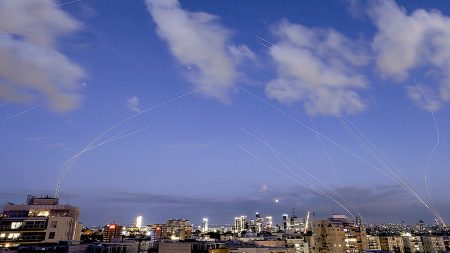
Israel’s customer base spans across continents and includes unlikely buyers. European nations represent the largest market segment, with Germany and Finland leading purchases, but the client list extends to India, Thailand, and Greece as well. Perhaps most surprising is the growing business relationship with several Muslim-majority countries including Morocco, the United Arab Emirates, and Bahrain—nations that have historically maintained distance from the Jewish state but now purchase Israeli missiles, drones, and cybersecurity systems. This commercial success transcends political differences, as military decision-makers worldwide recognize the value of Israel’s battle-tested equipment, with the Iron Dome missile defense system being particularly sought after for its proven effectiveness in real combat scenarios.
The latest breakthrough in Israel’s defense technology arsenal is the Iron Beam—a revolutionary laser system capable of neutralizing incoming missiles, mortar rounds, and drones at distances up to six miles. What makes this system particularly remarkable is its cost efficiency: while conventional interceptor missiles typically cost between $100,000 to $1 million per unit, the Iron Beam’s laser technology requires only electricity to operate, bringing the cost down to approximately $2 per interception. As Yuval Steinitz, chairman of Rafael Defense Industries (the manufacturer of Iron Beam), colorfully explained: “With the laser, the only cost is electricity. It is like between $1 and $2—less than the price of a hot dog in New York.” This cost difference represents a paradigm shift in defense economics, potentially saving billions in ongoing conflicts where thousands of interceptors might otherwise be required.
Beyond cost savings, the Iron Beam’s speed provides a critical tactical advantage. Unlike conventional interceptors which, despite their velocity, require time to reach targets, laser technology operates at the speed of light. “We have already used it against UAVs launched by Hezbollah in the north and missiles from Iran. It works,” confirms Professor Issac Ben-David from the University of Tel Aviv, who previously headed research and development at Israel’s Ministry of Defense. “The most important advantage is, once you see the target, it is intercepted at the speed of light. It takes a fraction of a second and the laser is already destroying it.” This speed advantage is particularly valuable when defending against short-range threats from places like southern Lebanon, where conventional rockets take less than a minute to cross into Israeli territory—giving traditional defense systems precious little time to respond.
The successful deployment of the Iron Beam represents a historic achievement in military technology. After decades of unsuccessful attempts by various nations to develop practical battlefield laser systems, Israel has become the first country to effectively use such a weapon in actual combat conditions. Initial deployment will focus on Israel’s northern border with Lebanon, but plans already exist to expand applications to include naval vessels and strategic air bases. The system’s potential has Rafael’s Steinitz predicting: “This is just the beginning of a new era. In time, maybe five years, it will enable us to shoot down every hostile object in the air around Israel. It’s really a game changer.” The technology’s implications extend far beyond Israel’s immediate security concerns, potentially revolutionizing how nations worldwide approach missile defense.
This technological breakthrough wasn’t achieved in isolation but represents the fruit of international collaboration. Rafael developed the Iron Beam in partnership with American defense giant Lockheed Martin, supported by $1.2 billion in funding from the Pentagon. This partnership highlights the mutual benefits of U.S.-Israeli defense cooperation, with the technology already being shared with the U.S. Army’s directed energy program. As Steinitz acknowledged, the relationship is fundamentally asymmetric but mutually beneficial: “We cannot do without the United States. But sometimes in a partnership, even the dwarf can contribute to the giant.” This humble assessment belies the significance of Israel’s contribution—a nation that has transformed the necessity of self-defense into technological innovation that now protects not only its own citizens but potentially those of its allies worldwide, including the United States.