





NATO Concerns Grow as U.S. Seizes Russian-Linked Oil Tanker in North Atlantic
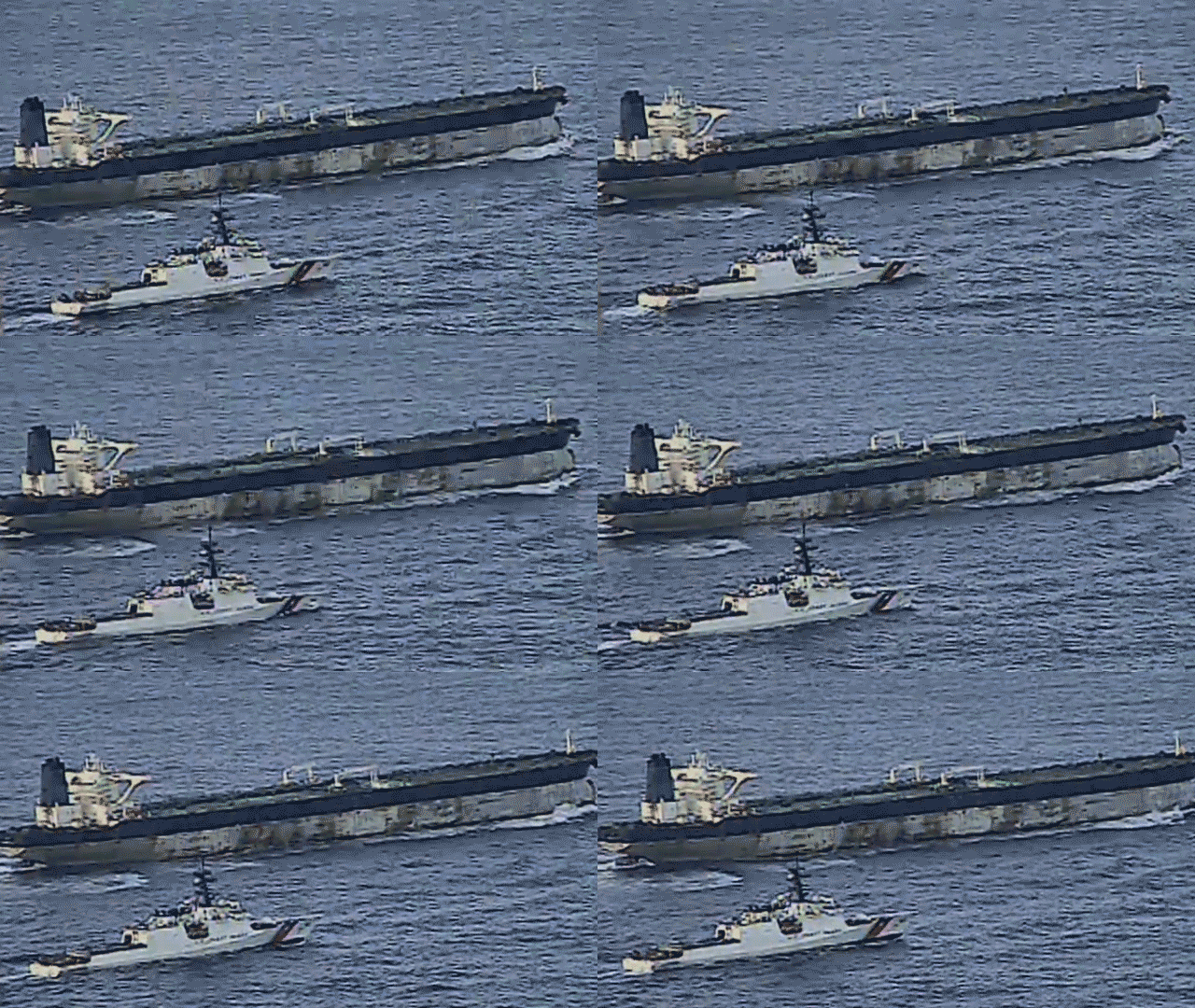
The recent seizure of the Marinera, a Russian-linked oil tanker, in the North Atlantic has brought to light significant concerns among NATO and Nordic-Baltic governments regarding “dark fleet” vessels and their crews. The U.S. military and Coast Guard personnel boarded the vessel as it operated between Iceland and the United Kingdom, citing deceptive shipping practices that included flying a false flag and violating sanctions. This incident has highlighted a growing issue in maritime security, with Michelle Wiese Bockmann, a Windward maritime intelligence analyst, noting that the Marinera’s ownership had recently been transferred to Burevestmarin LLC, a Russian company. The seizure represents a broader international effort to crack down on sanctioned oil transportation networks, particularly those connected to Venezuela’s shadow fleet.
The status and treatment of crew members aboard these vessels has become a point of contention between Russia and the United States. Following the seizure, Russian authorities demanded the “humane treatment and repatriation” of the crew members, who are reportedly Russian nationals. However, White House Press Secretary Karoline Leavitt firmly rejected these demands, stating, “This was a Venezuelan shadow fleet vessel that had transported sanctioned oil. The vessel was deemed stateless after flying a false flag, and it had a judicial seizure order. And that’s why the crew will be subject to prosecution.” This stance indicates the U.S. government’s determination to hold accountable not just the vessels and their owners, but potentially the crew members who operate them as part of sanctions evasion networks.
There’s growing concern among NATO and the Nordic-Baltic 8+ group of governments about the personnel aboard sanctioned oil tankers, particularly regarding “unauthorized people” and “armed guards.” Wiese Bockmann pointed out that the presence of armed personnel on these vessels is “highly irregular,” as such security measures are typically reserved for ships transiting high-risk areas like the Gulf of Aden or the Red Sea, where threats from Houthis or pirates are significant. “There is a blurring of commercial and military shipping around the dark fleet,” she explained, adding that this concerning development has “really only emerged in the last six or seven months.” This militarization of commercial vessels represents a new challenge for maritime security forces and potentially signals a more aggressive approach to sanctions evasion by Russia and other nations under international restrictions.
The crews of these “dark fleet” vessels often present a complex multinational makeup, typically involving a Russian master with crew members from China, India, or the Philippines. This international composition can complicate legal proceedings and diplomatic responses when vessels are seized. Adding to this complexity is the increasing trend of holding crews personally accountable for their roles in sanctions evasion. European authorities have begun targeting captains who facilitate “dangerous deceptive shipping practices, such as spoofing and going dark,” with Wiese Bockmann citing recent examples: “The EU recently sanctioned the captain of a tanker who refused orders from the Estonian navy to be stopped for inspection last May. And the French charged a captain over his refusal to comply with orders and failure to justify a flag’s nationality after authorities intercepted a dark fleet tanker in the Atlantic last October.”
The seizure of the Marinera is not an isolated incident but part of a broader strategy to target Venezuela’s shadow tanker fleet. Simultaneously with the Marinera operation, a second vessel, the M. Sophia, was boarded by U.S. authorities in international waters near the Caribbean while en route to Venezuela. These coordinated actions demonstrate an escalation in enforcement efforts against sanctions evasion networks that connect Russia, Venezuela, and potentially other nations under international restrictions. The Russian Foreign Ministry stated it was “closely following” the situation with the Marinera, according to state-run TASS news agency, indicating the diplomatic sensitivity of these maritime enforcement actions.
These incidents highlight the evolving nature of sanctions enforcement in international waters and the increasing willingness of Western powers to take direct action against vessels suspected of sanctions violations. The targeting of the “dark fleet” – vessels that operate with deliberately obscured ownership, documentation, or tracking systems – represents a significant challenge to those attempting to evade international sanctions. As Wiese Bockmann noted, there is a concerning lack of clarity regarding the status of sailors and seafarers aboard these vessels, which is “common with dark fleet tankers.” This enforcement strategy raises important questions about maritime law, crew treatment and responsibility, and the extent to which nations can intercept vessels in international waters based on sanctions violations. As these operations continue, they are likely to further strain relations between Russia and Western powers while testing the boundaries of international maritime enforcement.