





A Father’s Desperate Search: The Tragic Loss of a Young Iranian Boxer Amid Regime Crackdowns
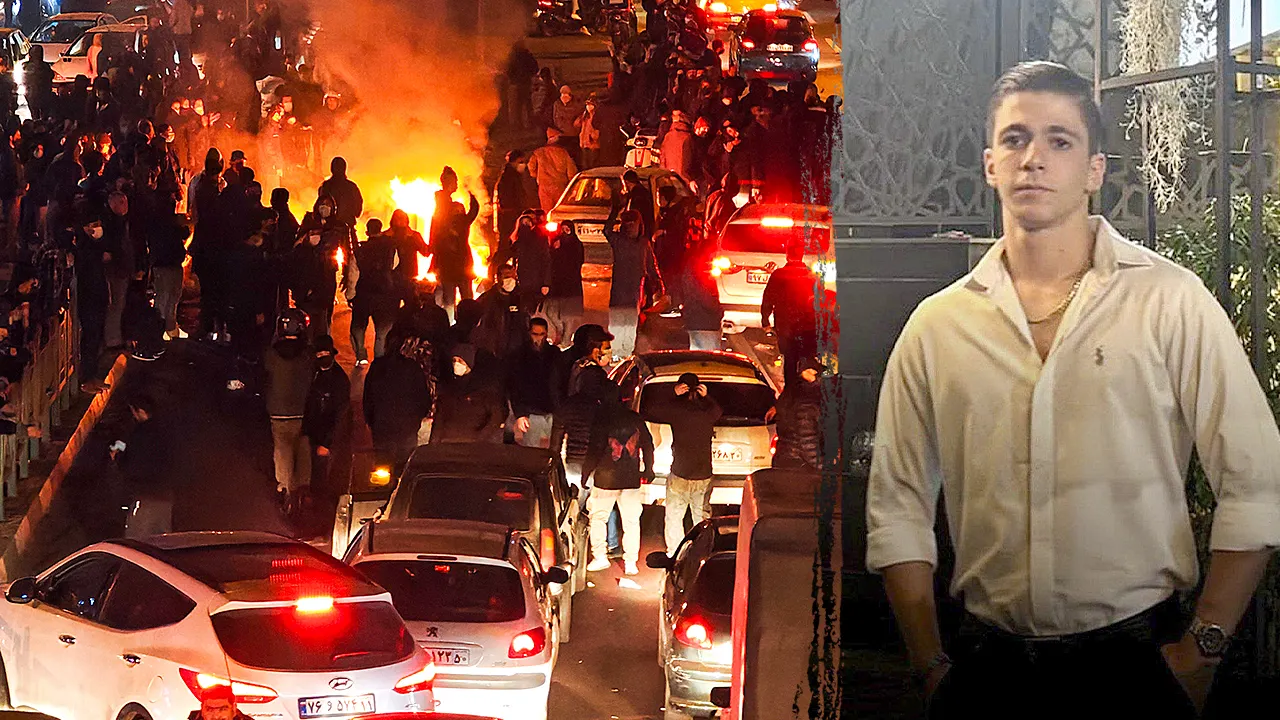
In a heart-wrenching scene that captures the human toll of Iran’s political repression, a father’s anguished voice echoes through a warehouse filled with black body bags. “My dear Sepehr, where are you?” he cries out, searching desperately for his 19-year-old son. This haunting moment, captured in footage that has since gone viral, tells the story of Sepehr Ebrahimi, a young amateur boxer who paid the ultimate price for participating in anti-regime protests. On January 11, in Andisheh, just 19 miles west of Tehran, Sepehr was shot and killed by Iranian security forces using live ammunition. His family spent an excruciating week searching through morgues, hospitals, and detention centers before finally discovering his body among piles of corpses. In his grief, Sepehr’s father was heard shouting, “Damn Khamenei. They have killed the children of so many people. You killed so many young people!”—a raw outburst that reflects the growing anger of countless Iranian families who have lost loved ones to government violence.
The killing of Sepehr Ebrahimi is not an isolated incident but part of a brutal pattern of repression that has intensified as protests against Iran’s clerical regime continue to spread across the country. According to the Human Rights Activists News Agency (HRANA), the death toll from these protests has reached alarming heights, with at least 6,126 people killed. Beyond these confirmed deaths, over 17,000 more cases remain under investigation, suggesting the actual number may be significantly higher. The regime’s response to peaceful demonstrations has been consistently violent, with security forces deploying live ammunition against unarmed protesters. As families like the Ebrahimis mourn their losses, their personal tragedies have become powerful symbols of resistance against a government that seems increasingly willing to use deadly force against its own citizens who dare to demand change, basic freedoms, and human rights.
Sepehr’s death has also drawn renewed attention to the plight of another Iranian boxer, Mohammad Javad Vafaei Sani, who currently sits on death row. At 30 years old, Vafaei Sani was once a champion boxer before his arrest in 2020 for participating in nationwide pro-democracy protests. The Iranian authorities accused him of supporting the opposition group known as the People’s Mojahedin Organization of Iran (MEK), a charge that carries severe penalties in the Islamic Republic. For the past five years, Vafaei Sani has endured imprisonment, reportedly suffering torture and prolonged solitary confinement. His case has alarmed the international community enough that in 2023, more than 100 human rights experts and international organizations sent a letter to U.N. High Commissioner for Human Rights Volker Türk, pleading for urgent intervention to prevent his execution. The parallels between Vafaei Sani’s situation and that of wrestling champion Navid Afkari, who was executed in September 2020 despite global outcry, are disturbingly clear.
The crackdown on athletes like Ebrahimi and Vafaei Sani reflects the Iranian regime’s particular fear of sports figures, who often enjoy widespread popularity and can serve as influential symbols of national pride and resistance. In a country where sports heroes are celebrated across social divides, their participation in political protests carries special weight. When these athletic figures join demonstrations or speak out against government abuses, their actions resonate deeply with the public, especially among young Iranians who make up a significant portion of the population. This explains why the regime has targeted them with such severity—executing Navid Afkari, imprisoning Vafaei Sani, and shooting young athletes like Sepehr Ebrahimi. Each case represents not just an individual tragedy but also the regime’s determination to silence those whose voices might inspire others to join the growing calls for political change and social freedom.
Behind these headline-making cases lie the ongoing protests themselves, fueled by a potent mix of political repression, economic hardship, and human rights abuses. Iranians across the country have taken to the streets despite knowing the risks they face from security forces. The demonstrations have brought together people from diverse backgrounds—students, workers, professionals, and others—unified in their desire for fundamental change. Many protesters are young Iranians who have grown up entirely under the Islamic Republic and now reject the limitations it imposes on their lives and futures. They demand basic freedoms, accountability from their leaders, and an end to the corruption and mismanagement that have crippled Iran’s economy. The regime’s response—mass arrests, violent crackdowns, and a digital blackout to prevent information from spreading—reveals its fear of this popular movement and its inability to address the legitimate grievances driving people into the streets.
As families like the Ebrahimis continue to suffer the consequences of standing up to authoritarianism, their personal stories have become powerful testimonies that transcend Iran’s borders. The footage of Sepehr’s father moving frantically among body bags, crying out for his son, has resonated around the world as a visceral illustration of the human cost of political repression. Such moments cut through statistics and news reports to reveal the raw emotional impact of state violence on ordinary families. They transform abstract political conflicts into deeply personal tragedies that demand moral recognition. For the Iranian diaspora and human rights advocates globally, these stories serve as urgent reminders of what’s at stake in Iran’s struggle for freedom and democracy. As protests continue despite the dangers, and as more families experience losses like the Ebrahimis’, the question becomes not whether change will come to Iran, but what price its people will have to pay before it does—and whether the international community will do more than watch as that price continues to mount in the lives of young people like Sepehr.