





Iran’s Revolutionary Guard Warns U.S. as Tensions Rise Amid Protests
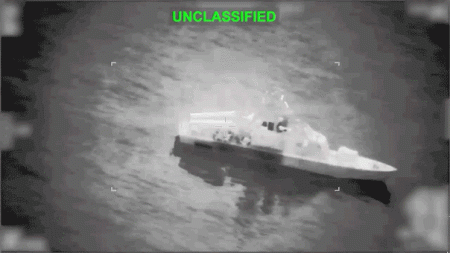
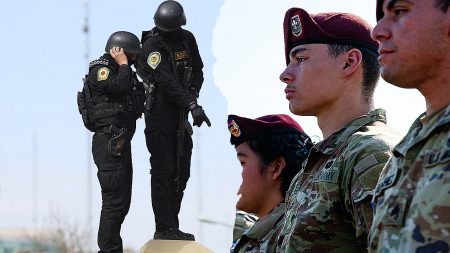
In a stark warning to the United States, the head of Iran’s Revolutionary Guard Corps (IRGC) declared that the paramilitary force stands “more ready than ever, finger on the trigger” as American naval forces approach the Middle East. General Mohammad Pakpour’s statement comes during a period of heightened tension following weeks of anti-government protests across Iran and the subsequent violent crackdown in which the IRGC has been deeply involved. This confrontational stance emerged as President Donald Trump directed U.S. warships toward Iranian waters, with the aircraft carrier USS Abraham Lincoln and its accompanying fleet reportedly positioned in the Indian Ocean. The movement of these military assets signals the potential for a serious escalation in the already fraught relationship between Washington and Tehran, with Trump stating the naval deployment was “just in case” he decides to take action while adding, “maybe we won’t have to use it.”
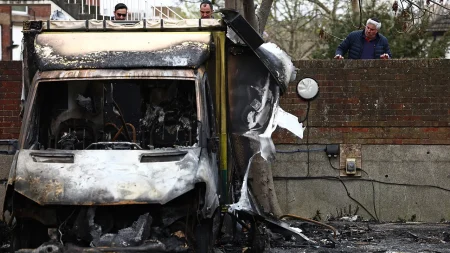
The current crisis has its roots in widespread protests that began on December 28, when Iranians took to the streets to express their frustration with the country’s deteriorating economic situation and increasing international isolation. Despite an internet blackout imposed by authorities, reports have emerged of severe violence against demonstrators. The human toll of this unrest has been devastating, with the U.S.-based Human Rights Activists News Agency (HRANA) reporting that over 5,100 people have been killed and more than 7,400 seriously injured. Additionally, nearly 28,000 people have reportedly been arrested in the regime’s sweeping crackdown. The Iranian government recently offered its own figures, acknowledging 3,117 deaths but categorizing many of the deceased as “terrorists” rather than civilian protesters, a characterization that has been met with skepticism by international observers and human rights organizations.
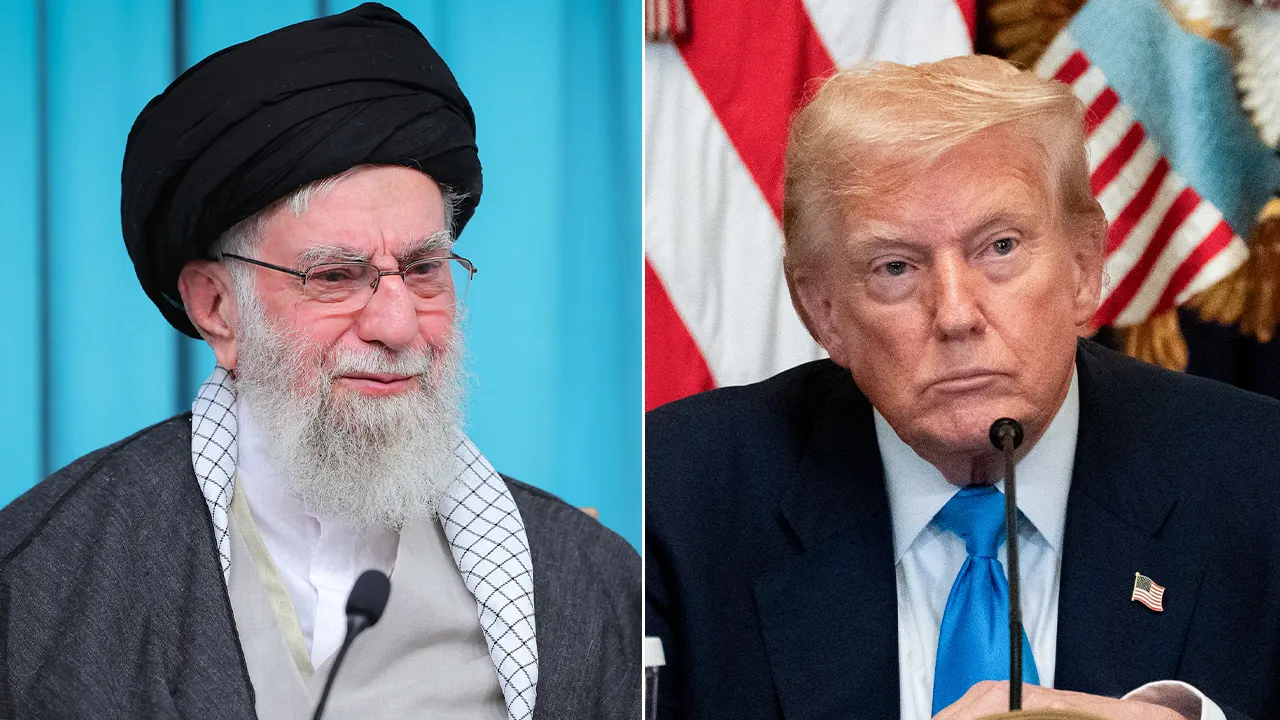
The exchange of threats between the two nations has intensified in recent days. General Abolfazl Shekarchi, a spokesman for Iran’s armed forces, issued a particularly aggressive warning to President Trump regarding any potential action against Supreme Leader Ayatollah Ali Khamenei, saying, “Trump knows that if any hand of aggression is extended toward our leader, we not only cut that hand, but also we will set fire to their world.” This rhetoric demonstrates the regime’s determination to present a unified and defiant front against international pressure. Similarly, an Iranian ambassador recently accused the United States and Israel of responsibility for “political destabilization, internal unrest and chaos,” highlighting the regime’s tendency to blame foreign actors for domestic discontent rather than addressing the underlying grievances of its citizens.
Both President Trump and Israeli Prime Minister Benjamin Netanyahu have openly expressed support for the Iranian protesters. Trump claimed in a social media post that the Iranian regime had canceled over 800 scheduled executions, though this assertion was promptly denied by Iran’s top prosecutor, Mohammad Movahedi, who called it “completely false.” Netanyahu stated that Israel was “closely monitoring” the situation and promised that once Iran was “liberated from the yoke of tyranny,” Israel would be prepared to partner with the Iranian people for peace. This international support for the protesters has further angered the Iranian regime, which views such statements as interference in its internal affairs and a threat to its sovereignty. The involvement of external actors, particularly long-standing adversaries like the United States and Israel, has contributed to the regime’s paranoia and its harsh response to the demonstrations.
The current situation in Iran represents one of the most significant challenges to the Islamic Republic since its establishment in 1979. The protests have been remarkable not only for their scale but also for their persistence in the face of brutal repression. What began as economic grievances has evolved into a broader movement questioning the very legitimacy of the theocratic system. The internet blackout imposed by authorities has made it difficult for the world to fully comprehend the extent of the unrest and the government’s response, but the information that has emerged paints a picture of widespread dissatisfaction with the status quo. Young Iranians, in particular, have been at the forefront of these demonstrations, demanding greater freedoms and opportunities in a country where nearly 60% of the population is under the age of 30.
The international community’s response to the crisis has been mixed, with Western nations generally condemning the Iranian government’s crackdown while regional powers have been more cautious in their statements. The World Economic Forum recently excluded Iran’s foreign minister from its annual summit in Davos, a symbolic but meaningful rebuke to the regime’s handling of the protests. As tensions continue to rise and military assets accumulate in the region, there is growing concern about the potential for miscalculation leading to open conflict. The IRGC’s warning to the United States and Israel “to avoid any miscalculation” acknowledges this danger while simultaneously reinforcing the regime’s readiness to respond forcefully to any perceived aggression. The coming weeks will be crucial in determining whether diplomatic channels can defuse the situation or if the region will descend into a more dangerous confrontation with global implications.