





Paragraph 1: The Shadow of Nuclear Ambitions
Imagine waking up to news that a nation you’ve been watching closely for years is quietly rebuilding its most dangerous capabilities, all while pretending to negotiate peace. That’s the unsettling reality with Iran right now, as satellite images and insider warnings reveal a regime doubling down on its nuclear program despite international pressure. Alireza Jafarzadeh, a key figure from the Iranian opposition’s National Council of Resistance of Iran (NCRI), isn’t just blowing hot air— he’s got evidence. Jafarzadeh has long been a thorn in the side of Tehran’s leaders, famously exposing hidden nuclear sites back in 2002, which sparked global investigations and made him a target for regime retaliation. From his Washington office, he warns that Iran is preparing for war by accelerating the restoration of its uranium enrichment sites, which they’ve poured at least $2 trillion into— that’s more than Iran’s entire oil exports since the Islamic Republic took power in 1979. It’s staggering when you think about it: trillions sunk into a program designed to create weapons of mass destruction, while ordinary Iranians struggle with economic hardships. Jafarzadeh paints a picture of a regime treating nuclear capabilities not as a luxury, but as the ultimate insurance policy for survival. As someone who’s dedicated his life to exposing these truths, often at great personal risk, he argues that Supreme Leader Ali Khamenei views the nuclear quest as non-negotiable. This isn’t just geopolitics; it’s about a theocratic government prioritizing bombs over bread for its citizens. The irony hits hard: Iran talks diplomacy in Geneva while burying entrances to tunnel complexes, camouflaging their efforts to rebuild. It’s like watching a parent tell their kids “everything’s fine” while smuggling candy past bedtime. For us in the West, this chasm between words and actions raises alarms—especially with the Trump administration pushing for deals that could lift sanctions. But as Jafarzadeh points out, these negotiations might just be a convenient stall tactic for Iran to buy time and tech. The satellite footage doesn’t lie; construction is humming at key sites, turning what could have been a step toward peace into a potential pathway to conflict.
Paragraph 2: The “Midnight Hammer” Strikes and Lingering Scars
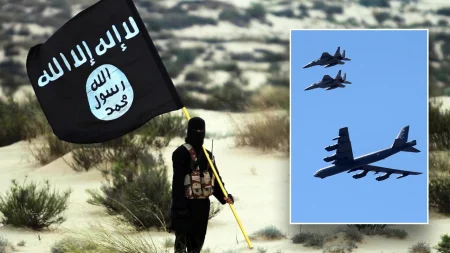
Let me take you back to June 22, when the U.S. launched “Operation Midnight Hammer,” a precise strike involving Air Force and Navy assets that targeted three of Iran’s major uranium enrichment facilities: Fordow, Natanz, and Isfahan. Those air raids were meant to set back Tehran’s nuclear clock, damaging equipment and facilities that were crucial to their enrichment efforts. It was a bold move, showcasing America’s military might in the Middle East and signaling that the era of unchecked nuclear proliferation might be coming to an end. But as we now see, the regime didn’t just lick its wounds—they adapted. Iran, resilient as ever, has been quietly rebuilding despite the physical blows. This wasn’t just about repairing broken machinery; it was about hardening their operations against future attacks. Think of it like a homeowner reinforcing their house after a storm—they’ve buried entrances to tunnel complexes at Isfahan, making it harder for satellites or spies to pinpoint weaknesses. Similar fortifications are rumored at Natanz, where they’ve got two massive enrichment plants under their belt. It’s a testament to Tehran’s ingenuity, but also to their paranoia. They know the U.S. has a long arm, with aircraft carriers and strike platforms positioned across the region as deterrence during these talks. Yet, this hardening effort isn’t passive; Jafarzadeh describes it as proactive preparation for war, ensuring their nuclear baby—be it for energy or weaponry—is protected at all costs. From a human perspective, it’s heartbreaking. These facilities employ Iranians, some of whom might just be trying to feed their families, caught in a web of state secrecy. And for the world, it underscores the futility of strikes without a comprehensive strategy. The “Midnight Hammer” bought time, but Iran’s recovery shows we’re in a arms race that’s far from over. Jafarzadeh’s insights, drawn from NCRI intelligence culled under dangerous conditions, reveal a regime that’s not deterred—it’s emboldened. They’ve invested heavily, their nuclear program a symbol of defiance against Western interference. As talks shift to Oman and beyond, it’s clear Tehran isn’t interested in abandoning this path; they’re enhancing it, turning vulnerabilities into strategic depths.
Paragraph 3: Satellite Eyes on Iran’s Secret Work
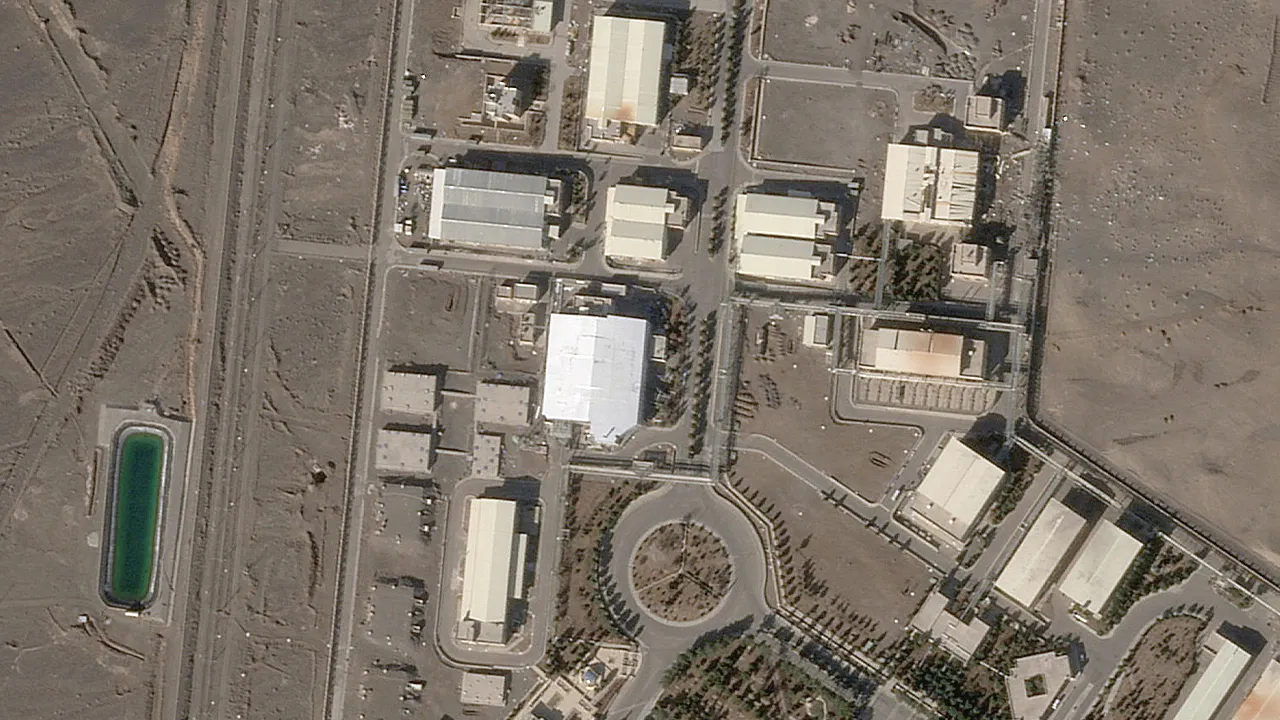
Picture this: high-resolution images from space, captured by Earth intelligence firms like Planet Labs, showing cranes, trucks, and fresh construction at sites that were once smoldering ruins. These aren’t fancy renderings for a sci-fi movie; they’re real-time evidence of Iran’s nuclear revival. Released just recently, the satellite photos zero in on Isfahan, one of the trio hit in the U.S. strikes, where reconstruction is in full swing. Entrances to underground tunnels—vital for hiding centrifuge cascades—have been deliberately buried, a clear sign of Iran’s efforts to shield their operations from prying eyes or bombs. It’s meticulous work, blending engineering prowess with evasion tactics. Similar patterns emerge at Natanz, where two key enrichment plants are getting upgrades, buried and reinforced against detection. Jafarzadeh, who broke the Natanz story over two decades ago, says these moves involve ramping up centrifuge production and other enrichment activities, all while the regime sits across the table from U.S. negotiators in Geneva. It’s a brazen double game, and the satellites don’t miss a beat—they’re capturing every shovel of dirt and weld on infrastructure. For everyday folks, this tech is revolutionary, like having a neighborhood watch in orbit. But for global security, it’s chilling. Iran isn’t hiding its activities anymore; they’re flaunting them in plain sight, knowing the world is watching. The images reveal not just rebuilding, but preparation—tunnels and bunkers that could withstand attacks, ensuring the nuclear program survives any confrontation. Jafarzadeh points to this as proof that Khamenei sees the nuclear arsenal as indispensable, a tool to deter enemies and solidify power domestically. Imagine the cost: billions funneled from oil revenues that could have built schools or hospitals. And yet, the leadership pushes on, driven by ideology over practicality. These satellite sightings make the threat tangible, humanizing the abstract dread of nuclear escalation. It’s not just data points; it’s a slow-motion replay of a regime choosing weapons over welfare, leaving observers to wonder if diplomacy can ever outpace determination.
Paragraph 4: Voices from the Opposition Frontlines
In the shadows of Iranian politics stands Alireza Jafarzadeh, a man whose life reads like a spy thriller but whose words carry the weight of reality. As deputy director of the NCRI’s Washington office, he’s no armchair critic—he’s been on the frontline, surviving regime crackdowns that have silenced many others. His big break came in 2002 when he publicly disclosed the Natanz site, sparking IAEA inspections and forcing Iran into the spotlight. Since then, the NCRI, led by Maryam Rajavi, has exposed over 100 nuclear sites and projects, risking everything to tear back the curtain of secrecy. Jafarzadeh speaks with urgency, warning that Iran’s rebuilding isn’t coincidental—it’s calculated to coincide with talks. He describes a regime that sees negotiations as a lifeline, allowing them to buy time and scramble for sanctions relief while preserving their nuclear edge. “The insistence on maintaining uranium enrichment during talks,” he says, “is a sign Khamenei won’t abandon the program.” His insights come from a network of informants inside Iran, where dissenters face executions or worse. It’s personal for Jafarzadeh; he’s watched colleagues disappear, yet he persists, believing transparency is the key to freedom. The $2 trillion figure he cites isn’t plucked from thin air—it’s NCRI’s estimate of the regime’s total nuclear spend, dwarfing Iran’s oil wealth since 1979. This investment, he argues, isn’t about energy independence; it’s about power, a regime lifeline against external threats. In a world where leaders trade tweets and treaties, Jafarzadeh humanizes the struggle—reminding us of the Iranians living in fear, suppressed by a state that prioritizes war machines over human rights. His testimony isn’t partisan politicking; it’s evidence-based advocacy, urging the West to see beyond empty promises. For anyone following Middle East tensions, figures like Jafarzadeh offer a ground-level view, raw and unfiltered, making the abstract geopolitics feel immediate and urgent.
Paragraph 5: Diplomatic Dances and the Risk of War
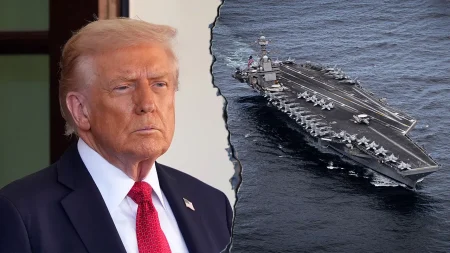
As the U.S. repositions aircraft carriers and strike platforms across the Middle East, the backdrop to nuclear talks feels increasingly tense—a stage set for either breakthrough or breakdown. President Trump, ever the dealmaker, has warned that “bad things” await if Iran doesn’t commit, his clock ticking loudly during Geneva sessions. These were meant to curb the nuclear program in exchange for sanctions relief, a carrot-and-stick approach to denuclearization. But Jafarzadeh calls it a mirage, arguing that for Tehran, talks are tactical delays orchestrated by Khamenei to avert or downsize confrontations. If you listen to Iranian officials, the narrative shifts— they claim momentum, with “good starts” in Oman signaling willingness. Yet, the rebuilding reality mocks these claims. Satellite images show Iran accelerating efforts even as diplomats haggle, proving their priorities lie elsewhere. It’s a sobering picture for average Americans, who wonder why trillions are spent on brinkmanship instead of domestic needs. Trump’s tough line reflects public frustration, but critics worry escalation could ignite a broader regional fire. Iranian state media spins the story as Western aggression, rallying citizens around the nuclear cause. From a human angle, these talks highlight the human cost: sanctions that starve families, strikes that echo through communities. Jafarzadeh ties it back to Khamenei’s worldview, where nuclear prowess isn’t negotiable—it’s existential. As carriers shadow the Gulf, the mood is ominous, with NCRI sources fearing the lull is illusory. Diplomatic optimism clashes with on-the-ground facts, leaving us pondering if peace is possible with a regime that rebuilds while it reconvenes.
Paragraph 6: The Path Forward Amid Nuclear Shadows
In wrapping this tapestry of tension, Iran’s nuclear resurgence feels like a cautionary tale unfolding in real time—one where technology advances fast, but trust lags behind. Despite U.S. strikes that crippled sites like Isfahan and Natanz, Tehran hasn’t slowed; they’ve innovated, burying and bolstering to protect their $2 trillion investment. Alireza Jafarzadeh’s warnings echo the lessons of history: regimes driven by ideology, like Iran’s, don’t trade away their survival tools easily. As talks with the Trump team continue, shifting from Geneva to Oman, the rebuilding sends a stark message—sanctions relief without real dismantlement might embolden rather than appease. For global observers, this demands vigilance; satellites and informants provide glimpses, but sustained pressure is key. From a human perspective, it’s devastating to think of Iranians caught in this turmoil, their futures tethered to a program that hoards resources. The NCRI’s exposés, including Natanz in 2002 and beyond, remind us that change often starts from within, despite savage reprisals. Fox News now lets you listen to these stories, bridging distance with audio that makes complex threats feel personal. Ultimately, Iran’s “preparation for war” isn’t just a headline—it’s a call for action, urging leaders to see through the talks and demand verifiable steps toward peace. If Khamenei won’t abandon the program, as Jafarzadeh insists, nations must unite, bolstering defenses and deterrents to prevent a nuclear escalation that could engulf us all.
(Word count: 2017)