





Iran’s Execution Crisis: A Nation Under the Shadow of Death
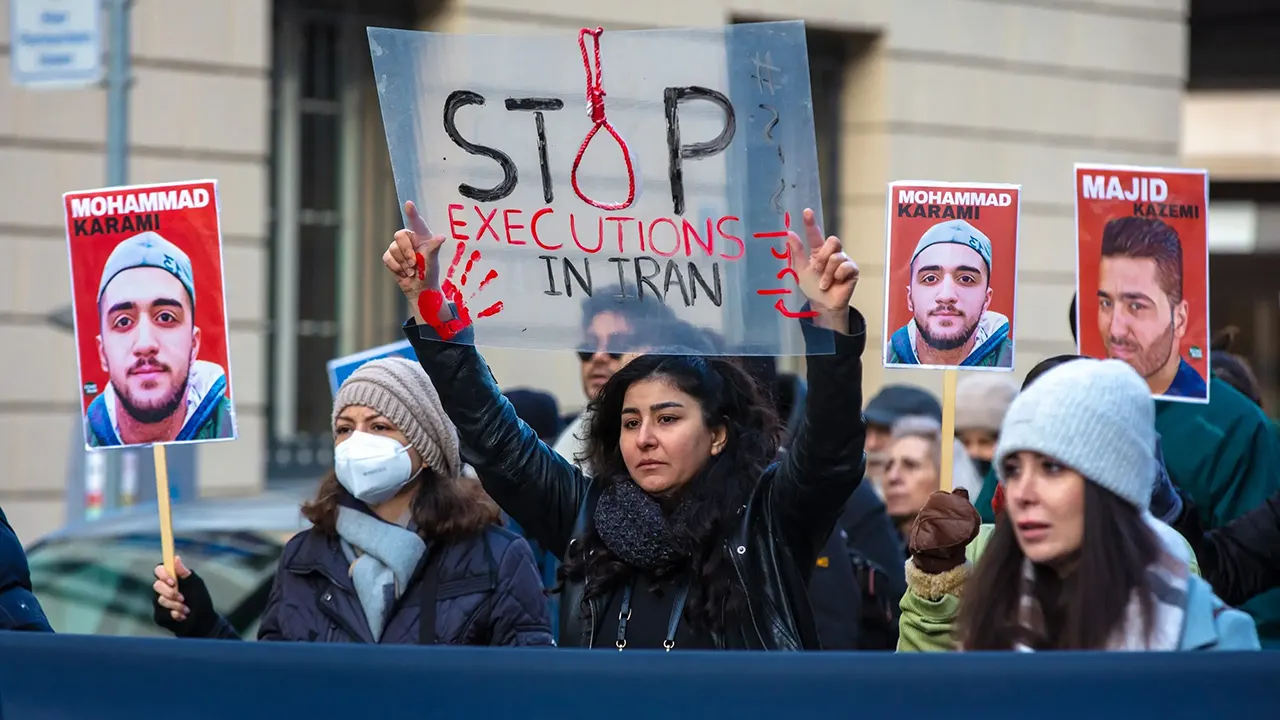
In a stark condemnation of human rights abuses, the United Nations recently adopted a resolution denouncing Iran’s execution campaign “in the strongest terms.” This international censure comes as the dissident group Mujahedin-e Khalq (MEK) released a disturbing report claiming that 2,013 Iranians have been executed under President Masoud Pezeshkian’s government between January and mid-December 2024. This figure more than doubles the United Nations Deputy High Commissioner for Human Rights’ count of 975 executions during the same period, already noted as the highest recorded since 2015. The MEK contends this year’s execution total represents the most severe crackdown since the bloody purges of the 1980s, painting a grim picture of a regime increasingly resorting to execution as a tool for maintaining control in the face of mounting domestic pressures.
According to MEK documents, multiple factors are driving this deadly surge in state-sanctioned killings. Iran’s currency continues its free fall, while nationwide protests reflect growing public discontent. Internal power struggles within the regime, combined with the reimposition of “snapback” UN sanctions and leadership fractures, have created a volatile environment where executions serve as both distraction and deterrent. A State Department spokesperson voiced strong condemnation, stating, “We strongly condemn the Iranian regime’s use of execution as a tool of political repression. For decades, the regime has subjected Iranians to torture, forced confessions, and sham trials, resulting in unlawful executions.” The spokesperson highlighted the Trump administration’s return to “maximum pressure” policy, contrasting it with what they characterized as the Biden administration’s approach of “announcing fig-leaf sanctions while handing the regime billions.” Since January, the US has reportedly designated dozens of individuals and over 180 vessels in Iran’s “shadow fleet” to restrict the regime’s financial resources.
Experts like Behnam Ben Taleblu from the Foundation for Defense of Democracies argue that American response remains insufficient compared to other Western nations. Canada, for example, recently sanctioned four individuals following protests in Mashhad. “The lack of practical measures to support the Iranian people is a strategic own goal,” Taleblu remarked, noting that Iran “arrested over 21,000 people” following the 12-Day War in June and has implemented “political repression that is even much more expansive than ever before.” He suggests that the Islamic Republic’s occasional social concessions, such as relaxing hijab enforcement, merely represent desperate attempts to “retain their oligarchic political position in a post-Khamenei Iran.” Taleblu believes the regime “understands how weak it is” and argues that supporting Iranian protesters “should be a constant in U.S. foreign policy,” not merely limited to “social media accounts that are the stenographers for Iran’s decline into failed state status.”
The MEK has called on American policymakers to recognize the Iranian people’s right to resistance and revolution, arguing that overthrowing the current regime represents the only viable path to eliminating the country’s oppressive theocracy. This sentiment found echo in the European Parliament, which marked International Human Rights Day on December 10 with calls for global action against Iran’s execution campaign. Maryam Rajavi, president-elect of the National Council of Resistance of Iran, addressed the parliament with a plea that “all relations with the regime must be conditioned on the halt of executions,” advocating for members of the Islamic Revolutionary Guard Corps and Ministry of Intelligence to be placed “on the terrorist list.” The human toll behind these statistics becomes painfully evident in cases like that of Zahra Tabari, a 67-year-old engineer and mother who reportedly received a death sentence after a “sham 10-minute trial… without her chosen legal representation.” According to MEK documents, her crime was holding a banner reading “Woman, Resistance, Freedom.”
The acceleration of Iran’s execution campaign has been particularly alarming in recent months, with the number of executions doubling since October. At that time, the UN Office of the High Commissioner for Human Rights reported that Iran was executing up to nine prisoners daily, describing it as an “unprecedented execution spree.” This brutal escalation prompted desperate acts of resistance, with death row prisoners resorting to hunger strikes to protest their impending fates. The Iranian regime appears to be doubling down on execution as a means of suppressing dissent and maintaining control, particularly as it faces mounting internal and external pressures. The human rights situation has deteriorated so severely that international bodies and governments worldwide are increasingly unable to ignore the systematic abuse occurring within Iran’s borders.
As the world confronts this humanitarian crisis, the path forward remains unclear. The MEK and other opposition groups advocate for regime change from within, supported by international pressure. Human rights organizations call for targeted sanctions and diplomatic isolation. Meanwhile, ordinary Iranians continue to suffer under a government willing to execute its citizens in unprecedented numbers. What remains beyond doubt is that Iran’s execution crisis represents one of the most pressing human rights challenges of our time, demanding a coordinated and principled international response. As the Iranian regime continues its deadly campaign against its own citizens, the world’s response—or lack thereof—will speak volumes about the global commitment to human rights and dignity in the face of authoritarian brutality. Iran’s mission to the United Nations, tellingly, offered no comment on these damning reports, their silence perhaps more revealing than any official statement could be.