






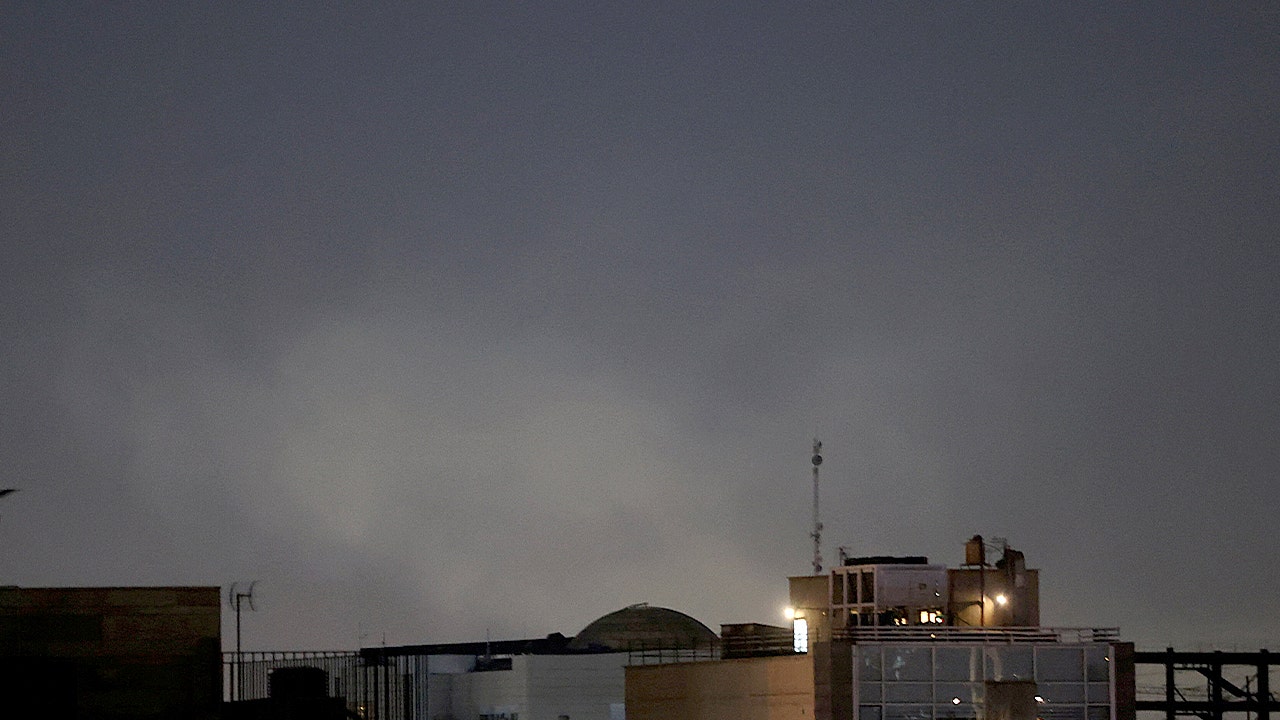
The Sudden Darkness: Iran Plunges into Chaos After a Devastating Attack
Imagine waking up one ordinary Saturday morning, grabbing your phone to check the news or message your family, only to find that the entire internet in your country has vanished. That’s what happened to millions in Iran as the world held its breath following a massive military operation by Israel and the United States. Dubbed Operation Epic Fury, the strikes targeted a key compound in Tehran, eliminating dozens of senior regime officials in what officials described as a precise and relentless assault on the heart of Iranian power. Within hours, a digital blackout engulfed the nation, shutting down connectivity to near zero according to global monitors. It was as if the sky itself had been wiped clean of satellites, leaving the people in a fog of uncertainty. Eyewitnesses on the ground described scenes of confusion—shops closing early, people gathering in public squares with only word-of-mouth to share information, while government buildings hummed with the low buzz of emergency generators. The air was thick with fear and speculation; was this the end of an era for the Islamic Republic? As reports filtered in slowly through international channels, it became clear that the blackout wasn’t just a glitch—it was a deliberate move, straight from Iran’s playbook during times of crisis. This incident echoed the dramatic episodes of the 2025 Twelve-Day War with Israel, where similar shutdowns had crippled communications and isolated the populace. For many Iranians, this wasn’t just about losing access to social media or streaming services; it was about losing touch with the outside world during a moment when their leadership lay exposed and vulnerable. The blackout started around 7:00 UTC, not long after the deadly strikes, and lasted for about 12 hours initially, with connectivity plummeting to around 1%. Experts watching from afar could only marvel at the speed and scale, noting how rare such national blackouts are globally. In a country where information is power, this sudden silence spoke volumes about the regime’s desperation to maintain control in the face of unprecedented external pressure. People whispered in corridors and alleys, piecing together fragments from radio broadcasts or smuggled SIM cards, wondering if their government could survive such a bold challenge. The human toll was immediate too—families separated, businesses grinding to a halt, and a sense of isolation that mirrored the emotional blackout many felt internally. This wasn’t random; it was calculated, a strategic shield deployed amid the carnage, forcing the world to speculate on what had been lost and what might come next.
Decoding the Digital Silence: Insights from the Experts
Diving deeper, the blackout wasn’t just a technical hiccup; it was a tactical masterpiece born out of necessity. NetBlocks CEO Alp Toker, a seasoned observer of global internet disruptions, painted a vivid picture of the unfolding drama on Fox News Digital. He described how connectivity began “flatlining” almost instantly, dropping to negligible levels after the initial strikes. At 6:10 UTC, the Iranian compound in Tehran was hit with pinpoint accuracy, wiping out key figures in the regime. Just an hour later, at 7:10 UTC, telecom disruptions kicked in, and by 8:00 UTC, the blackout was in full force, consolidating what had started as a morning-wide shutdown. By 8:30 UTC, it was absolute—a mirror of wartime strategies. Toker drew parallels to the 2025 Twelve-Day War, where Israel and Iran had clashed fiercely, and similar blackouts had been used to obscure military movements and prevent information leaks. “This is straight out of Iran’s wartime playbook,” he explained, his voice carrying the weight of years analyzing cyber skirmishes. Globally, such complete national blackouts are a rarity, seen only in extreme conflicts or authoritarian clampdowns. In Iran, this felt personal and raw—millions disconnected not by chance but by design, to shield the elite while ordinary citizens suffered the fallout. Toker elaborated on the technical side, noting how nearby networks weren’t as locked down, creating a “background noise” that intelligence agencies could exploit. Smartphones, even when seemingly off, ping international servers, leaking metadata like breadcrumbs leading straight to survivors or hideouts. This wasn’t paranoia; it was smart survival tactics amid the smoke and rubble. For onlookers like Toker, it was fascinating yet harrowing—watching a nation essentially go dark, cut off from the digital lifeline that connects us all. He imagined the scenes in Tehran: regime loyalists frantically destroying devices, eradicating any digital footprint that could betray their positions. The blackout was a direct response, he argued, to fears of cyberattacks that could exacerbate the physical damage. Iran’s leadership, still reeling, would view every satellite link or whitelisted network as a potential threat, treating all communication like a ticking bomb. This humanized the situation for those outside—these weren’t just abstract IP addresses failing; they were real people making gut-wrenching choices to protect their power, at the expense of their citizenry’s connectivity.
A President’s Bold Declarations: Trump’s Message Amid the Mayhem
Amid the digital void, one voice cut through the chaos like a beacon: President Donald Trump’s fiery post on Truth Social. In a message that reverberated across international broadcasts, Trump declared the strikes “heavy and pinpoint,” promising they would continue “uninterrupted throughout the week or as long as necessary” to secure “peace throughout the Middle East and, indeed, the world.” His words were potent, mixing bravado with an olive branch that surprised many. He claimed that Iranian security forces and members of the powerful Islamic Revolutionary Guard Corps (IRGC) were already eyeing immunity deals, eager to defect. “We are hearing that many of their IRGC, Military, and other Security and Police Forces no longer want to fight and are looking for Immunity from us,” Trump wrote, urging them to “peacefully merge with the Iranian Patriots” in what he framed as an offer for peace. The tone was urgent, almost paternal: “As I said last night, ‘Now you can have Immunity; later you only get Death!’” This wasn’t just a political statement; it was a psychological operation, broadcasted to a populace straining to hear through the blackout. For Iranians listening via underground radio or smuggled feeds, Trump’s message might have sown seeds of doubt, painting a picture of regime cracks widening under pressure. He linked the strikes directly to justice, promising retaliation for past aggressions while dangling forgiveness to those willing to switch sides. Observers noted the human touch in Trump’s unfiltered style—raw, direct, and loaded with exclamation points that mirrored the intensity of the moment. It humanized the global standoff, turning abstract geopolitics into a personal call to action, where individual soldiers and officials had real choices weighing on their hearts. Critics argued it was inflammatory, but supporters saw it as decisive leadership, pushing for a Middle East free of tyranny. As the blackout persisted, Trump’s words floated like echos, reaching those in Iran who dreamed of a different future, far from the regime’s shadows. This wasn’t diplomacy in boardrooms; it was a battlefield broadcast, raw and unscripted, appealing to the human desire for safety and change amidst the uncertainty.
Peeking Into Paranoia: Why the Blackout Was Essential for Survival
Unpacking the rationale behind the blackout revealled layers of strategy and fear that humanized the regime’s actions. Alp Toker, reflecting on the timing, suggested the shutdown was no accident—it was a deliberate barrier against further devastation. With the compound strike at 6:10 UTC still fresh, Iranian leadership likely feared cascading cyber threats that could compound the physical losses. “Communications would have been limited,” Toker explained, “and Iran’s leadership would have proceeded with the assumption that all communications, including satellite or whitelisted networks, carry risks.” Paranoia, he noted, was “well grounded,” a direct and belated response to intelligence breaches that had already exposed key figures. Imagine the scene: in secure bunkers, officials destroying phones and computers, wary even of encrypted channels, believing every connection could leak vital details. Toker highlighted how metadata from smartphones—pings to international services even when supposedly locked—could pinpoint locations with eerie precision. This wasn’t just tech talk; it was a glimpse into the mind of a cornered regime, where everyday devices became silent assassins, revealing who’s at a meeting and when. Participants in high-level gatherings might steer clear of tech, but their entourages created unavoidable “background noise,” correlating with other spy data to paint a full picture. For Iran, the blackout was a preemptive strike on this digital ghost army, consolidating control in the face of compounded trauma. It echoed the human instinct for self-preservation, a regime cocooning itself to avoid the fate of those killed. Toker speculated that if the meeting was compromised via such metadata, the lesson was clear: total disconnection was the only shield. This made the blackout feel intimate, a story of vigilant leaders versus unseen hunters, where every byte could mean life or death. Iranians outside the elite circle felt the brunt, their daily lives interrupted not by whim but by the elite’s shadows of dread. In this narrative of fear, the blackout saved lives by severing links that could have led to more strikes, turning Iran’s internet into a sanctuary of silence.
The Uncertain Fate of Leadership: Khamenei’s Shadow Lingers
As dust settled over Tehran, questions swirled about the most elusive figure of all: Supreme Leader Ayatollah Ali Khamenei. Reports from the strike confirmed significant regime casualties, but his fate remained shrouded in mystery, fueling rumors that rippled through the partial blackout. Was he among the dozens killed in the compound obliteration, or had he slipped away, orchestrating from the shadows? This uncertainty added a deeply human dimension to the crisis, transforming geopolitical gambits into a riveting thriller of survival and subterfuge. Toker mused that even if participants knew to avoid betraying tech, the metadata labyrinth could have unveiled the gathering—attendees, times, exact locations. In the aftermath, paranoia would reign, prompting the leadership to instigate the blackout to snuff out any lingering risks. Imagine the anxiety: loyalists wondering if their smartphones had already doomed them, with the regime scrambling to erase digital trails. For Khamenei, if alive, this was a moment of reckoning, his once-iron grip now questioned by forces beyond his borders. The blackout exacerbated this, turning isolation into a tool for control, limiting leaks that could reveal his whereabouts. Civilians, cut off, turned to old-school whispers, sharing tales of eyewitness glimpses or denied access to official sites. This humanized Khamenei not as an untouchable icon but as a man hunted, his every move scrutinized through the lens of global intelligence. His absence from public statements during the hours of darkness only amplified the drama, casting him as both victim and villain in an unfolding saga. For the Iranian people, this added layer of intrigue—wondering if their leader was alive or fallen—deepened the national disquiet, blending fear with a flicker of hope for change. It was a reminder that in the haze of war, even the most powerful aren’t immune to the erasers of history.
Echoes of Past Struggles: Blackouts as a Tool of Control
Reflecting on broader patterns, Iran’s blackout fit seamlessly into a history of digital suppression, revealing a regime adept at wielding information as a weapon. During periods of domestic unrest, like the nationwide protests in January that saw thousands lose their lives, similar blanket shutdowns had curtailed dissent, choking off coordination and information flow. These moments weren’t mere accidents; they were strategic tools to maintain power, echoing the chaos of wartime scripts. NetBlocks data underscored this rarity—such extensive blackouts few and far between globally, underscoring Iran’s isolationist tendencies. For the populace, these blackouts felt like emotional bludgeons, severing ties to global solidarity and amplifying loneliness. People resorted to handwritten notes or face-to-face chats, rediscovering human connections amid the void, yet tinged with dread of regime reprisals. This historical lens humanized the current event, framing it not as isolated but as part of a tapestry of control, where blackouts shielded the elite from accountability. In the 2025 war’s shadow, these strategies had proven effective, buying time to regroup. Now, with strikes ongoing, the blackout signaled a regime in full defensive mode, prioritizing survival over openness. Trump’s calls for peace contrasted sharply with this, promising a future unmarred by such draconian measures. As connectivity flickered back partially, Iranians pondered what “peace” might mean—would it end the cycles of blackout and strike? This linkage to past turmoils made the incident relatable, a story of resilience against authoritarian currents, where digital darkness mirrored deeper societal fractures. It invited empathy for those trapped in the crosshairs, urging a global dialogue beyond the bombs. Ultimately, the blackout wasn’t just tech failure; it was a chapter in Iran’s ongoing struggle, human stories interwoven with codes and circuits, where freedom’s hour teetered on the edge of uncertainty.