






Iran’s Human Rights Crisis: Allegations of Abuse Amid Government Claims
In a harrowing development from Iran, numerous eyewitness accounts have emerged detailing disturbing human rights violations against protesters, even as the government claims to have successfully quelled nationwide unrest. The National Council of Resistance of Iran (NCRI-US) revealed to Fox News Digital that “barbarity continues” throughout the country, with particularly troubling reports of detained protesters allegedly being killed and their bodies burned to conceal evidence. These testimonies paint a grim picture of a regime desperately trying to maintain control through increasingly brutal measures, including reports of sexual assault against teenage detainees and financial extortion from families of slain protesters who are forced to pay exorbitant sums—as much as 10 billion rials—simply to recover the bodies of their loved ones.
The current crisis began on December 28 when protests erupted across Iran, fueled by deep-rooted public anger over political repression, economic hardship, and state violence. What started as localized demonstrations quickly expanded into a nationwide movement that the government has struggled to contain. Despite Iran’s prosecutor general Mohammad Movahedi confidently declaring that “the sedition is over now” and thanking those who “extinguished this sedition by being in the field in a timely manner,” human rights organizations present a drastically different reality. According to the Human Rights Activists News Agency (HRANA), by day 25 of the protests, the death toll had reached staggering proportions—4,902 confirmed fatalities, with an additional 9,387 deaths still under investigation. The agency also reported that the number of arrests has soared to 26,541, indicating the massive scale of the government’s crackdown on dissent.
The France-based Kurdistan Human Rights Network (KHRN) has uncovered particularly disturbing patterns of abuse by authorities. Families seeking to recover the bodies of relatives killed during protests are reportedly being forced to pay enormous ransoms, with some amounts reaching up to 10 billion rials. Even after paying these sums, families face continued intimidation, with funeral ceremonies conducted under heavy security surveillance. In a particularly cruel twist, many families have reportedly been coerced into falsely attributing the deaths of their loved ones to the protesters themselves rather than to government forces. The KHRN has also documented allegations of sexual assault against detained protesters, including a 16-year-old, by Iranian security forces in Kermanshah. These reports suggest systematic abuse designed not just to punish current protesters but to terrorize the population into future compliance.
Ali Safavi of the NCRI provided additional shocking details about the treatment of detainees, describing how “several young women and men were forced to undress, so the military could see whether they had pellet wounds.” This humiliating practice appears to be part of a broader strategy to identify and punish participants in the protests. Perhaps most disturbing are reports that when detainees are killed, “their bodies were burned,” presumably to destroy evidence of torture or cause of death. These allegations paint a picture of a regime willing to go to extraordinary lengths to conceal the true extent of its crackdown. Safavi also contradicted the government’s claims that the protests have been crushed, noting that clashes continued in multiple cities as recently as Tuesday night, including in “Kermanshah where protesters and armed units of the IRGC fought in parts of the city,” as well as in Rasht and Mashhad.
The ongoing protests represent a significant challenge to the Iranian regime, one that won’t be easily resolved even if the current wave of demonstrations subsides. As Safavi noted, “the people and the regime will not return to the status quo even if the uprisings have slowed down. This is because of the blood of thousands of martyrs on their hands.” This sentiment suggests that the government’s violent response has fundamentally altered the relationship between the Iranian people and their rulers, creating deeper divisions that may fuel future unrest. Safavi was blunt about the prospects for peaceful change, stating that “the regime is still in power, and it won’t abandon brutal and bloody suppression so there is no pathway to a velvet revolution in Iran.” This assessment reflects the growing recognition among opposition groups that the Iranian government remains committed to maintaining power through force rather than addressing the legitimate grievances of its citizens.
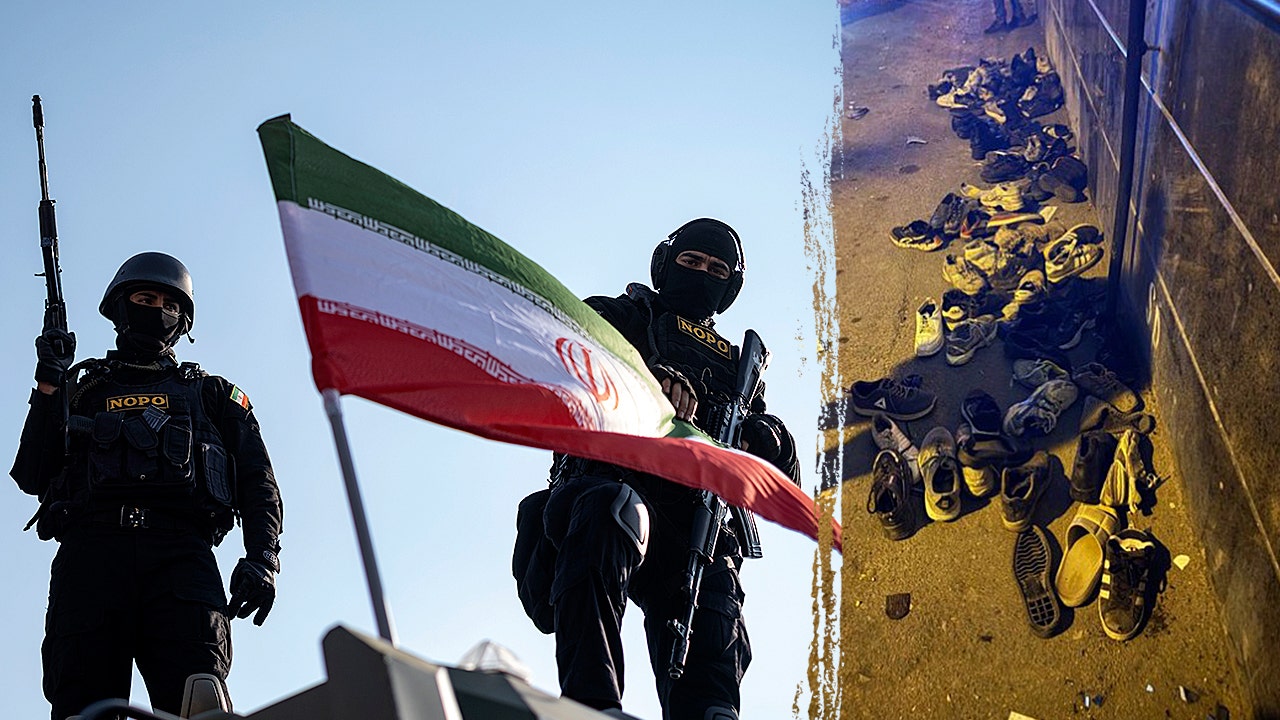
The visual imagery from Iran’s streets carries powerful symbolism of the human cost of the government’s crackdown. Safavi poignantly noted that “the shoes and sneakers seen left along the sidewalks remind us of the 30,000 MEK members and Iranian prisoners who were hanged during the 1988 massacre based on a fatwa by Khomeini.” This reference to one of Iran’s darkest historical episodes draws a direct line between current events and past atrocities, suggesting that the present government is employing tactics from the same playbook of repression. As international attention focuses on Iran, these allegations of torture, sexual assault, extortion, and murder raise urgent questions about the international community’s responsibility to respond to such widespread human rights abuses. While the Iranian government may claim victory over the protesters, the evidence suggests that the underlying tensions remain unresolved, and the human cost of the regime’s response continues to mount in ways that may have lasting consequences for Iran’s future.