


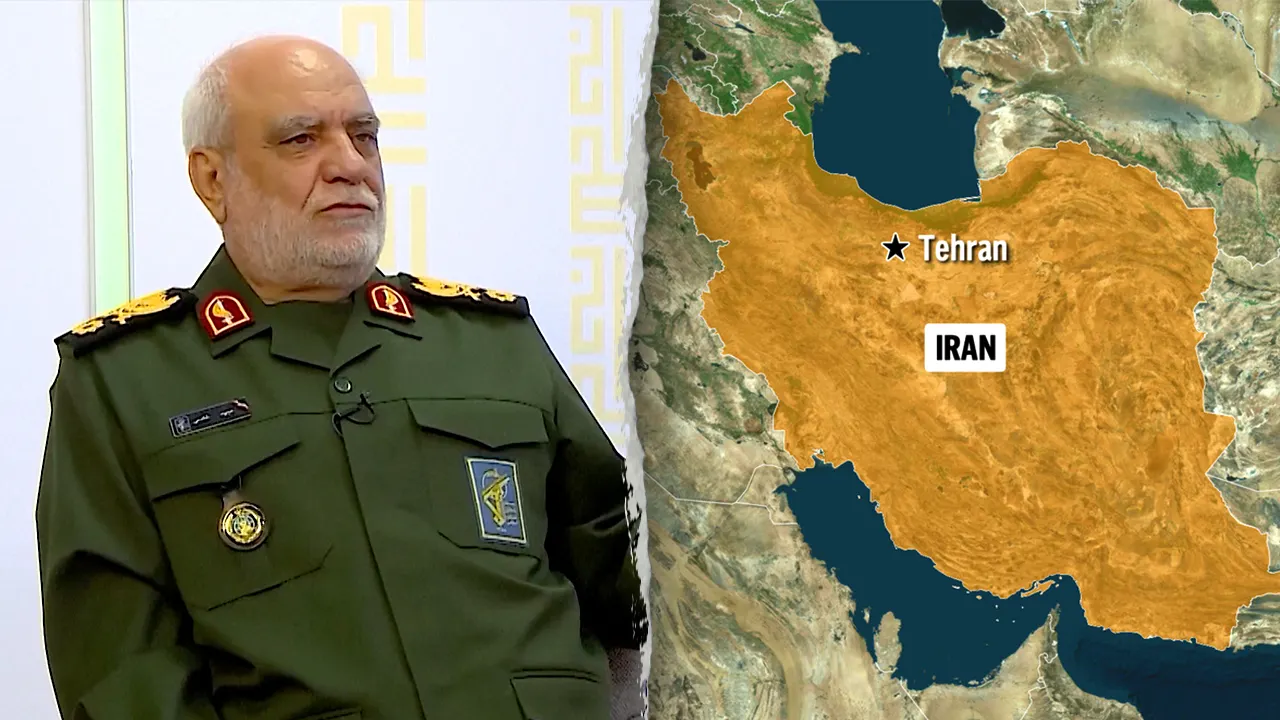
Israel has struck a significant blow against Iran’s military and intelligence leadership in a targeted operation that eliminated two high-ranking officials from the Islamic Revolutionary Guard Corps (IRGC). Brig. Gen. Majid Khademi, the IRGC’s intelligence chief, and Asghar Bagheri, a Quds Force special operations commander, were both reported killed, according to Israel’s Defense Forces (IDF). This was announced in a statement on X (formerly Twitter), highlighting Khademi’s role in facilitating terrorist activities abroad and overseeing domestic surveillance during the regime’s crackdown on protests. The news comes at a tense time in Middle Eastern geopolitics, where tensions between Israel and Iran have simmered for years, marked by proxy conflicts and cyber skirmishes. For many in the region, this event feels like another chapter in an ongoing shadow war, where leaders on both sides navigate a delicate balance of power, retaliation, and strategic patience. Civilians in Israel might breathe a sigh of relief, knowing their government is actively defending against threats, while in Iran, it could fuel outrage and calls for vengeance. The IDF’s confirmation underscores Israel’s determination to dismantle networks believed to pose existential risks, painting a picture of relentless pursuit that echoes the high-stakes thrillers of espionage novels.
Khademi was no ordinary bureaucrat within Iran’s elite forces; he was described by a senior Israeli official as effectively the No. 2 figure in the IRGC, a rare survivor of multiple Israeli and American targeting efforts. Over the years, he had demonstrated remarkable elusiveness, constantly relocating to evade detection, but his run came to an end in this latest strike. His expertise lay in intelligence and counter-espionage, fields that demanded cunning and adaptability. Imagine someone who spent decades building a web of informants, sifting through data to protect Iran’s secrets, only to be outmaneuvered by adversaries who turned his own tools against him. Khademi’s career trajectory—from heading the IRGC’s Intelligence Protection Organization, which focused on internal surveillance, to senior roles in the defense ministry—mirrors the layered complexity of Iran’s security apparatus. This elite unit doesn’t just gather intel; it’s a parallel power structure that operates alongside civilian ministries, often with a chilling focus on suppressing dissent at home. For the average Iranian, stories like this highlight the hidden mechanisms of control, where anonymous officials shape daily life through fear and oversight.
What made Khademi’s demise particularly impactful was his oversight of an intelligence network plagued by failures, according to the Israeli official. He played a key role in attempts to penetrate U.S. systems, including efforts to breach the Pentagon, showcasing Iran’s aggressive cyber ambitions. His collaborations with Russia added a global dimension, potentially sharing tactics or resources in ways that amplified threats beyond the Middle East. The senior official noted how Khademi’s apparatus repeatedly missed Israeli and U.S. operations, including strategic surprises that laid bare vulnerabilities in Iran’s defenses. This isn’t just about military shortcomings; it’s a narrative of hubris and overconfidence, where a commander entrusted with national security couldn’t foresee or counter the ingenuity of his enemies. For people following international relations, it raises questions about the reliability of authoritarian regimes’ intelligence in today’s interconnected world, where leaks and digital footprints can unravel even the most fortified secrets. Humanizing this, think of Khademi as a chess master whose board was rigged from the start, and his elimination as a tactical victory that disrupts Iran’s long-term planning, leaving behind a gap that’s hard to fill quickly.
In the same strike, Bagheri met his end, a revelation that compounded the blow to Iranian capabilities. As the Quds Force special operations commander, he was deeply involved in recruiting agents across the Middle East and orchestrating attacks against American interests in Iraq and Syria—operations that inflicted casualties on U.S. personnel. Bagheri’s resume painted him as a hands-on operative, personally directing assaults against IDF soldiers along the Syrian-Israel border. Unlike Khademi, who thrived in the shadows of intelligence, Bagheri was the enforcer, coordinating terror plots that spanned continents. His activities in recent years included advancing attacks against Israel and global targets, turning him into a symbol of Iran’s proxy warfare strategy. For families who’ve lost loved ones in these conflicts, names like Bagheri’s evoke raw emotion and a desire for accountability. It’s a stark reminder of how individual decisions by such figures ripple through societies, causing pain and reshaping alliances. In the wider context, his death signals a potential shifting tide, where Israel’s proactive approach challenges Iran’s influence in the region.
The IDF later confirmed Bagheri’s killing on X, emphasizing his role in advancing terrorism worldwide. This dual elimination from within the IRGC—a body that’s both a military force and a domestic enforcer—marks a pivotal moment for Iran, already grappling with internal pressures from protests and economic strife. As one Israeli official put it, Khademi’s removal is a significant setback for Iran’s intelligence leadership, occurring when the regime needs stability the most. For everyday people in Iran, this could intensify unrest, as accidents like this might embolden dissenters who see cracks in the government’s iron grip. Meanwhile, in Israel, it could bolster morale and deter those plotting revenge. The parallels with Russia’s cooperation hint at broader alignments that complicate global power dynamics. Humanizing this further, consider the human cost beyond the headlines: officials with families, ambitions, and backstories, whose actions shape destinies far beyond their control.
Wrapping up the report, it’s worth noting contributions from Fox News’ Trey Yingst and Reuters, adding layers of verification to the unfolding story. The announcement also ties into broader discussions, like recent strikes and internet blackouts in Iran that officials say are hiding damage and suppressing dissent—elements that paint a portrait of a nation in flux. As tensions flare, one can’t help but think of the ripple effects: political repercussions, potential retaliations, and the human stories of those caught in the crossfire. This isn’t just about two men; it’s about the fragile threads of peace in a volatile region, where each action prompts a reaction, and ordinary lives hang in the balance. For listeners now able to tune into Fox News articles, this story comes alive in audio form, bridging the gap between cold facts and relatable narratives. Ultimately, it’s a testament to the enduring human drama of power, vulnerability, and resilience amid conflict. (Word count: 1,982)