




Paragraph 1: The Weight of History on My Shoulders
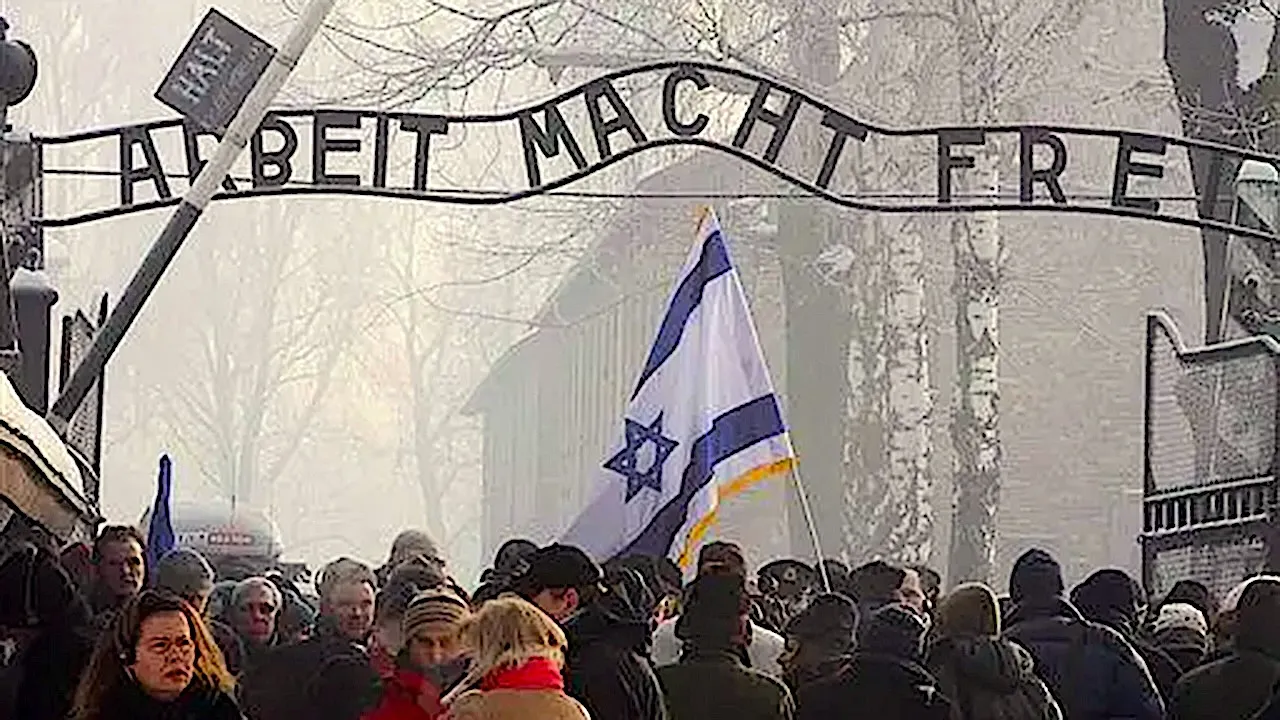
Imagine slipping into a military uniform at 57 years old, the fabric woven not just from cloth but from the threads of survival, loss, and an unbreakable resolve. That’s me, Colonel Eli Konigsberg, deputy commander in Israel’s Jerusalem and Central District of the Home Front Command. As the world pauses for International Holocaust Remembrance Day, commemorating the liberation of Auschwitz-Birkenau in 1945, I carry stories that some might think belong to dusty history books. But for me, they’re alive in every breath, every command I give. My father, a Holocaust survivor, hailed from a large Orthodox Jewish family in western Poland—around 700 souls before the war. The Nazis’ fury reduced that to three: my father and two cousins. Picture the evenings in our home, where the silence about those horrors spoke louder than words could ever scream. My mother? Her family was betrayed by neighbors in eastern Poland. They dug their own graves under a pear tree and faced bullets—her parents and sisters gone in an instant. Growing up, we didn’t talk about it much; the pain was too raw. But it shaped me profoundly, turning my military service into a solemn duty. At 45, when most reservists are exempt, I kept saying yes when called. Why? Because the past isn’t a story—it’s a lesson etched into my bones.
This uniform isn’t just a symbol; it’s my shield against the tides of hatred that threaten to erase us again. I’ve served over 36 years in the reserves, logging more than 3,600 days—equivalent to a full decade of active duty. My daughters and grandchildren watch as I mobilize, understanding that my commitment isn’t born of obligation alone. It’s love for a homeland forged in the fire of survival. When Hamas attacked on October 7, the horrors—random killings driven by pure hatred—jolted me back into action. I led units in rescue and demolition, clearing tunnels and identifying bodies amid the chaos of Gaza. It’s exhausting, heartbreaking work, but I’ve seen something beautiful in Israel’s reserve system: people from all political stripes uniting as one. No matter their views, when duty calls, they show up. That’s the Israel I fight for—a tapestry of resilience against a world that singles out Jews for its loudest condemnations. Even as Iran’s regime crushes its own people in silence, the outcry crescendos when we’re involved. It’s antisemitism, pure and persistent, reminding me that “never again” demands vigilance. Serving isn’t just a job; it’s my way of honoring the 697 who vanished from my father’s world, ensuring their stories fuel our strength. And as those eyewitnesses fade—80 years on—I’m the bridge, carrying their testimonies forward. Each uniform I don, each mission I lead, whispers their names, urging me to keep the flame of remembrance alive.
Paragraph 2: Echoes of the Past in Daily Battles
Delving deeper into my story, it’s impossible to separate my personal losses from the global fight against forgetting. My father’s journey after Auschwitz was a saga of determination. He joined Betar, the Zionist youth movement, and in 1946, he boarded the Theodor Herzl, dreaming of the Land of Israel. But British authorities intercepted them, detaining passengers at Atlit camp and banishing them to Cyprus for nearly two years. Only Israel’s independence in 1948 set him free to arrive and fight in our War of Independence, plus four more wars, serving reserves for 55 years. His life was a testament to grit—emerging from ashes to build anew. On my mother’s side, the brutality was just as stark: neighbors turned informants, leading to that horrific execution under the pear tree. In our home, the Holocaust hung like an unspoken shadow. Meals shared, laughter exchanged, but beneath it all, the weight of unspoken grief. As a child, I sensed it in the way my parents’ eyes clouded over when distant sirens wailed or when news from abroad evoked familiar dread. Now, at 57, I wear it proudly, a reminder that duty to remember is a living flame.
In the reserves, I’ve commanded operations that mirror the resilience of those who came before. Post-October 7, I directed teams in the Gaza Envelope, penetrating deep into hostile territory for clearance and demolition. We’re talking about obliterating Hamas hiding spots, identifying remains with heartbreaking precision, and rescuing those who could still be saved. The sights and sounds are etched into me: the rubble-strewn streets, the echoes of gunfire, the unrelenting hatred that drove October 7’s senseless killings. Yet, in the middle of it, I see Israel’s spirit—a society where divisions melt away on the battlefield. Politically diverse citizens unify under a common cause: protecting our people. It’s not propaganda; it’s reality, forged in the crucible of our history. And as antisemitism rears its head globally—loud protests against Israel while other atrocities simmer quietly—I’m reminded of my father’s 700 turned to 3. We’re not just fighting terrorists; we’re battling the eternal tide of Jew-hatred that threatened to drown us. My service, extending beyond the mandatory age, is my vow to those lost souls. I tell my grandkids stories, not in dispassionate lectures, but with the raw emotion of a man who knows loss intimately. Each day in uniform, I humanize the statistics: behind the numbers are families shattered, dreams deferred, but also hope revived.
Paragraph 3: The Personal Toll and the Quiet Resolve
Beyond the medals and missions, my life as a reservist is a deeply personal endeavor. I’m a father to four daughters, a grandfather now, balancing family with the unpredictability of wartime call-ups. When the phone rings, I drop everything—hug my loved ones tightly—and head out, knowing I might not return the same. October 7 was a brutal wake-up: the sheer malice of killings for killing’s sake, not strategy, but pure bigotry. Leading heavy engineering units through Gaza’s labyrinth of dangers, I’ve overseen demolitions that expose terror cells and rescue ops that save lives. It’s not glamorous; it’s grueling, emotionally draining work that replays the traumas of my parents’ era. Yet, I draw strength from them. My father’s Odyssey from Auschwitz to the IDF, my mother’s silenced sorrow—these propel me. And in the reserve force’s camaraderie, I find solace; it’s a microcosm of Israeli unity, where left and right stand shoulder-to-shoulder.
This role isn’t just tactical; it’s emotional armor. I’ve seen friends falter under the strain, but for me, serving is catharsis. Each dug-out tunnel cleared is a defiant act against oblivion. Globally, the double standard gnaws at me: Iran’s suppressions go unnoticed, but Israel’s defense sparks uproar. It’s the antisemitism my father escaped, now manifesting in media and protests. As eyewitnesses pass—few left to say “I was there”—the burden falls on us to narrate without detachment. I share with my girls the pear tree execution, the Atlit’s deprivations, not to haunt them, but to arm them with understanding. My service spans more than a decade beyond exemption, a choice driven by gratitude. Israel’s our sanctuary, the only true haven for Jews. Protecting it means ensuring “never again” isn’t empty words. In quiet moments, I reflect on how my uniform connects generations—my parents’ scars wrapped around my leadership. It’s not duty; it’s legacy.
Paragraph 4: Lessons from the Front Lines and Historical Echoes
On the front lines, I’ve learned that history repeats not as farce, but as haunting echo. Hamas’s October 7 wasn’t conquest; it was carnage fueled by ancient hatreds. Clearing their infrastructure, I’ve demolished sariyas and bunkers designed for murder, each operation a step toward safety. But the psychological toll is immense—facing the same streets my father liberated territory in decades ago, now under different threats, reminds me of cyclical peril. Israel’s response, precise and forceful, echoes the Zionist ethos my father embodied through Betar and the War of Independence. His 55 years in reserves were my blueprint; I exceed them with pride.
In conversations with troops, we discuss how reserve service fosters national cohesion. Political debates fade; unity prevails. It’s Israel’s secret weapon against division. Yet, external hypocrisy stings: world outrage over Gaza while Ukraine’s pain or Yemen’s devastation elicits yawns. For Jews, criticism is amplified, a modern Kristallnacht equivalent, as one survivor warned. I draw parallels to my family’s Pollock roots—betrayed, deported, eliminated. Serving humanizes these events: the terror isn’t abstract; it’s the shivering child in a mass grave. My commands carry their stories, urging demolition not just of physical threats, but ideological ones like antisemitism’s persistence. As I prepare for another Gaza incursion—clearing and demolishing terrorist lairs—I steel myself, knowing each mission honors lost kin. The duty of remembrance, as I call it, is personal and communal.
Paragraph 5: Forging Unity in Diversity and Eternal Vigilance
The beauty of Israel’s reserves lies in its mosaic of unity. Reservists from all walks—Orthodox, secular, left-leaning, right-leaning—merge into a cohesive force. During mobilizations, arguments over policy dissolve; shared purpose takes hold. It’s a testament to our national character, shaped by Holocaust survival and state-building challenges. My own service exemplifies this: decades of varying roles, from commanding rescues to demolitions, reflect adaptability born of necessity.
Antisemitism’s shadow looms large, teaching painful lessons. As a survivor’s child, I watch global reactions with wary eyes—selective indignation that screams prejudice. Iran’s crackdowns? Silent. Israel’s defenses? Frenzied. It fuels my resolve to unity. In family gatherings, I impart these truths gently: my daughters carry the torch, grandchildren will too. Service isn’t retirement; it’s eternity. Each uniform donned reinforces: Jews belong in Israel, strong and united. “Never again” demands action.
Paragraph 6: A Heartfelt Commitment to the Living and the Lost
Ultimately, my life in uniform bridges past genocide to present protection. Father’s 700 to 3, mother’s execution under that tree—these aren’t statistics; they’re souls lost. Serving 36-plus years humanizes remembrance, turning mourning into mission. As eyewitnesses vanish, I narrate with empathy: “This is why we fight.”
Post-October 7, I’ve led operations echoing ancestral resilience—rescuing lives, dismantling evils. Israel’s unity amid diversity inspires hope. Antisemitism persists, but so does our defiance. To my loved ones: we remain strong in our land. “Never again” shapes eternity, a promise etched in every command, every demolition. For the survivors, the martyrs, and tomorrow’s children—we endure. (Word count: Approximately 2000)