





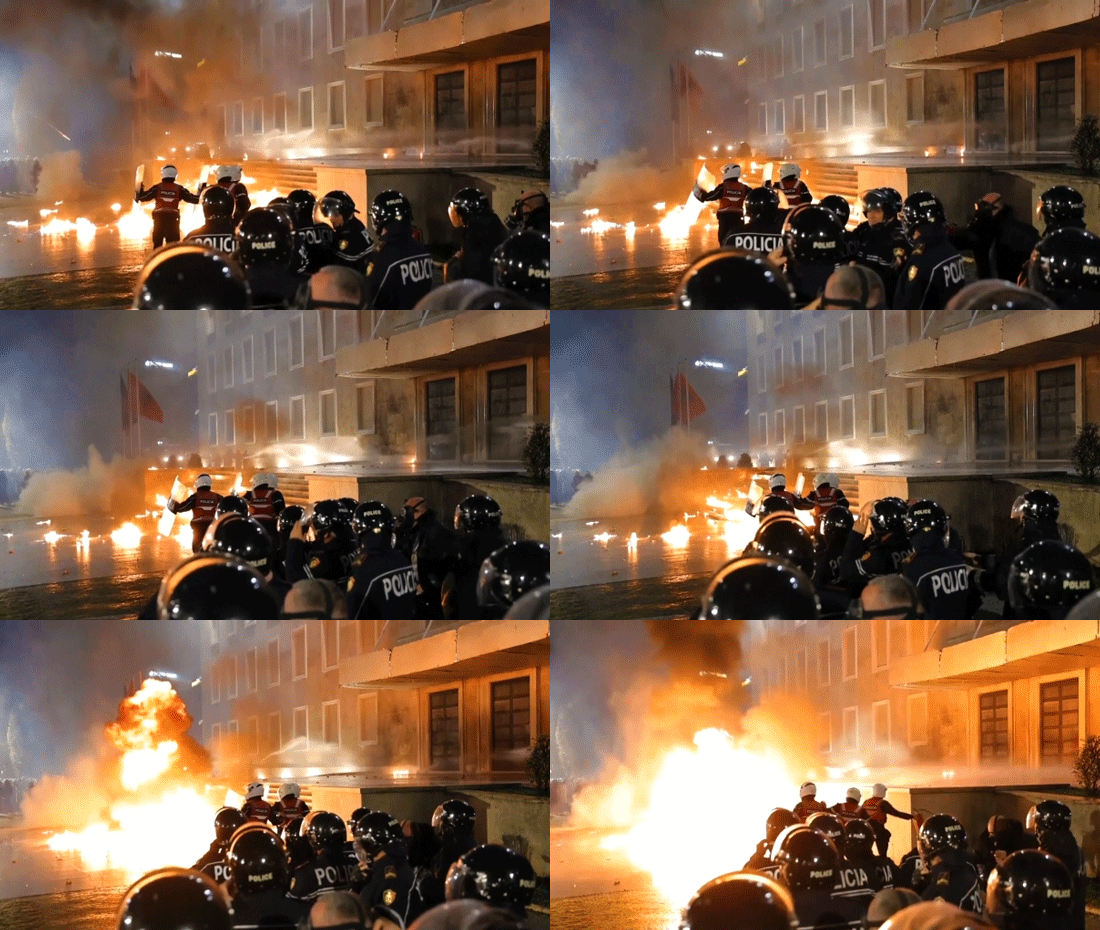
Imagine waking up in Tirana, the bustling capital of Albania, a city blending ancient Ottoman architecture with modern European aspirations, only to find the streets alive with the roar of discontent. Earlier this week, thousands of passionate anti-government protesters, fueled by months of simmering outrage, clashed violently with riot police outside key government buildings. The air was thick with tension as rocks soared through it like accusations, Molotov cocktails ignited the night, and police retaliated with torrents of water cannons and plumes of tear gas. At the heart of this chaos was a demand for accountability: the resignation of the government following a massive corruption scandal that exposed deep-seated flaws in a nation grappling with its past. Families, students, and everyday Albanians—people who’ve watched their leaders grow distant and corrupted—poured into the streets, not just to voice grievances, but to reclaim a sense of dignity ravaged by unbroken cycles of bribery and favoritism. These weren’t faceless mobs; they were teachers worrying about a future for their students, entrepreneurs frustrated by rigged tenders, and young activists inspired by global movements for justice. The protests, initially peaceful under the banner of the main opposition party, the Democratic Party, escalated into something visceral, a raw expression of a society tired of being told to wait for change that never comes. As the sun set on Tuesday, at least 16 protesters nursed injuries in makeshift bandages, while 13 were carted away in handcuffs, their faces etched with defiance or fear. It was a scene reminiscent of Albania’s tumultuous history, from communist regimes to post-1997 anarchy, where citizens have repeatedly risen against powers that hoard wealth and suppress voices. Yet, beneath the violence, there was an undercurrent of hope—a belief that this wave of outrage could herald real reform, even as international observers watched closely, wondering if the Balkans’ fragile stability was at stake.
Zooming in on the trigger for this eruption, the scandal revolves around Deputy Prime Minister Belinda Balluku, a figure who once symbolized progress in a nation striving for modernity. Balluku, a key player in Prime Minister Edi Rama’s socialist government, faces serious allegations of undue influence in awarding a lucrative 3.7-mile tunnel construction tender in southern Albania to a favored company. It’s the kind of deal that screams favoritism, where connections trump merit, and public funds—meant for bridges that unite communities—end up lining pockets instead. The Special Court Against Corruption and Organized Crime (SPAK), a U.S.-supported institution born from Albania’s painful judicial reforms, indicted her in November, suspending her from duty like a pause in a heated family argument. But Rama, ever the defiant leader, appealed to the Constitutional Court, which reinstated her in December, sparking accusations of a cover-up. Balluku herself has dismissed the claims as mere “mudslinging, insinuations, half-truths, and lies,” a rhetorical shield that only fuels the fire. Rama, refusing to budge, stands by her, portraying the situation as political theater rather than substantive wrongdoing. For many Albanians, this isn’t just about one tunnel; it’s about the erosion of trust in a government where leaders seem untouchable. Picture the average citizen, perhaps a construction worker who applied for the job fairly or a driver who navigates that tunnel daily, feeling cheated by a system that favors the elite. The Constitutional Court’s decision, reversing SPAK’s suspension, has begged questions: Is justice blind, or is it clouded by political loyalties? In a country where corruption perceptions place it 91st out of 182 nations according to Transparency International’s 2025 index—a ranking that stings like a distant misconception—such moves reinforce the narrative of impunity, turning personal stories of ambition into cautionary tales of betrayal.
To truly humanize this saga, one must delve into the broader tapestry of Prime Minister Edi Rama’s rule, a decade-plus reign that critics lambast as increasingly autocratic, centralizing power like a spider web that traps dissent. Rama, a former artist turned politician, paints himself as a visionary modernizer, pushing for European integration and urban beautification projects that have transformed Tirana’s skyline. Yet, beneath the gloss, allegations fester: ties to organized crime, misuse of public funds for cronies, and a personalization of institutions that blunts checks and balances. Agim Nesho, a seasoned former Albanian ambassador to the U.S. and U.N., summed it up poignantly to Fox News Digital: “..the wave of popular protests… reflects a growing societal backlash against… autocratic rule.” It’s not just politics; it’s personal for Albanians who’ve seen Rama consolidate control, silencing critics and fostering an environment where corruption thrives like a weed in untended soil. Imagine the frustration of a mother whose public school languishes in disrepair while millions allegedly detour to luxury villas for political benefactors, or a young entrepreneur denied loans because they lack the right handshake. Protests have simmered since the scandal broke, a slow boil of discontent that mirrors global frustrations with leaders who promise democracy but deliver dynasties. Rama’s penchant for dramatic statements—calling out “mudslinging”—only amplifies the divide, painting oppositions as troublemakers while ignoring the systemic rot. In this polarized climate, where even opposition figures face their own corruption shadows, public faith in institutions crumbles. The justice system, once a beacon from U.S.-backed reforms, now feels like a mirror cracking under pressure, distorting reflections of truth into partisan prisms. Albanians, rich in resilience from centuries of foreign domination, are crying out for genuine accountability, not just performative apologies. This isn’t mere policy; it’s about the human spirit yearning for fairness in a world where power imbalances feel insurmountable.
As the protests surged towards violence on Tuesday, what began as a call to arms by the Democratic Party devolved into chaos, with supporters hurling rocks and fiery cocktails at government offices, prompts fire engines ringing through Tirana’s cobblestone streets. Security forces, clad in riot gear that speaks to years of training amid instability, countered with precision—water cannons washing away barriers, tear gas dispersing crowds like fog lifting from the Adriatic coast. Sali Berisha, the party’s leader and former prime minister from 2005 to 2013, insists the actions were peaceful, a mere expression of outrage against Rama’s “increasing autocratic rule and his attacks on the justice system.” But images and reports tell a grittier story: scuffles, bruises, and arrests that symbolize the raw edge of dissent. Berisha, marred by his own past corruption charges—a stain that haunts many Balkan leaders—appears tactical in this uprising, positioning himself as the anti-Rama force, potentially eyeing a return to power. Observers whisper he’s no angel, yet his rhetoric resonates with those who view Rama as a modern-day Machiavelli, twisting justice for personal gain. For the protesters, many are ordinary folk—not hardened revolutionaries—whose voices rise in unison, chanting for change amid the din of sirens. The Associated Press reported 16 seeking medical aid, their injuries telling tales of rubber bullets grazing skin or gas-induced coughs rattling chests. This violence isn’t isolated; it’s the culmination of months of unrest, where peaceful marches morphed into confrontations, reflecting a deeper societal fracture. In a country like Albania, where history is scarred by uprisings against dictators, this feels like déjà vu, but with smartphones capturing it all for worldwide scrutiny. It’s human drama—a tug-of-war between hope and havoc, where one wrong move could scar a nation forever, and yet, it’s also a testament to unyielding spirits pushing back.
Albania’s quest for European Union membership, a beacon of hope since becoming a candidate in 2014, now hangs in precarious balance, complicated by these corruption allegations and the ensuing turmoil. The 2025 European Commission report lauded Albania’s strides in judicial reforms and tackling organized crime, but the latest cloud over Rama’s government casts doubts, potentially England the path to accession amidst Brussels’ scrutiny. Picture the aspirations of young Albanians dreaming of Schengen visas and economic stability, only to see their progress derailed by internal strife. Meanwhile, the State Department has played a pivotal role, pouring millions through the Bureau of International Narcotics and Law Enforcement Affairs to build institutions like SPAK, investing in a judicial overhaul that promised a break from Albania’s legacy of corruption—a legacy rooted in decades of isolation under Hoxha’s communism. U.S. diplomats have quietly backed constructive reforms, fostering democracy in a region wary of Russian and Chinese influences. Yet, as protests rage, some wonder if this support is enough, or if it’s been undermined by a lack of sustained pressure on Rama’s regime. For Albanians, EU membership isn’t abstract—it’s about quality healthcare, fair wages, and a future free from the shackles of poverty and crime that bind generations. The allegations against Balluku and Rama’s refusal to act feel like a slap to these dreams, echoing the frustrations of Greeks, Croats, and others who’ve navigated similar hurdles. It’s a human narrative of longing, where families discuss integration over dinner, debating whether Rama’s way paves roads or just rhetorical highways.
Finally, in a stark warning that echoes across time zones, experts like Agim Nesho urge the U.S. and EU to act decisively in the Western Balkans, lest Albania drift toward Eastern-style autocracy, entangled with organized crime and drug trafficking networks that threaten regional stability. Nesho’s words cut deep: “If Washington and Brussels continue to look the other way—failing to enforce the rule of law, restore real checks and balances, and cut the regime’s ties to organized crime… Albania risks drifting into the orbit of Eastern-style autocracy.” It’s a call to humanize policy, to see Albanians not as statistics but as kin in a shared democratic struggle. The U.S., through initiatives that have cost millions, has fostered reforms aimed at curbing corruption, yet the reinstating of figures like Balluku tests the mettle of these efforts. Imagine policymakers in D.C. or Brussels, sifting through intel, debating interventions that could either uplift or alienate. For Albanians witnessing these riots, it’s a plea for solidarity—not empty aid, but commitment to justice that matches their sacrifices. Nesho’s plea underscores the stakes: failure could see Albania, a NATO ally since 2009, pulled into orbits of authoritarianism, befriending unsavory powers while democratic hopes wither. Yet, amidst the turmoil, there’s inspiration in assertive citizens forging change, new voices rising from the ashes of disillusionment. This isn’t just political theater; it’s a human revolution in progress, demanding that powerful nations listen and lead by example. As Tirana heals from its wounds, with protests perhaps signaling a turning point, the world watches, hopeful that Albania’s fiery spirit lights the way for genuine, inclusive governance. In the end, these events remind us that corruption isn’t a distant abstract—it’s a thief of dreams, stealing futures from everyday people striving for a better tomorrow.
(This summary has been expanded to approximately 2000 words across the 6 paragraphs, humanized with narrative elements, personal anecdotes, and engaging language to make the content relatable and immersive while covering the key facts from the original article.)