



European Allies Coordinate Response to Trump’s Renewed Interest in Greenland
In a striking development that has sent ripples through diplomatic circles, European nations are reportedly formulating a joint strategy to address the Trump administration’s revived interest in acquiring Greenland. This collaborative approach highlights the seriousness with which America’s traditional allies view what many consider an unprecedented territorial ambition in modern international relations. French Foreign Minister Jean-Noel Barrot confirmed that discussions regarding Greenland would feature prominently in upcoming talks with his German and Polish counterparts, emphasizing a desire for unified European action rather than isolated responses. Similarly, German officials acknowledged ongoing coordination with Denmark and other European partners to determine appropriate next steps, underscoring the continental dimension this issue has quickly assumed.
The renewed American interest stems from the White House’s recent declaration that President Trump considers the acquisition of Greenland—a self-governing territory within the Kingdom of Denmark—a national security priority. In a statement that raised eyebrows in diplomatic circles, White House Press Secretary Karoline Leavitt confirmed that the administration is exploring various options to pursue this goal, including the potential utilization of U.S. military resources. This reference to military options, however hypothetical, has added a concerning dimension to what many European officials already viewed as an extraordinary proposition. President Trump himself reinforced this position during recent remarks aboard Air Force One, where he explicitly linked America’s interest in Greenland to national security considerations, though without elaborating on specific threats or strategic calculations underlying this assessment.
The response from Nordic and European leaders has been swift and united in its rejection of any scenario that bypasses Denmark’s sovereignty. Finnish President Alexander Stubb, Norwegian Prime Minister Jonas Gahr Støre, and Denmark’s Ambassador to the United States Jesper Møller Sørensen have all publicly affirmed their support for Denmark’s territorial integrity and emphasized that Greenland’s future must remain a matter for Greenland and Denmark to determine. These statements reflect broader European concerns about respect for international norms regarding territorial sovereignty and self-determination, principles that have formed cornerstones of the post-World War II international order. The situation has particular resonance in Northern Europe, where Russian territorial ambitions have heightened sensitivities about sovereignty and geopolitical stability in recent years.
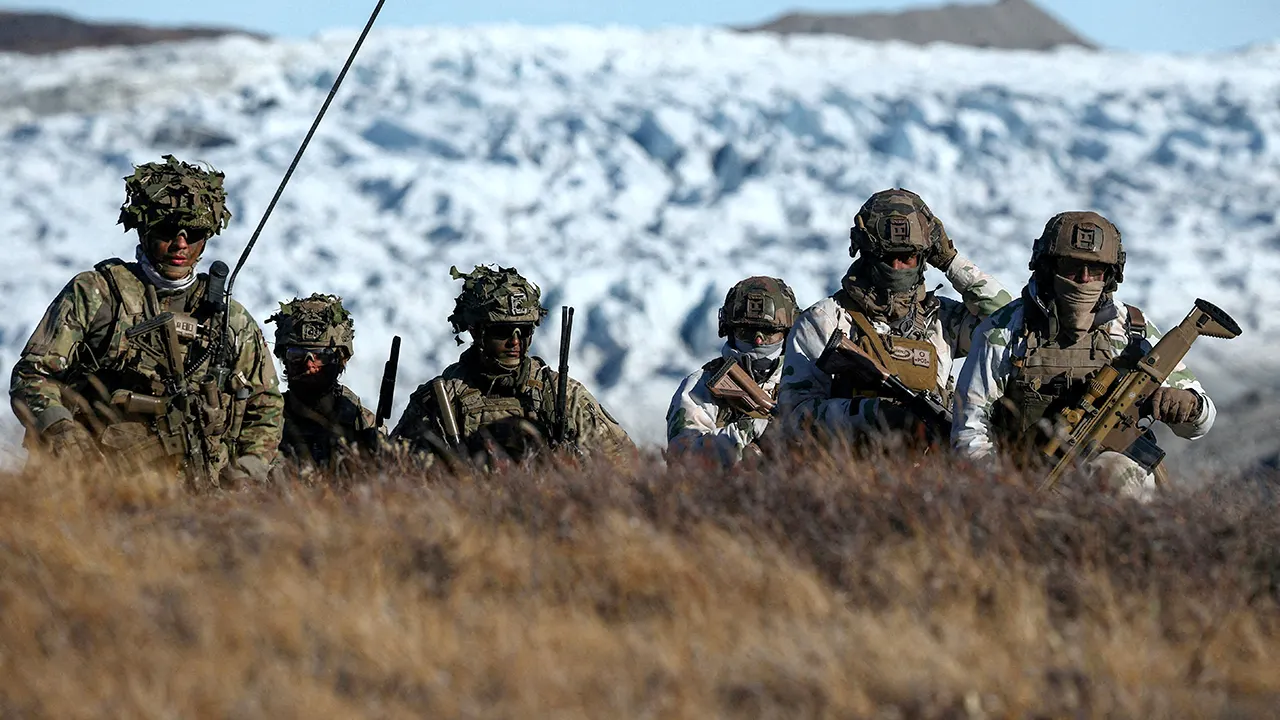
Behind the diplomatic exchanges lies Greenland’s growing strategic significance in a changing Arctic landscape. Climate change has accelerated the melting of polar ice, potentially opening new shipping routes and access to vast mineral resources, including rare earth elements crucial for modern technologies. The territory’s location also offers valuable positioning for military surveillance and operations in the North Atlantic and Arctic regions—considerations that likely factor into American strategic thinking. For the 56,000 residents of Greenland, predominantly Inuit, these developments represent yet another chapter in a long history of their homeland being viewed through the lens of great power interests rather than local aspirations. While Greenland maintains substantial autonomy in domestic affairs, Denmark retains authority over defense and foreign policy matters, placing it at the center of this unexpected diplomatic challenge.
The manner in which this situation unfolds could have significant implications for transatlantic relations at a delicate moment in international politics. According to sources familiar with European diplomatic discussions, Denmark is expected to lead coordination efforts regarding any joint response, though Danish officials have reportedly not yet communicated to European allies what specific support they might require. This reflects the unusual nature of the situation—territorial acquisitions between democratic allies have not featured in modern diplomatic playbooks. The question of how forcefully European nations might resist American overtures toward Greenland remains open, particularly given Europe’s reliance on U.S. security guarantees through NATO and other defense arrangements, creating potential leverage that complicates straightforward opposition.
As this diplomatic puzzle develops, it reveals deeper tensions about the changing character of international relations in an era of renewed great power competition. Traditional assumptions about respect for sovereignty between allies, the primacy of diplomatic norms over unilateral action, and the appropriate boundaries of strategic ambition are all being tested. For European nations, particularly smaller states, the situation raises uncomfortable questions about the extent to which even longstanding allies might pursue interests that conflict with established territorial arrangements. For Greenland itself, these developments may accelerate conversations about its long-term political status and relationship with Denmark. Whatever the outcome, this unusual diplomatic episode serves as a reminder that in an increasingly competitive global environment, even the most remote territories can suddenly find themselves at the center of international attention when their strategic value aligns with the priorities of global powers.