






Europe’s Battle Against the Rising Tide of Cocaine Trafficking
In a startling revelation that highlights the evolving nature of global drug trafficking, European authorities are finding themselves increasingly overwhelmed by a flood of cocaine making its way across the Atlantic. “Europe is literally being flooded with cocaine,” warns Artur Vaz, Portugal’s narcotics police chief and director of the National Unit for Combating Drug Trafficking at Portugal’s Judiciary Police. This stark assessment underscores a growing crisis that has European law enforcement scrambling to adapt to sophisticated smuggling techniques that were once primarily a concern for U.S. authorities. The economics driving this transatlantic drug trade are straightforward yet powerful: criminal organizations acquire cocaine in Latin America at relatively low prices, then sell it in European markets where profit margins are substantial, creating a seemingly irresistible incentive for traffickers to develop increasingly innovative methods of transportation.
The evolution of smuggling techniques has reached new levels of sophistication, with traffickers employing a diverse arsenal of vessels to move their illicit cargo across the Atlantic. While traditional cargo ships and high-speed boats continue to play a role, European authorities are increasingly encountering low-budget, semi-submersible vessels known colloquially as “narco-subs.” These stealthy crafts are designed to evade detection, sailing with only their tops visible above the water’s surface – often painted in steely blues and grays to blend with the stormy Atlantic waves. Portuguese authorities recently celebrated a significant victory when they intercepted one such narco-sub in the mid-Atlantic carrying 1.7 metric tons of cocaine. However, this success story represents just the tip of the iceberg. As Sam Woolston, an investigative journalist specializing in organized crime, explains, “The interdiction rates for these subs is between 10%, roughly, and maybe as low as 5%. Even if one or two get nabbed by the authorities, it’s not enough to dissuade them.” This sobering statistic highlights the enormous challenge facing European law enforcement agencies.
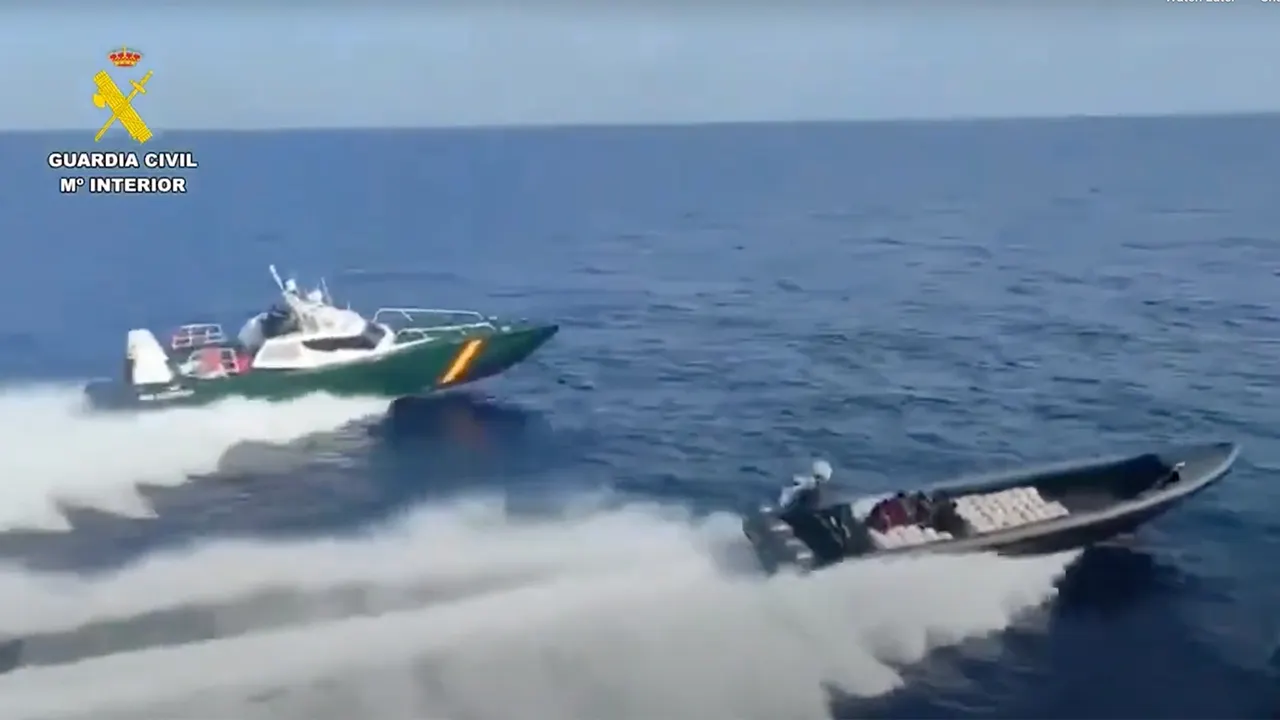
The stark contrast between European and American approaches to combating maritime drug trafficking reveals a fundamental difference in tactics and legal frameworks. While the Trump administration has adopted an increasingly aggressive policy of destroying suspected drug vessels and, in some cases, killing their crews, European authorities generally opt for interception rather than destruction. The European approach prioritizes detaining the often low-ranking crew members for interrogation, hoping to gather intelligence about the drug kingpins, gang operations, and distribution networks that orchestrate these smuggling operations. This more measured approach reflects Europe’s strict adherence to legal constraints, though some officials express a desire for expanded capabilities. As Portugal’s Vaz puts it, “We must be more muscular — that is, with greater means and a greater capacity for intervention. But, of course, within the rule of law.” This statement encapsulates the tension European authorities face between respecting legal boundaries and effectively combating increasingly sophisticated drug trafficking networks.
The appearance of narco-subs in European waters represents a significant evolution in drug trafficking techniques. While such vessels have been used in the Americas for years, their deployment across the vast Atlantic Ocean marks a new frontier in smuggling innovation. “It’s mind-boggling, the level of sophistication,” notes Derek Maltz, a former acting chief of the U.S. Drug Enforcement Administration. The willingness of trafficking networks to risk expensive equipment and human lives on the treacherous transatlantic journey speaks to both their resources and their confidence in avoiding detection. Maltz suggests that part of the problem may be perception: “It’s all about the money, and it’s all about the risk, and right now I don’t think these networks perceive Europe as a huge risk for them.” This assessment hints at a troubling reality – that drug cartels may view European waters as a softer target compared to the more militarized American approach to interdiction, potentially driving more trafficking activity toward European shores.
The human dimension of this illicit trade is perhaps its most disturbing aspect. The dangerous transatlantic journeys aboard narco-subs are typically undertaken not by drug lords or high-ranking cartel members, but by what Woolston describes as “desperate people” willing to risk everything for a paycheck. “You’ll be locked up in a very small compartment for days, usually inhaling things like diesel fumes,” explains the journalist. “There have been cases of narco submarines found with a crew of dead bodies.” This grim reality underscores the exploitative nature of the drug trade, where those at the bottom of the hierarchy face the greatest dangers while those at the top remain safely distant from the risks. “The kingpins would not get on these boats,” Woolston emphasizes, highlighting the disposable view traffickers take toward the human lives involved in their operations. This aspect of the trade presents European authorities with both a humanitarian challenge and a law enforcement dilemma – how to appropriately deal with crew members who are simultaneously perpetrators and victims.
As cocaine continues to flow into Europe at unprecedented rates, the challenges facing authorities grow increasingly complex. The sophisticated methods employed by drug trafficking organizations demand equally sophisticated responses, yet European law enforcement agencies must balance effective interdiction with legal constraints and humanitarian considerations. The contrasting approaches of European and American authorities highlight different philosophies in combating drug trafficking, with Europe generally favoring intelligence gathering and prosecution over the more aggressive American tactics. As narco-subs and other innovative smuggling methods continue to evolve, European authorities may need to reassess their strategies and capabilities while maintaining their commitment to operating within legal frameworks. What remains clear is that as long as the enormous profit incentive exists, criminal organizations will continue to develop new and creative ways to transport cocaine across the Atlantic, presenting an ongoing challenge that requires international cooperation, advanced technology, and sustained commitment to address effectively.