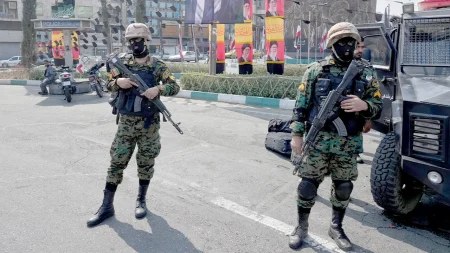





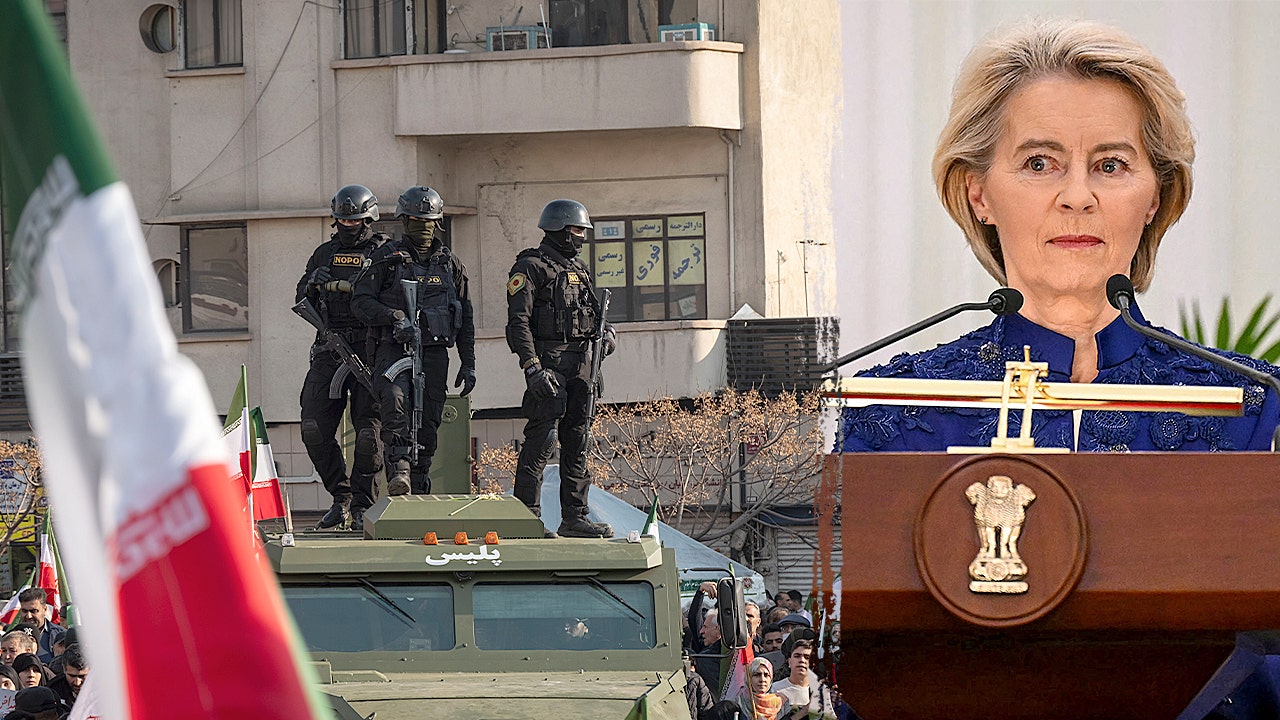
In the heart of Europe, a momentous decision unfolded on Thursday, one that echoed the cries for justice from a distant land gripped by turmoil. The European Union took a bold step forward, formally moving to label Iran’s Islamic Revolutionary Guard Corps (IRGC) as a terrorist organization. This wasn’t just diplomatic jargon; it was a symbolic strike against what many saw as a regime’s brutal machinery. Since December 28, Iran had been rocked by nationwide protests sparked by the death of Mahsa Amini, a 22-year-old Kurdish woman arrested for allegedly violating strict dress codes. What began as grief turned into a firestorm of defiance, with millions pouring into streets across cities like Tehran, chanting for freedom and against theocratic oppression. Families huddled around flickering smartphones, sharing videos of young women cutting their hair in solidarity, while fathers worried about sons detained in midnight raids. The IRGC, a powerful entity that’s as much a political force as a military one, has been at the forefront of crushing these uprisings, using live ammunition against unarmed crowds. By designating it as terrorists, the EU aimed to expose the force’s role in what Human Rights Watch termed “widespread atrocities,” including over 400 killings in one province alone. This move came alongside a fresh slate of sanctions targeting key figures and entities supporting the crackdown, effectively throttling the regime’s finances and isolating its enforcers. For ordinary Iranians, who had seen their social media feeds censored and their voices silenced through blackouts, this international gesture felt like a glimmer of hope—a validation that their suffering wasn’t in vain.
At the core of these sanctions were the faces of repression: Iran’s interior minister, high-ranking IRGC commanders with blood on their hands, police chiefs overseeing mass arrests, and even cyber enforcers who waged war on digital free speech. These weren’t abstract entities; they were individuals with names and stories, appointees loyal to a system that had long repressed dissent. One sanctioned commander, for instance, was reportedly directly involved in coordinating units that fired on protesters in Shiraz, where a 17-year-old boy named Amin was killed in broad daylight, leaving his grieving mother to organize makeshift vigils in hidden basement gatherings. Another target was a judge from revolutionary courts, known for rubber-stamping sentences that sent activists to the hangman’s noose. The sanctions also extended to those aiding Russia’s war efforts, with Iranian drone supplies to Ukraine frontlines cited as a betrayal of global norms. As of Thursday, confirmed fatalities stood at a staggering 6,373, with thousands more under review—each a human life cut short, from students dreaming of higher education to housewives protesting inequalities. The Human Rights Activists News Agency painted a bleak picture: a “post-crackdown phase” where arrests morphed into psychological terror, with paramilitary forces in Iranian cities employing tactics reminiscent of guerrilla warfare, firing heavy machine guns through residential areas to instill fear. Families like that of a Tehran dentist, whose daughter vanished during a protest and resurfaced weeks later in a prison hospital, embodied the raw emotion behind these numbers. Economically, the fallout was dire; inflation ravaged already strained households, with reports of regime elites funneling millions abroad amid rumors of sanctions evasion. Yet, in the shadows of this oppression, small acts of resistance flourished—women removing hijabs in secret recordings, or couples dancing in hidden parks, defying the IRGC’s grip on daily life.
Welcoming this seismic shift, European Commission President Ursula von der Leyen took to social media, her words a rallying cry that resonated far beyond Brussels. “I welcome the political agreement on new sanctions against the murderous Iranian regime,” she posted, her digital voice amplifying the plight of Iranians. She didn’t mince words: calling the IRGC “terrorist” was a long-overdue acknowledgement of a force that crushed protests “in blood.” For von der Leyen, this wasn’t policy; it was personal, a reflection of Europe’s shared values of democracy and human rights. She envisioned standing with the brave individuals in Iran, from young girls risking everything for educational equality to men chanting against compulsory military service in a draft-dodging aristocracy. German Foreign Minister Johann Wadephul echoed this unity, pledging rapid legal implementation of the designation—a “strong political signal” mirroring the repression’s scale. He evoked the IRGC’s auxiliary militias meeting unarmed protesters with “extreme violence,” from executions in stadiums to orchestrated disappearances that left communities fractured. Wadephul spoke of European solidarity, “side by side” with Iranians against destabilization not just at home but across the Middle East, where the IRGC had fueled proxy wars in Syria and Yemen. His tone carried empathy for families subjected to communication blackouts, where mothers couldn’t call sons for days, fearing the worst. In parliament sessions back home, European leaders debated the moral weight: was this enough to deter violence, or merely a band-aid on a festering wound? Activists in exile, like those in Berlin cafés recounting tales of torture, hailed the move as a victory, but cautioned that sanctions alone couldn’t topple a regime with nuclear ambitions and a web of global influence.
The EU’s decision didn’t happen in isolation; it built on a growing chorus of condemnation from the global stage. The United States had already branded the IRGC a Foreign Terrorist Organization back in April 2019, a move that restricted its financing and travel, effectively isolating its operatives on American soil. Canada joined in June 2024, followed by Bahrain and Saudi Arabia, all signaling an erosion of diplomatic cover for what they viewed as a destabilizing force. Organizations like United Against Nuclear Iran (UANI) urged the United Kingdom to follow suit, warning that without broader restrictions, the IRGC could continue laundering funds through shell companies in places like the UAE. For ordinary observers worldwide, these designations brought home the IRGC’s metastasizing threat: its members weren’t confined to Iran’s borders but operated in espionage networks, from Vienna’s streets to New York’s boardrooms. Amid the protests, stories emerged of IRGC-linked operatives infiltrating diaspora communities, intimidating critics through cyberattacks or worse. One exiled journalist in Vancouver detailed how her father, a Tehran street vendor, was warned by IRGC proxies after her reporting, forcing him to flee. Internationally, the move highlighted Europe’s evolving role in Middle Eastern affairs, shifting from appeasement to accountability. Lindsey Graham, the outspoken U.S. Senator, amplified calls for American intervention, urging “any means necessary” to halt the killings—a stance that polarized opinions on isolationism versus engagement. In the background, U.S. lawmakers debated expanding sanctions on Iranian elites allegedly siphoning wealth, drawing parallels to historical boycotts against apartheid South Africa. Yet, for Iranians watching from afar, these alliances offered both hope and heartache, as recollections of past revolts—crushed in 2009—reminded them that change was fragile.
From Tehran’s gilded halls, the Iranian response was defiant, laced with what some called ironic hypocrisy. Parliament Speaker Mohammad Bagher Ghalibaf lambasted the EU, dismissing the IRGC as “one of the strongest and most effective anti-terrorism forces in the world.” He invoked their battles against ISIS, praising their global fight against extremism while overlooking the domestic carnage. This narrative, trotted out in state media broadcasts, served to rally a populace weary of economic hardship, but for many, it rang hollow. Protesters-turned-refugees in Turkey shared stories of IRGC units posing as anti-terror squads, only to turn their weapons on civilians heeding calls for democracy. Ghalibaf’s words came alongside government-issued propaganda videos, portraying international critics as pawns of “Western imperialism,” a phrase that evoked memories of the 1979 revolution’s anti-American fervor. Inside Iran, where free speech was a luxury, dissent simmered underground; coded messages in poetry or graffiti mocked the regime’s stance. Families of defectors, like that of an IRGC officer who fled to Canada, faced reprisals—relatives arrested, homes raided—for his perceived betrayal. Internationally, analysts noted Tehran’s reliance on IRGC fronts for economic survival, from oil exports to arms trafficking, making sanctions a double-edged sword that could deepen internal divisions. Yet, the regime’s dismissal of the EU’s move as “hypocritical” underscored a deeper fear: that isolation might breed unrest from within, turning public opinion against a leadership propped up by force.
Looking ahead, this EU designation carries profound implications for Iran’s future and the global fight for freedom. It could pave the way for multinational cooperation, straining Tehran’s alliances with powers like Russia, where IRGC assistance in drone warfare has drawn ire from human rights groups. In Iran, activists hope it emboldens the “woman, life, freedom” movement, with rallies potentially defiant under a legal umbrella that criminalizes suppression. For families still mourning the fallen—like the parents of Kian Pirfalak, the 9-year-old boy shot in the head during protests—these measures offer a rare sense of justice, albeit delayed. Economically, experts predict tighter scrutiny on Iran’s illicit networks, potentially curbing regime wealth while exacerbating hardships for average citizens, sparking debates on humanitarian aid. On the world stage, it invites alliances among democracies, from EU-U.S. intelligence sharing to countering Iranian influence in proxy conflicts. Critics warn of escalation risks, as Tehran might retaliate through cyberattacks or regional sabre-rattling, akin to past missile launches. Yet, for Iranians, this moment symbolizes resilience: stories of Zuckerberg lighting a profile picture in solidarity, or global petitions amassing millions, remind them they’re not alone. Ultimately, the IRGC’s terror label isn’t just a title; it’s a bridge to accountability, humanizing the struggle of a nation yearning for change. As von der Leyen put it, Europe stands with Iran’s brave fighters—a pledge that, if honored, could rewrite history’s darkest chapters.