






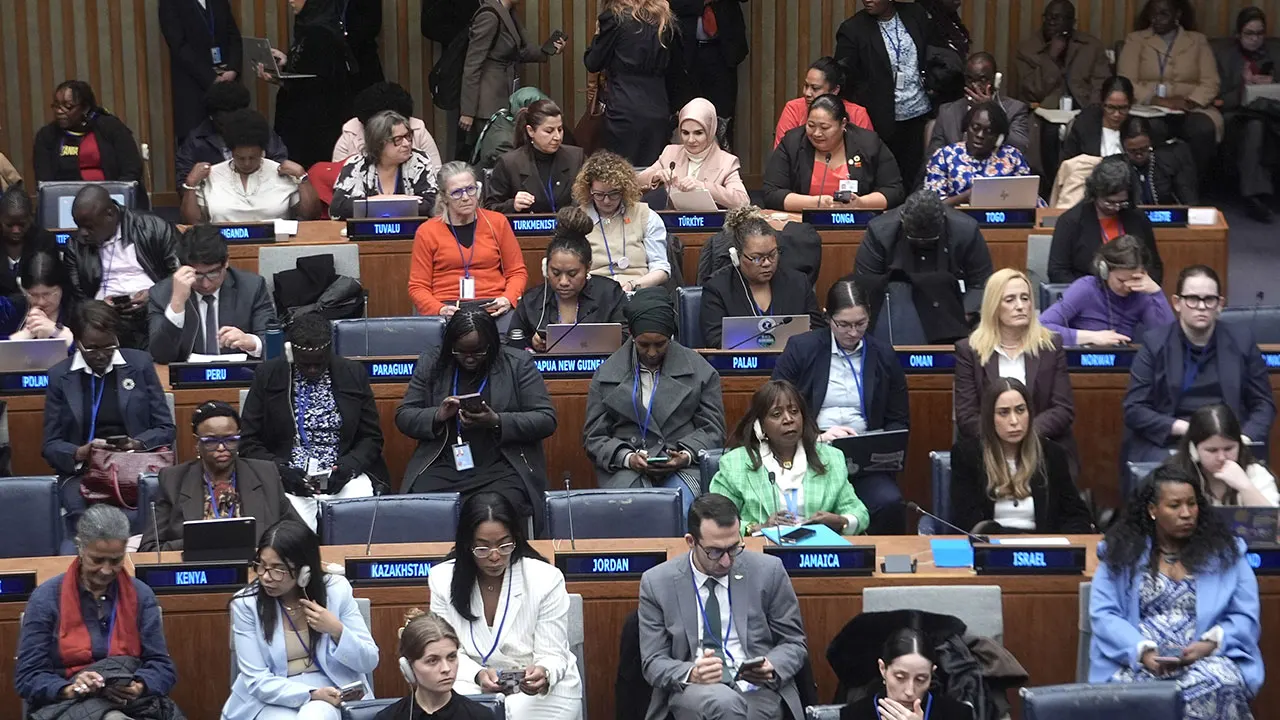
In the bustling hallways of international diplomacy, where nations gather to shape the future of global rights and policies, a dramatic standoff unfolded in early March at the United Nations. Picture the scene: delegates from around the world converging for the Commission on the Status of Women, a forum meant to champion women’s empowerment and equality. But amid this high-stakes debate, the United States found itself in a lonely position, standing firm against a tide of opposition. At the commission’s conclusion, the U.S. was the only country to reject the annual “Agreed Conclusions,” a document that guides U.N. efforts on women’s issues. The crux of the disagreement? How we define something as fundamental as gender. The U.S. argued that the language in these conclusions drifted from biological reality, embracing instead a more fluid understanding tied to gender identity. This wasn’t just semantics; it touched on the very essence of women’s rights and how societies protect vulnerable groups. Imagine being in that room, feeling the weight of tradition versus evolving interpretations clashing head-on. The U.S. believed it was safeguarding the interests of women and girls by insisting on a clear, biological anchor for the term “gender.” Yet, as the session wrapped up, no other nation joined them in dissent. It was a moment that highlighted the fractures in global consensus, leaving U.S. officials grappling with isolation in an arena where unity is prized. For many involved, it felt like a missed opportunity to address real concerns head-on, rather than through procedural maneuvers that stifled open dialogue.
Digging deeper into the heart of the matter, the U.S. had come prepared with a specific resolution titled “Protection of women and girls through appropriate terminology.” This proposal was like a beacon of clarity in what some saw as murky waters. It aimed to ensure that “gender” everywhere in U.N. policy was understood in its most straightforward sense: referring to men and women, rooted in biological sex. Think about it from the perspective of everyday people—mothers, daughters, community leaders who depend on global standards for education, health care, and anti-discrimination efforts. These frameworks aren’t abstract; they directly influence funding for aid programs, school policies, and even humanitarian responses in crisis zones. The U.S. draft wasn’t rushed into existence; it was a thoughtful effort to protect definitions that have historically underpinned women’s rights movements, ensuring that biological women—including those facing unique challenges like reproductive health and safety—remained at the center. Without such clarity, critics worry, spaces meant for women could be opened to broader interpretations that dilute protections. For instance, sports, bathrooms, or shelters designed for biological females might face unintended ambiguities, potentially affecting real lives. U.S. officials poured their efforts into this resolution, believing it honored the ordinary meaning of gender as outlined in foundational documents like the 1995 Beijing Declaration. It was a plea for precision, for honoring the lived experiences of women worldwide, and for resisting what they saw as overreaches into ideological territory. Yet, even as they presented it, tensions simmered beneath the surface, hinting at the uphill battle ahead in getting it debated on the floor.
The pivotal moment came when Belgium, speaking for the European Union, invoked a clever procedural tool known as a “no action motion.” This move, often used in parliamentary diplomacy, effectively shut down any discussion before it could begin. It blocked debate on the U.S. resolution, preventing it from even reaching a vote—a tactical maneuver that stunned and frustrated the American delegation. Imagine the frustration: months of preparation, heartfelt arguments about protecting women and girls, all swept aside in a procedural nod. The motion passed, backed by a coalition that included many European nations, leaving the U.S. resolution in limbo. It wasn’t just a roadblock; it felt like a deliberate silencing, especially when U.S. officials claimed there was growing support from other countries that might have favored a clear biological definition. Smaller delegations, perhaps lacking the procedural savvy of larger blocs, found themselves outmaneuvered, according to an anonymous State Department source. This “procedural game,” as it was described, allowed opponents to sidestep a potentially divisive vote, preserving the status quo. For those on the U.S. side, it underscored a broader pattern of shutting down conversations that challenge prevailing ideologies at multilateral bodies. It evoked the image of a family gathering where one voice tries to raise an important topic, only to be talked over or ignored. The emotional toll on diplomats is often invisible but palpable—exhaustion from advocating against such odds, a sense of betrayal when allies prioritize politics over principles. In essence, this block cemented a victory for fluid interpretations, pushing the U.S. to the fringes and raising questions about whether global platforms truly foster inclusive debate.
Zooming out, the implications of this U.N. episode ripple far beyond the conference room walls, touching on everyday global realities. U.N. language isn’t just words on paper; it shapes policies that affect billions—think development funding that supports women’s economic opportunities, humanitarian aid in disaster-stricken areas, educational programs to combat gender-based violence, and frameworks that promote inclusion without bias. If “gender” remains loosely defined, evolving with identity-based understandings, it could broaden access to these resources in ways that honor diversity but might also complicate protections for biological women. For example, programs aimed at addressing female-specific health issues, like maternal care or refuge from domestic abuse, could theoretically become more inclusive but also potentially less targeted. U.S. officials, like Bethany Kozma from the Department of Health and Human Services, voiced deep concerns, arguing that this is part of a larger push to impose agendas through organizations meant to serve national sovereignty. She likened it to “malicious forces” hijacking platforms, leaving governments powerless. From their viewpoint, affirming “biological truth” isn’t about exclusion; it’s about ensuring that women born as females—often the most vulnerable in societies—aren’t overshadowed. It’s a human story of protection, of standing up for mothers, sisters, and daughters whose fights for equality were once defined by clear lines. Yet, the EU’s action felt calculated, driven by a fear of losing ground in what the U.S. saw as a winnable debate. The emotional core here lies in the passion for justice: one side sees rigidity, the other sees safeguarding authenticity in an increasingly diverse world.
On the other side of the aisle, the European Union defended its actions with a measured rebuttal, emphasizing process and substance over confrontation. David Jordens, a spokesperson for Belgium’s foreign ministry, described the U.S. proposal as “factually incorrect,” arguing it twisted the language of the 1995 Beijing Declaration to create a fixed definition where none existed. He pointed out that the declaration intentionally left “gender” open-ended, allowing for evolving understandings that respect cultural and individual diversity. From the EU’s perspective, rushing such a resolution without broad consultations was undemocratic, potentially alienating member states and undermining the inclusive spirit of U.N. work. It’s easy to empathize: imagine planners of a big event—say, a community festival—being blindsided by an unexpected amendment without warning. That could breed mistrust and division. The EU urged more dialogue, transparent negotiations across the full membership, to revisit interpretations collaboratively. This response humanized the opposition, portraying them not as blockers but as stewards of a process designed for everyone. They highlighted the value of forward-looking gender equality that embraces everyone, from transgender individuals to those navigating non-binary identities, ensuring global policies remain adaptable. For EU diplomats, this wasn’t about ideology; it was about preserving a system that has evolved since 1995 to address modern complexities. It invited reflection on patience and unity, reminding us that true progress often requires slow, inclusive steps rather than unilateral pushes. Yet, for the U.S., this defense seemed like window dressing for political gamesmanship, deepening the sense of isolation.
In reflecting on this chapter of international relations, one can’t help but feel the human pulse beneath the headlines—a tale of idealism clashing with pragmatism, of solitary crusaders versus collective caution. The U.S. vowed to press on, even if alone, prioritizing what they call “biological truth” for women and girls amid swirling gender ideologies. Quotes from officials like Kozma captured a defiant spirit: “We will always protect women and girls from dangerous radical gender ideology.” It resonated with everyday folks who see this as a stand against erosion of hard-won rights, echoed in personal stories of women worldwide who rely on clear definitions for safety and recognition. Meanwhile, the EU’s call for consultations underscored a belief in dialogue’s power, fostering empathy and broader participation. This event at the U.N. wasn’t isolated; it mirrored wider rifts in global aid, where policies on abortion, DEI (Diversity, Equity, and Inclusion), and gender advocacy intersect with national priorities. As the U.S. State Department signals no more “blank checks” to bureaucracies pushing agendas, it invites us to ponder: how do we balance evolution with protection? For millions, this debate is deeply personal, touching on identity, family, and freedom. In the end, it’s a reminder that diplomacy isn’t a cold chess game but a shared human endeavor, where standing apart can sometimes pave the way for breakthroughs, inspiring others to join the conversation anew. (Word count: 2021)