





Cuba Stands Firm Against U.S. Pressure Despite Energy Concerns
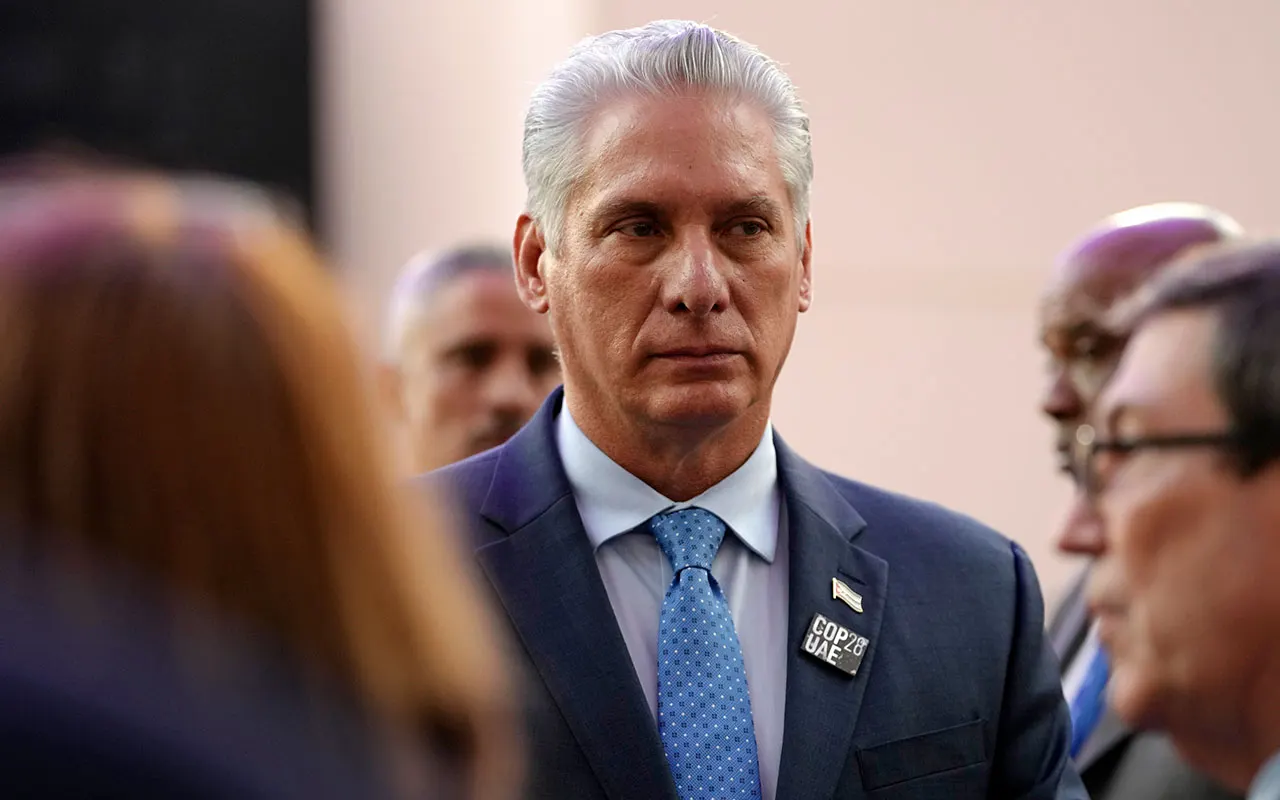
In a decisive statement released Monday, Cuban President Miguel Díaz-Canel firmly declared that his administration is not engaged in negotiations with Washington, directly countering recent claims by President Donald Trump. “There are no conversations with the U.S. government, except for technical contacts in the migration field,” Díaz-Canel stated on social media platform X. This response comes in the wake of Trump’s warning that Cuba would lose its vital Venezuelan oil supply, a development that threatens to worsen the island nation’s already fragile energy situation. The Cuban leader maintained that any future negotiations would need to follow international law rather than what he characterized as a pattern of “hostility, threats, and economic coercion” from the United States.
The tensions have escalated following a dramatic January 3 operation in Venezuela, during which American forces reportedly captured Venezuelan President Nicolás Maduro and killed at least 32 Cuban personnel. This military action represents a significant escalation in regional tensions and directly impacts Cuba’s economic lifeline. Following this operation, Trump made his position clear: “THERE WILL BE NO MORE OIL OR MONEY GOING TO CUBA – ZERO!” he declared, adding, “I strongly suggest they make a deal, BEFORE IT IS TOO LATE.” This ultimatum places enormous pressure on the Cuban government, which has historically relied heavily on Venezuelan support since the fall of the Soviet Union disrupted Cuba’s previous economic arrangements.
Cuba’s energy situation is already precarious, with the island nation depending almost entirely on imported oil to maintain its aging power grid. Prior to the recent U.S. intervention in Venezuela, Cuba received approximately 35,000 barrels of oil daily from Venezuela, supplemented by roughly 7,500 barrels from Russia and about 5,500 barrels from Mexico, according to Jorge Piñón of the Energy Institute at the University of Texas at Austin. These imports are crucial for Cuba, which has struggled with widespread blackouts in recent years due to a combination of fuel shortages, deteriorating infrastructure, and damage from hurricanes. The potential loss of Venezuelan oil threatens to significantly worsen these existing problems, potentially leading to more frequent and prolonged power outages across the island.
Despite these looming challenges, Díaz-Canel’s administration appears unwilling to bow to U.S. pressure. “We have always been willing to engage in a serious and responsible dialogue with the various governments of the United States, including the current one,” he stated, but emphasized that such dialogue must be based on “sovereign equality, mutual respect, principles of International Law, reciprocal benefit without interference in internal affairs and with full respect for our independence.” This stance reflects Cuba’s long-held position on U.S.-Cuba relations, prioritizing sovereignty and self-determination over concessions that might be seen as capitulating to external demands. The Cuban government clearly views Trump’s approach as a continuation of decades of what they consider aggressive U.S. policy toward the island.
The current situation is further complicated by U.S. sanctions on both Russian and Venezuelan oil, which limit Cuba’s options for alternative energy sources. As global politics increasingly impacts energy markets, Cuba finds itself caught in a geopolitical struggle with few immediate solutions. The Cuban people, who have endured economic hardships for decades, may face even greater challenges if the energy situation deteriorates further. Daily life on the island has already been significantly disrupted by regular blackouts, with businesses, hospitals, and households all affected by unpredictable power supplies. Without Venezuelan oil, and with limited alternatives available due to sanctions and financial constraints, ordinary Cubans could face increasingly difficult living conditions.
Looking ahead, the standoff between Cuba and the United States appears unlikely to resolve quickly. With Díaz-Canel rejecting Trump’s pressure tactics and insisting on respect for Cuba’s sovereignty, and with Trump maintaining a hardline position regarding Venezuelan oil shipments, the situation remains at an impasse. The impact on Cuba’s energy security and its broader economy could be severe, potentially leading to increased migration pressures as Cubans seek better conditions elsewhere. For now, Cuba’s leadership appears to be calculating that maintaining independence and sovereignty is worth the economic pain that may come from losing Venezuelan oil supplies. As this situation unfolds, the resilience of both the Cuban government and its people will be tested once again, continuing a pattern of struggle against external pressures that has defined much of Cuba’s modern history.