



Colombian President Petro’s Bold Stand Against Potential U.S. Intervention
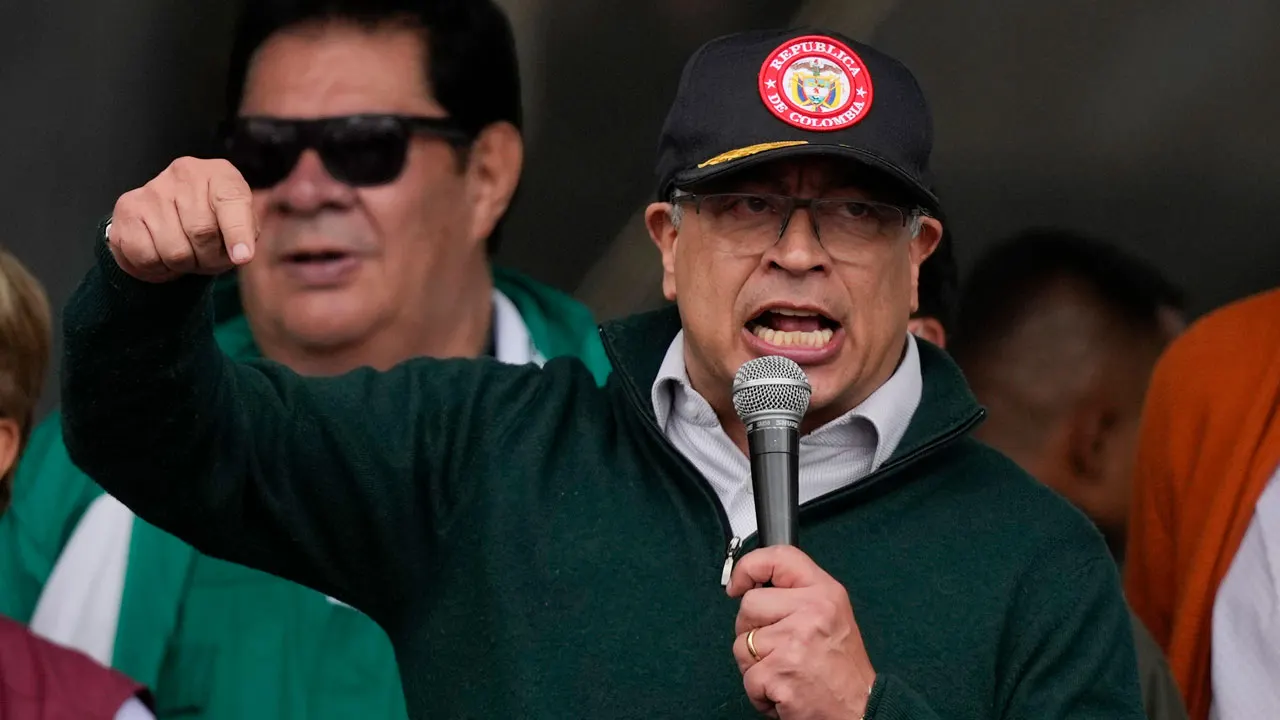
In a startling declaration that has raised diplomatic tensions across the Americas, Colombian President Gustavo Petro announced he would “take up arms” against the United States if it were to launch military action against Colombia. This dramatic statement came in the wake of U.S. military operations in Venezuela and the capture of Venezuelan President Nicolás Maduro. Petro, who once belonged to the M-19 guerrilla movement before it demobilized in the early 1990s, made his position clear on social media: despite having sworn off weapons after the 1989 Peace Pact, he would break that vow to defend his homeland. The Colombian leader forcefully rejected accusations from former U.S. President Donald Trump that he has connections to drug trafficking, stating plainly, “I am not illegitimate, nor am I a narco.” Petro emphasized his modest financial situation, noting that he still pays a mortgage on his family home from his presidential salary and has publicly disclosed his bank statements to demonstrate financial transparency.
The tensions escalated following Trump’s provocative remarks during an Air Force One press conference, where the former president characterized Colombia as “very sick” and described Petro as “a sick man who likes making cocaine and selling it to the United States.” Trump’s suggestion that Colombia might be the next target in America’s drug war campaign carried ominous implications, particularly when he responded “It sounds good to me” to a question about potential U.S. operations in the South American nation. These statements weren’t isolated incidents but part of a pattern of antagonism; Trump had previously warned Petro to “wise up” or risk becoming a target, labeled him an “illegal drug dealer,” and called him a “lunatic.” Such rhetoric represents a significant escalation in U.S.-Colombian relations that have historically been cooperative, if sometimes strained, particularly around narcotics control strategies.
For his part, President Petro has been one of Trump’s most outspoken critics in Latin America, consistently pushing back against U.S. policies he views as interventionist. He has condemned American military strikes on suspected drug-smuggling vessels in the Caribbean, claiming that many victims were “poor fishermen” who turned to the drug trade out of economic necessity rather than criminal intent. Petro’s resistance to U.S. policy reached a critical point last November when he temporarily suspended intelligence sharing with Washington after calling Trump a “barbarian.” This deterioration in bilateral relations reflects deeper disagreements about how to address the drug trade problem that has plagued Colombia for decades. While U.S. administrations have typically favored military and law enforcement approaches, Petro has advocated for addressing root causes of narcotics production, including rural poverty and lack of economic alternatives for farmers.
The reality of Colombia’s narcotics trade is more complex than either leader’s rhetoric suggests. The country’s drug trafficking operations are predominantly controlled by various illegal armed groups, including the Gulf Clan, the ELN (National Liberation Army), and dissident factions of FARC (Revolutionary Armed Forces of Colombia) that rejected the 2016 peace agreement. These organizations operate in remote regions where state presence is minimal, making drug control efforts particularly challenging. Petro has warned that U.S. military intervention or bombing campaigns would only serve to radicalize rural communities, potentially transforming ordinary farmers into “thousands of guerrillas in the mountains.” His perspective is informed by Colombia’s long history of internal conflict, where heavy-handed tactics have often backfired by driving recruitment for armed groups rather than dismantling them.
The diplomatic fallout from this exchange has already begun to materialize. In a previous confrontation, the Trump administration revoked Petro’s visa to the United States, citing “reckless and incendiary actions” after the Colombian president allegedly urged U.S. soldiers to disobey orders while speaking on a New York City street. This unprecedented step against a sitting head of state highlights the unusual degree of personal animosity that has characterized the relationship between these leaders. The White House has not yet responded to Petro’s latest statement about taking up arms, leaving open questions about how the current U.S. administration views these exchanges and whether they might affect ongoing cooperation on issues ranging from migration to environmental protection in the Amazon.
As regional observers watch this situation unfold, the implications extend far beyond bilateral relations between Colombia and the United States. The capture of Venezuela’s Maduro and Trump’s subsequent comments about potential action in Colombia have sent shockwaves throughout Latin America, reviving concerns about U.S. interventionism that many had hoped belonged to a previous era. Russia and China have already entered the diplomatic fray regarding Venezuela, adding a global dimension to what might otherwise be hemispheric tensions. For Colombia, a nation that has made significant progress toward peace after decades of internal conflict, the prospect of becoming the next target in an expanded drug war represents an existential threat to its stability and sovereignty. Petro’s dramatic declaration, while perhaps partly rhetorical, reflects genuine anxiety about potential foreign intervention and determination to assert Colombian independence in determining its own approach to narcotics control and national security.