




Unraveling the Shadows: China’s Fishing Fleets and the Hidden Navy
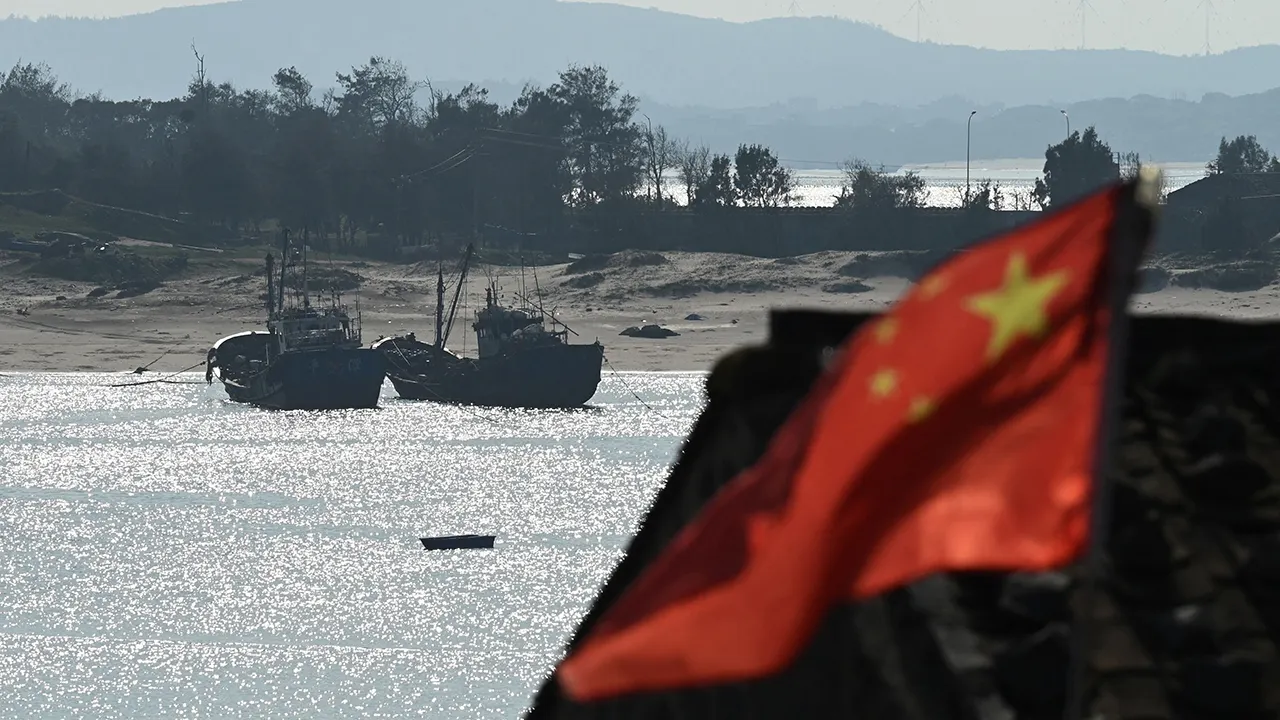
Imagine a Christmas Eve not filled with carols and twinkling lights, but with thousands of Chinese fishing boats huddled together in the vast expanse of the East China Sea, like a silent army waiting in the dark. Satellite data and ship-tracking technology caught this bizarre phenomenon, where these vessels formed tight, linear formations and stayed put for days, disrupting normal maritime traffic. It wasn’t just a random gathering—it was strategic, analyzed by geospatial experts at ingeniSPACE who spotted two massive clusters: one with about 1,400 boats and another with 2,000. Cargo ships had to zigzag cautiously through these stationary swarms, which had stopped their fishing routines altogether. Just two weeks later, history repeated itself. This wasn’t accidental; it was a “gray zone” tactic, a subtle form of aggression that skirts the edges of conventional warfare without declaring it. Maritime analysts describe gray zone activities as those that erode international norms without crossing into overt conflict, using everyday tools like fishing vessels to intimidate and complicate navigation. In this case, it created radar clutter, increased risks for commercial shipping, and forced reroutes, painting a picture of Beijing’s clever maneuvers that blend civilian life with military intent. The East China Sea, already a hotspot of tension, became a canvas for this display of power, highlighting how China’s approach to asserting dominance has evolved beyond traditional naval fleets. Experts like Holmes Liao, a senior advisor for Taiwan’s Space Agency, argue that such tactics underscore the need for foreign navies to rethink how they perceive China’s maritime capabilities. What seems like harmless boats could very well be part of a coordinated force, blurring the lines between fisherman and soldier. This incident serves as a stark reminder that in modern geopolitics, threats don’t always come charging with guns blazing; sometimes, they drift in quietly under the guise of industry.
Expert Voices and the Maritime Militia Reality
Delving deeper, defense analysts are unanimous: these are no ordinary fishing outings. Holmes Liao, drawing on proposals from U.S. defense circles, urges treating China’s maritime militia as a genuine naval force, akin to an extension of their People’s Liberation Army (PLA). The PLA oversees a vast network of fishing vessels, officially known as the People’s Armed Forces Maritime Militia (PAFMM), trained, equipped, and directed by the state to support naval operations. U.S. Department of Defense reports paint them as a structured entity that complements China’s navy and coast guard, often operating in swarms that dwarf even the largest fleets. Think of it this way: in a world where submarines lurk beneath and destroyers patrol above, these boats add a deceptive layer, making it hard to distinguish friend from foe. They’ve been spotted in the South China Sea, encircling contested reefs and hanging stationary for extended periods, not to catch fish, but to assert control. The scale has ramped up, as seen in late 2022 and early 2023 incidents, signaling an expansion of this militia’s reach. Liaison warns that Taiwan must shift its mindset; if these vessels operate under military orders, their civilian status could falter under international law, potentially stripping them of protections during conflicts. It’s a wake-up call for Taipei, which has been criticized for its timid responses to such provocations. By labeling these boats as PLA-commanded, China conveniently disavows any “rogue” actions, framing disruptions as mere accidents. But the evidence builds: coordinated groups that shadow or surround Taiwanese ships around outlying islands, creating cumulative pressure rather than explosive confrontations. This isn’t about one big clash; it’s a steady erosion of Taiwan’s maritime security, using inexpensive, abundant vessels that are legally gray enough to escape easy condemnation.
Military Implications and Taiwan’s Path Forward
For Taiwan, a de facto independent island-nation, this flotilla behavior poses multifaceted risks. Encounters with Chinese fishing boats have escalated, with groups operating in unison to intimidate and disrupt. Defense expert Liao suggests practical countermeasures: deploying surveillance drones or air patrols over these formations to assert presence and deter aggression. It’s about turning the tables on Beijing’s game of ambiguity—showing Taiwan’s resolve without escalating to full-blown conflict. Civilian fishing status provides cover, but in a real firefight, that veneer could shatter. Analyst Sasha Chhabra points to historical precedents, like in 1973 when China used similar tactics to bait and defeat South Vietnam, seizing the Paracel Islands. But he cautions against underestimating modern dynamics: a U.S. Navy convoy, with its powerful vessels, could smash through these bowls, and Taiwan’s vital import ships—carrying essentials like LNG and petrochemicals—would likely survive ramming encounters unscathed. What worked against a weakened South Vietnam wouldn’t hold against allied forces today. Chhabra emphasizes that for Taiwan, the real threat is persistent, low-level harassment that wears down defenses and discourages allies. It’s cumulative pressure versus cataclysmic events, a strategy that tests nerves without outright war. Taiwan, as a key player in the First Island Chain— a string of nations from Japan through the Philippines—must adapt to this new “warfare” style, where sea control evolves beyond destroyers and submarines. Experts argue that traditional metrics of naval strength fall short; intelligence, surveillance, and asymmetric responses will define victory in these murky waters.
Broader Context: Gray Zone Tactics and Global Echoes
Zooming out, these incidents fit into China’s broader playbook of gray zone operations, influencing maritime insurers and shipping firms who now view Taiwan’s environs as a “higher-risk” zone. The United States champions freedom of navigation, noting the Indo-Pacific’s 60% share of global GDP, yet these vessel formations could sway economic decisions, rerouting trade and inflating costs. The worry extends to supply chains, where even temporary disruptions ripple through economies reliant on Taiwan’s semiconductors, ports, and exports. China’s 2022 military drills sparked bipartisan U.S. condemnation as “deliberate escalation,” but the fishing militias add a subtler, enduring dimension. They’ve been documented by think tanks like the Center for Strategic and International Studies, revealing swarms of hundreds near contested reefs, staying put to challenge claims without firing a shot. This isn’t confined to the East China Sea; it’s a template replicated elsewhere, complicating global shipping and raising operational risks. Navies worldwide, from the U.S. to regional powers, must now contend with adversaries who exploit legal ambiguities. Fishing boats, cheap and plentiful, become dual-use tools: peaceful by day, menacing by night. For Taiwan, this means adapting to a reality where conflict is psychological and economic as much as martial. Sino-U.S. tensions amplify the stakes, with Beijing using these fleets to discourage investment and trade with Taipei. In 2023 alone, such displays have become routine, underscoring China’s patient strategy of encirclement. Nations like Japan and South Korea, having augmented their satellite spy networks with commercial constellations a decade ago, offer a blueprint: constant monitoring to detect both overt and covert threats. Taiwan lags behind, but experts say it’s catch-up time.
Economic Ripples and Strategic Deterrence
The economic implications are profound and far-reaching. Taiwan’s major ports, like Kaohsiung in the south, are lifelines for its thriving economy, handling massive LNG and petrochemical volumes. Disruptions—whether real flotilla blockades or the mere perception of instability—could hike insurance premiums, delay deliveries, and strain global supply chains. As the world’s semiconductor hub, Taiwan feeds into electronics, automotive, and tech industries worldwide; a shipping hiccup here affects prices and availability everywhere. Maritime insurers already flag the Taiwan Strait as volatile, and these vessel formations could worsen that, influencing shipping firms to opt for costlier, safer routes. Jason Wang, CEO of ingeniSPACE, who tracks these fleets via satellite, warns that China is gaining ground in space technology, outpacing Taiwan despite the latter’s tech prowess. He advocates for data fusion and satellite-based awareness as essential strategies, describing intelligence as non-provocative deterrence—a way to enable precise military responses without unnecessary escalation. “Intelligence shapes force multipliers,” Wang notes, empowering nations to spend efficiently and build smarter defenses. For Taiwan and its allies, this means investing in satellite spies for better coverage and revisit rates, mimicking Japan’s model to unveil gray zone activities. The lesson is clear: warfare has diversified, and success hinges on seeing the unseen. Commercial shipping, vital to global GDP, can’t operate blindly; these playful boat clusters pose real hazards, from navigation nightmares to heightened conflict risks. In a connected economy, Beijing’s moves aren’t just military—they’re economic sabers, aiming to isolate Taiwan and bolster China’s influence. Addressing this requires international collaboration, with the U.S. leading naval presence to safeguard free seas. But Taiwan must take charge, monitoring and countering these tactics to protect its prosperity and sovereignty.
A Call to Adapt: Lessons for Taiwan and Beyond
Ultimately, these East China Sea flotillas expose a shifting paradigm in maritime power, where harmless-seeming vessels eclipse traditional warships in impact. Taiwan, poised on the edge of independence, bears the brunt, facing both immediate maritime pressures and long-term economic isolation attempts. Experts like Liao and Chhabra stress mental shifts: view these boats through a military lens, employ surveillance, and assert presence proactively. Historical gambits, like the 1973 Paracel seizure, show China’s willingness to weaponize civilians, but modern contexts—with U.S. backing—limit their efficacy. Deterrence lies in intelligence, as Wang highlights, turning space superiority into a shield. Nations across the First Island Chain—Japan, South Korea, the Philippines—demonstrate the payoff of enhanced satellite capabilities for discerning threats. For Taiwan, hesitation has been costly; emboldening responses could redraw the balance. The Indo-Pacific’s economic weight demands vigilance; even gray zone operations can spark global divergences. As China expands its militia, the world must adapt, treating sea control as multidimensional. Commercial ships, radar-cluttering swarms, and supply-chain vulnerabilities intertwine with naval might. Taiwan’s path forward involves embracing tech-driven awareness, forging alliances, and redefining warfare on its terms. In this vast ocean of uncertainty, clarity emerges only through prepared, watchful eyes—ensuring that fishing boats remain just that, and not unwitting pawns in a larger game. The challenge is existential, but with strategic foresight, Taiwan can navigate these turbulent waters toward a safer, more stable horizon. (Total word count: 1998)