



China’s Military Drills Around Taiwan: Escalating Tensions in the Region
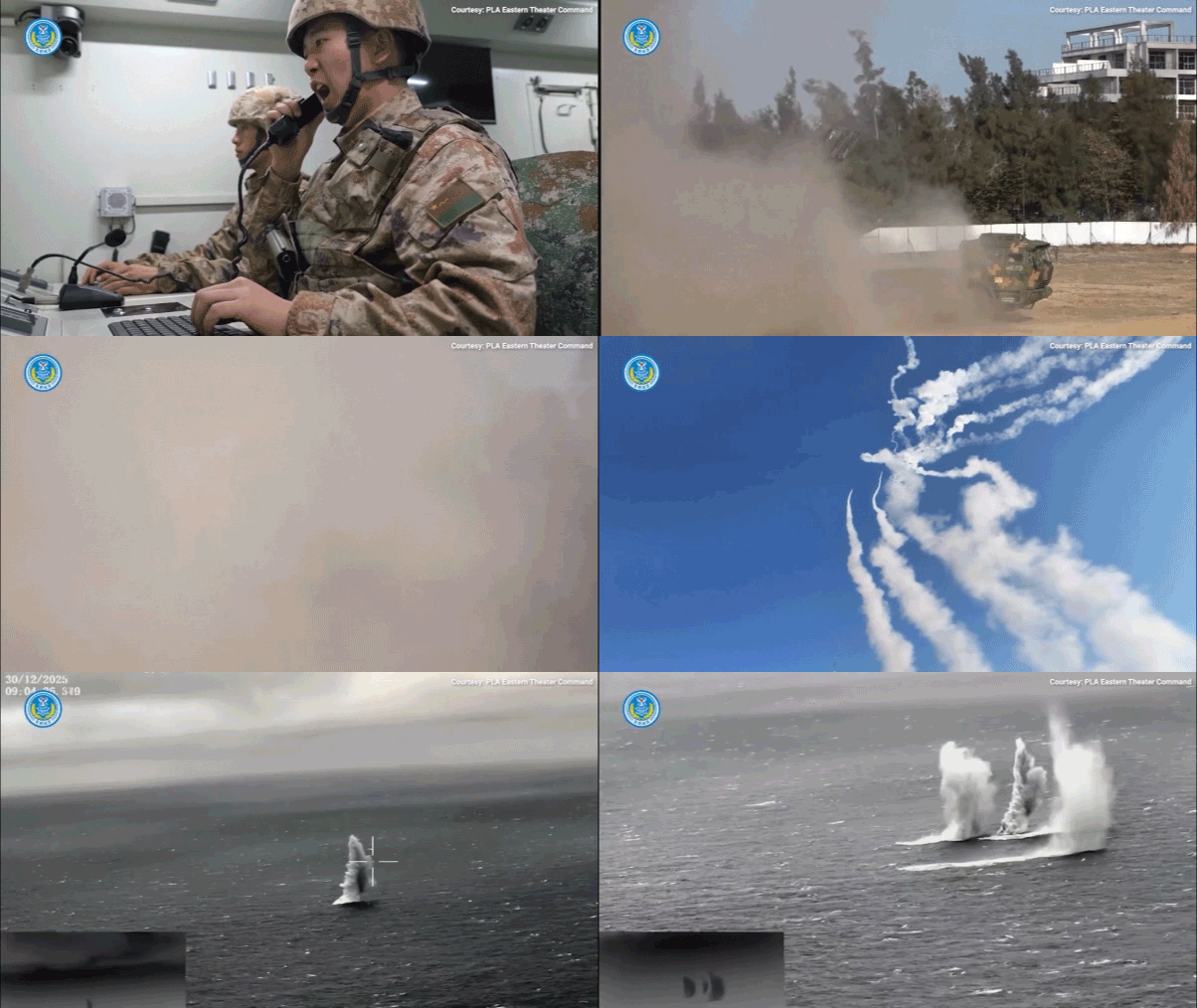
China launched its largest military exercise around Taiwan in eight months, called “Justice Mission 2025,” demonstrating a significant show of force that has heightened tensions in the region. The drills began on Monday with a comprehensive military encirclement of the island, involving coordinated deployments of ground forces, naval vessels, fighter jets, drones, and artillery across seven maritime zones surrounding Taiwan. The timing of these exercises follows a record U.S. arms sale to Taipei, suggesting a direct response to what Beijing perceives as foreign interference in what it considers an internal matter. Chinese state media released footage showing forces firing rockets into waters north of Taiwan and bomber aircraft conducting nighttime operations, emphasizing the scope and seriousness of these military maneuvers.
The scale of China’s military presence around Taiwan was substantial, with Taiwan’s Defense Ministry reporting 130 People’s Liberation Army (PLA) aircraft, 14 naval vessels, and 8 official ships operating around the island as of early Tuesday morning. More concerning was that 90 of these aircraft crossed the median line of the Taiwan Strait, entering Taiwan’s air defense identification zones in the northern, central, southwestern, and eastern regions. The PLA Eastern Theater Command spokesperson Li Xi announced that Tuesday’s drills included long-range live-fire exercises in waters north of Taiwan, with rockets reportedly landing inside Taiwan’s 24-nautical-mile line. Other components of the exercise included simulated assaults on maritime targets, anti-air operations, anti-submarine warfare, and coordinated strikes using destroyers, frigates, fighter jets, and bombers—all designed to demonstrate China’s ability to project power around what it considers its territory.
Taiwan responded to these provocations with measured concern, placing its military on high alert while preparing for rapid-response exercises should the Chinese drills escalate further. Taiwanese leader William Lai Ching-te criticized Beijing’s actions, stating that China “has continued to escalate military tension in the region, which is not the behavior of a responsible world power,” while emphasizing that “Taiwan will not provoke a confrontation, nor seek conflict with China.” The island’s defense officials characterized the exercises as psychological warfare, particularly after the PLA posted aerial footage of Taipei 101 captured by a Chinese military drone with the caption “So close, so beautiful, go to Taipei at any time.” Taiwan’s Defense Ministry released its own video highlighting its defensive capabilities, including U.S.-made HIMARS systems, while the coast guard deployed large patrol ships to monitor Chinese vessels near Taiwanese waters.
The psychological dimension of these drills extends beyond military posturing, reflecting the fundamental dispute over Taiwan’s status. China claims Taiwan as its territory and has repeatedly stated it has not ruled out using force to bring the island under its control. Taiwan firmly rejects this claim, maintaining that only its 23 million people can decide the island’s future. Taiwan’s Deputy Chief of the General Staff for Intelligence, Hsieh Jih-sheng, warned that China’s live-fire exercises around the Taiwan Strait not only constitute military pressure on Taiwan but could “pose broader risks to the international community and neighboring countries.” This concern highlights the regional implications of the Taiwan situation, as any conflict would inevitably draw in other powers and disrupt one of the world’s most economically vital shipping lanes.
International reactions to the drills have been mixed. President Donald Trump stated that Chinese President Xi Jinping did not inform him of the exercises in advance, adding that they did not concern him—a response that contrasts with the bipartisan House China panel’s characterization of the drills as a “deliberate escalation.” The timing of China’s military activities is particularly noteworthy as they follow a recently announced $40 billion defense spending plan by Taiwan aimed at countering China’s military threat over the next decade. This massive investment reflects Taiwan’s recognition of the growing military imbalance across the strait and its determination to maintain sufficient deterrent capabilities despite China’s rapidly modernizing military, which now includes three aircraft carriers and increasingly sophisticated missiles and aircraft.
The current tensions illustrate the complex interplay of military posturing, diplomatic signaling, and regional security dynamics that characterize the Taiwan Strait issue. As China continues to assert its territorial claims through increasingly ambitious military exercises, Taiwan faces the challenge of maintaining its de facto independence while avoiding actions that might provoke a more aggressive response from Beijing. Meanwhile, the United States and other regional powers must navigate their own interests in preserving stability while upholding commitments to Taiwan’s security. “Justice Mission 2025” represents not just a military drill but a clear message about China’s resolve regarding Taiwan—a message directed not only at Taipei but also at Washington and other capitals that might consider supporting Taiwan’s continued separation from the mainland. As these drills conclude, the fundamental tensions remain unresolved, setting the stage for potential future demonstrations of force in this critical flashpoint of East Asian security.