


Turmoil in China’s Military Hierarchy Signals Deeper Instability Under Xi
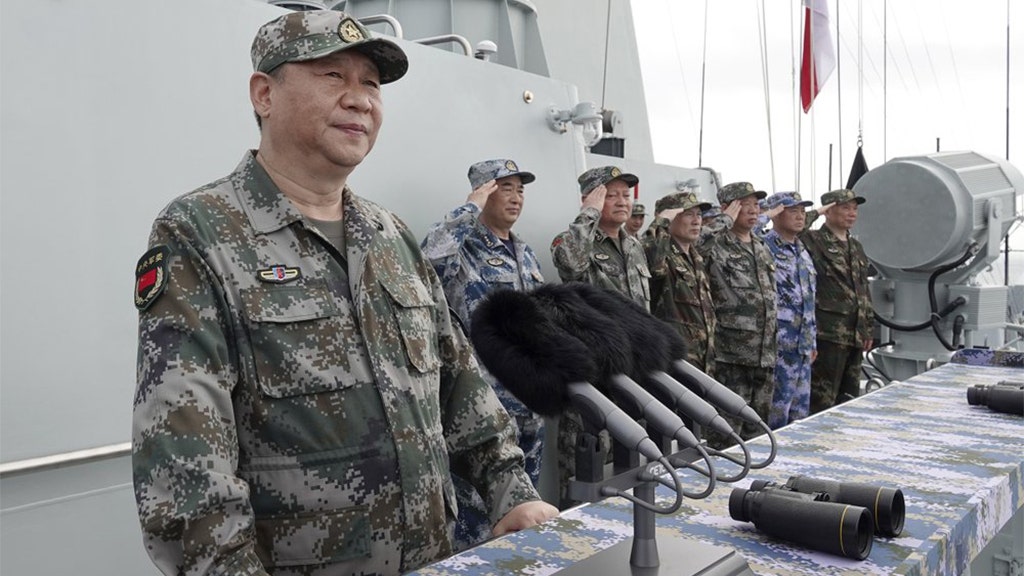
Recent dramatic removals of senior military leaders in China have opened a window into potential internal fractures within the Chinese Communist Party, raising significant questions about the People’s Liberation Army’s readiness and stability under President Xi Jinping’s leadership. While Beijing has remained characteristically tight-lipped about the specifics, Western media reports suggest an extraordinary purge is underway, potentially including allegations that a top general leaked sensitive nuclear information to the United States. Though China’s government hasn’t officially confirmed espionage claims, the scope of the leadership shakeup itself reveals a political system experiencing considerable strain, with possible implications for regional security – particularly regarding Taiwan.
The unprecedented nature of these removals appears to be driven primarily by Xi’s obsession with political control rather than signaling imminent conflict, according to Craig Singleton, senior China fellow at the Foundation for Defense of Democracies. “These unprecedented purges reflect Xi’s clear focus on control and cohesion — ensuring the People’s Liberation Army is politically reliable, centralized and obedient before it can be tasked with high-risk operations,” Singleton explains. Rather than drawing parallels to Stalin-era purges, he suggests a more apt comparison might be the Soviet Union in 1979, when political leadership pushed for the invasion of Afghanistan despite military warnings about its sustainability. This dynamic suggests a growing disconnect between Xi’s political ambitions regarding Taiwan and the operational realities faced by military leaders who may understand their forces aren’t fully prepared for such a complex undertaking.
The lack of transparency surrounding these events makes definitive conclusions difficult, but China expert Gordon Chang emphasizes the extraordinary nature of what appears to be unfolding. “There’s no way to make sense of this right now,” Chang noted. “All we can say is that the situation is fluid, that the regime is in turmoil, and probably the People’s Liberation Army is not ready to engage in major operations because dozens of senior officers have been either arrested or removed.” Of particular interest are reports from The Wall Street Journal alleging that General Zhang Xiaoxiao has been accused of providing core technical material about China’s nuclear weapons program to the United States – an allegation Chang views with skepticism given the limited access such an official would likely have to such sensitive information and the CIA’s previously troubled track record of maintaining assets within China.
The removal of General Zhang, reportedly the most senior uniformed officer in China and second only to Xi Jinping within the Communist Party’s Central Military Commission, represents an extraordinary development that suggests deeper fissures within the party structure itself. Chang describes the situation as “a whole class of leadership being junked,” indicating systematic instability rather than isolated incidents of discipline. While China’s embassy spokesperson in Washington D.C. framed these investigations as part of the “Party Central Committee and the Central Military Commission maintain[ing] a full-coverage, zero-tolerance approach to combating corruption,” the scale and targeting of such high-ranking officials suggests political motivations beyond standard anti-corruption efforts that have been a hallmark of Xi’s tenure.
The implications for regional security, particularly regarding Taiwan, are complex and potentially concerning. While the current internal turmoil makes a deliberately planned invasion of Taiwan less likely in the immediate term, analysts warn this doesn’t necessarily reduce overall danger. Chang argues that while China may not intentionally start hostilities, the internal instability increases the risk of miscalculation that could lead to unintended conflict. “Not like it’s China deliberately starting one, but China stumbling into one,” he explains, adding that given the current political turmoil, “Xi Jinping is [not] in a position to de-escalate a situation.” Singleton offers a complementary perspective, suggesting that while these purges may temporarily degrade China’s military readiness, they could ultimately increase political control over the military and reduce internal dissent, potentially enabling riskier decisions in the future once the immediate upheaval settles.
This military shakeup illustrates a growing paradox within Xi’s China: as he intensifies his grip on power through purges and political control measures, he may inadvertently be deepening systemic instability rather than strengthening the regime’s foundations. The removal of experienced military leaders, whatever their alleged transgressions, disrupts command structures and institutional knowledge at a time when tensions in the Taiwan Strait and broader Indo-Pacific region remain high. This creates a potentially dangerous situation where a politically insecure leadership may feel pressured to demonstrate strength externally while dealing with internal fractures. As the international community watches these developments unfold, the lack of transparency from Beijing only adds to uncertainty about China’s military capabilities and decision-making processes during this apparent period of internal turmoil – leaving neighboring countries and the United States navigating a security environment that may be more volatile than previously understood.