



Bulgarian Protests Force Government to Withdraw Controversial Budget
In a remarkable display of people power, Bulgaria’s government has been forced to withdraw its unpopular 2026 draft budget after massive protests erupted across the country. What began as frustration over economic policies quickly evolved into a powerful movement led primarily by young Bulgarians demanding fundamental changes in how their country is governed. The widespread demonstrations highlight growing tensions between a government pursuing European integration and citizens concerned about corruption and economic hardship as Bulgaria prepares to join the Eurozone.
At the heart of these protests is a generation of young Bulgarians who envision a different future for their homeland. “Gen Z took to the streets because they want to stay in Bulgaria, but they want a renewed, different, corruption-free Bulgaria,” explained Daniel Lorer, a member of Bulgaria’s parliament. These young protesters aren’t rejecting their country—they’re fighting for it. They’ve grown up in post-communist Bulgaria, witnessing their nation join the European Union in 2007, but many feel that true reform remains elusive. The proposed budget, which included tax and social security increases alongside more government debt, became the catalyst for their frustrations. Rather than accepting the ongoing exodus of young talent to Western Europe, these protesters are taking a stand, insisting that Bulgaria can become a place where they can build their futures.
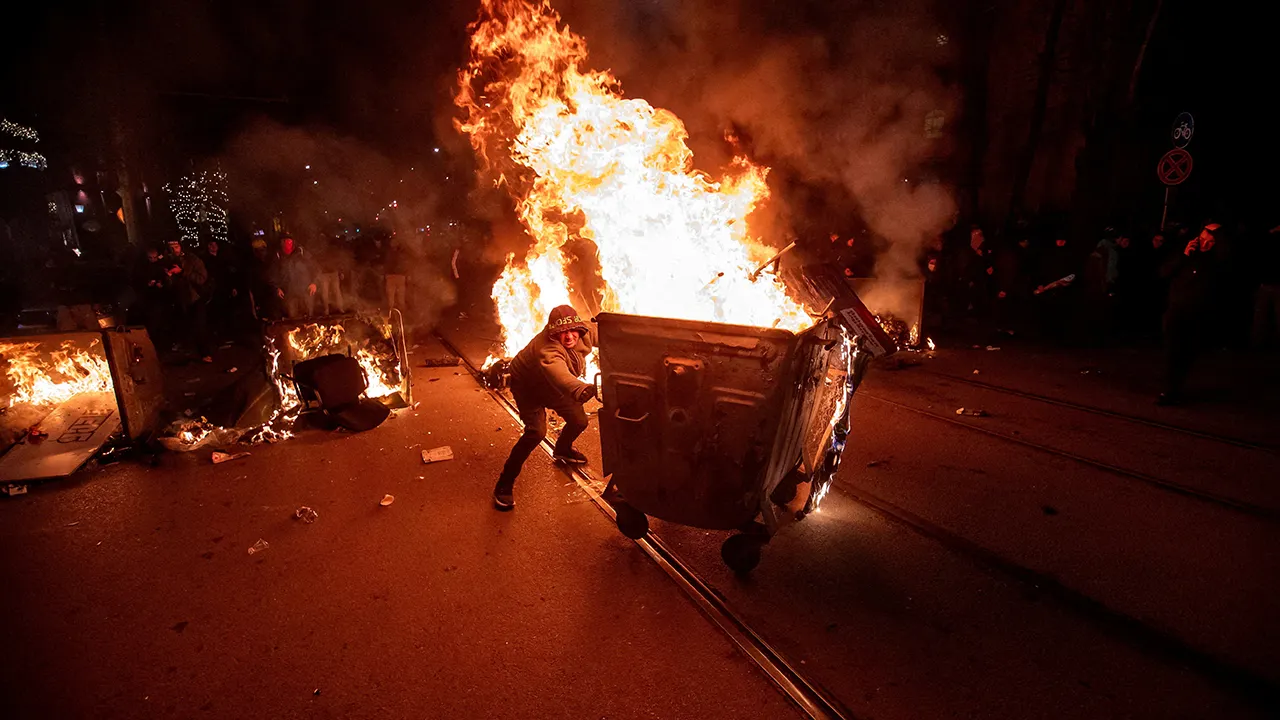
Prime Minister Rosen Zhelyazkov’s government initially seemed caught off guard by the intensity of the protests but ultimately recognized the need to respond. “The government saw what the citizens who protest had to say… I support these people who protest for more rights, more democracy, more justice,” Zhelyazkov acknowledged at a press conference following the decision to withdraw the budget. “This is a visible protest of young people, young people who are looking for their place in the future of Bulgaria, which we are obliged to hear.” While most demonstrations remained peaceful, there were isolated incidents of violence, with some masked protesters clashing with police after attacking offices of the ruling party in Sofia. The government has now promised to draft a new budget that addresses citizens’ concerns, though details remain unclear about what specific changes will be made.
The political turmoil comes at a particularly sensitive time for Bulgaria, which is scheduled to join the Eurozone in January 2026. This planned adoption of the euro represents a major milestone in the country’s European integration, but it has become increasingly divisive. Many Bulgarians fear that switching from their national currency, the lev, to the euro will trigger inflation and raise living costs in what is already one of the EU’s poorest member states. Bulgarian President Rumen Radev, who holds a largely ceremonial position, has sided with the opposition and called for the government’s resignation and early elections—a move that critics argue could create political gridlock at a crucial juncture. The timing of these protests also raises concerns about potential foreign interference, particularly from Russia, which has historically maintained influence in its former communist ally.
Indeed, the specter of Russian influence looms large over Bulgaria’s current situation. “Russia is always glad to stir unrest. Anything that upsets the democratic process in any EU country is welcome, and even more so in Eastern Europe, their former sphere of influence,” noted MP Lorer. Ruslan Stefanov, director for the Center for the Study of Democracy in Sofia, expressed similar concerns about President Radev: “Radev, who echoes Kremlin talking points and opposes the Euro, could still sabotage the process despite it being legally irreversible. This is a volatile mix that threatens stability and could invite more unwelcome Russian meddling.” Experts have observed persistent social media campaigns seemingly designed to amplify opposition to Bulgaria’s Eurozone accession, stoking doubt and confusion among citizens. As Bulgaria navigates this sensitive transition, maintaining political stability becomes not just an economic concern but a matter of national security.
The current protests reflect a broader struggle for Bulgaria’s future trajectory. Since joining the EU in 2007, the country has made progress in various areas but continues to grapple with corruption, economic inequality, and the challenge of retaining its younger population. Bulgaria formally began the process of joining the Eurozone in 2018, with its currency included in the European Exchange Rate Mechanism in 2020. For many Bulgarians, however, these institutional developments haven’t translated into tangible improvements in daily life. The protest movement represents both a challenge and an opportunity—a potential turning point where citizens demand more accountability from their leaders while simultaneously demonstrating their commitment to building a better Bulgaria. As the government works to draft a new budget and navigate the path to Eurozone membership, it faces the fundamental challenge of restoring public trust while addressing legitimate concerns about corruption, economic justice, and Bulgaria’s place in Europe.