


Australia to Honor Heroes of Hanukkah Shooting with New Bravery Award
In the wake of Australia’s deadliest mass shooting since 1996, Prime Minister Anthony Albanese has announced plans to establish a national bravery award recognizing the extraordinary courage shown by civilians and first responders during the tragic Hanukkah celebration attack. The December 14 massacre, which claimed fifteen lives at Bondi Beach in Sydney, has been described by officials as an ISIS-inspired terrorist act specifically targeting Australia’s Jewish community. Albanese’s announcement comes as the nation continues to process both the horror of extremist violence and the remarkable heroism displayed by everyday Australians who risked their lives to protect others.
“This Christmas is a different one because of the anti-terror and the terrorist attack motivated by ISIS and antisemitism,” Albanese stated during a recent press conference, highlighting the stark contrast between the violence and the subsequent displays of human compassion. “But, at the same time, as we have seen the worst of humanity, we have seen the bravery and kindness and compassion… from those who rushed to danger.” The Prime Minister’s words reflect the national sentiment of grief mixed with pride in those who confronted danger rather than fleeing from it. The proposed honors system would specifically recognize individuals who demonstrated exceptional courage during and immediately following the attack, working within the framework of Australia’s existing Honors and Awards system.
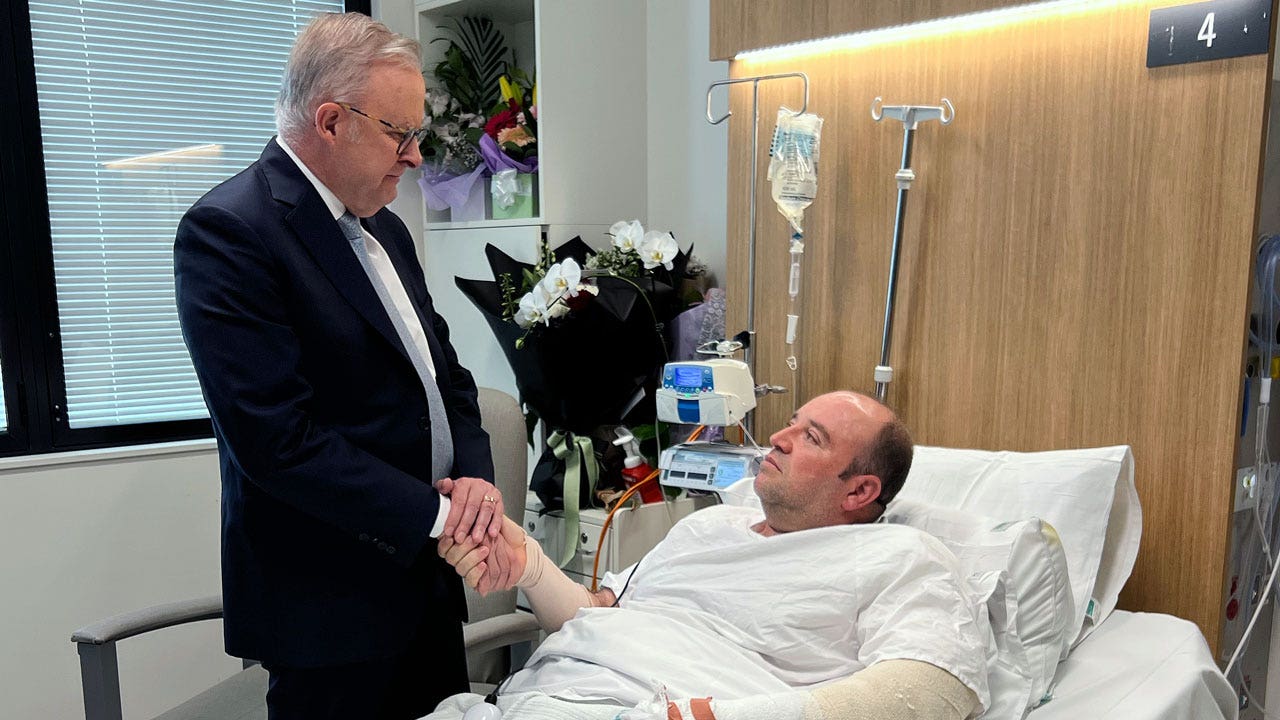
Among those whose bravery has captivated the nation is Ahmed al Ahmed, a Syria-born Australian Muslim store owner who was captured on video tackling and disarming one of the gunmen before being wounded himself. Al Ahmed’s actions, crossing religious and cultural boundaries to protect fellow Australians during a Jewish holiday celebration, have become a powerful symbol of unity in the face of hatred. Similarly, Boris and Sofia Gurman have been recognized for their heroism after security footage showed them confronting one of the attackers before the shooting began. Tragically, despite their brave intervention attempt, both were later killed when the gunman overpowered them—a heartbreaking reminder of the human cost of such courageous actions.
Australian authorities have identified the perpetrators as 50-year-old Sajid Akram and his 24-year-old son, Naveed Akram, who reportedly filmed a video manifesto containing antisemitic rhetoric and expressions of support for the Islamic State terrorist organization. Investigators believe the father-son duo may have been planning this attack for several months, raising questions about radicalization and terrorist recruitment within Australia. Only Naveed Akram survived the attack and now faces multiple murder and terrorism charges, while his father died during the incident. The case has prompted renewed discussion about domestic terrorism threats and the global resurgence of ISIS-inspired violence.
The Bondi Beach attack has deeply affected Australia’s national psyche, occurring during a holiday season traditionally marked by celebration and community gathering. Prime Minister Albanese himself experienced the raw emotion firsthand when he was booed while attending a vigil honoring the victims, reflecting the complex tensions and grief within the community. Despite this, his government’s focus on recognizing heroism represents an attempt to find meaning and national unity amid the tragedy. The attack has particularly impacted Australia’s Jewish community, which now faces heightened security concerns even as they receive broad support from fellow Australians of all backgrounds.
Beyond the immediate tragedy, the Bondi Beach attack has exposed broader concerns about ISIS resurgence and global jihadist networks. Security experts have warned that despite territorial defeats in Syria and Iraq, ISIS continues to inspire lone-wolf attacks and small-cell operations worldwide through online radicalization. Australia’s experience now joins a troubling pattern of ISIS-inspired violence in Western nations, prompting renewed focus on counterterrorism efforts and community resilience. Yet amid these serious security considerations, the proposed bravery award serves as a reminder that even in humanity’s darkest moments, extraordinary courage and selflessness can emerge—qualities that the Australian government now seeks to formally recognize and honor as part of the nation’s healing process.