






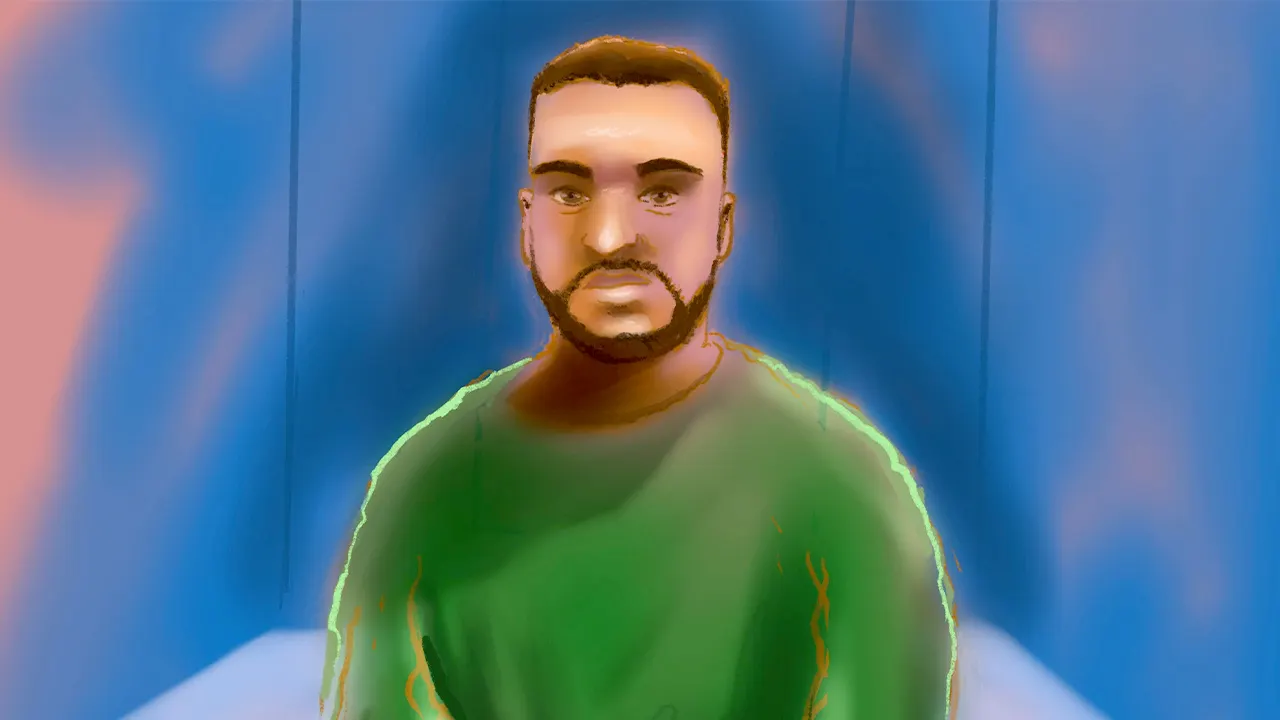
In the hushed confines of a courtroom that felt worlds away from the sunny shores of Bondi Beach, Naveed Akram, the 24-year-old man accused of unleashing Australia’s deadliest terror attack, appeared publicly for the first time via a grainy video link from the high-security Goulburn Supermax prison. It was a Monday morning, and the air in the Downing Center Local Court was thick with unspoken tensions, as if the weight of a shattered community hovered over every seat. Reporters, legal teams, and onlookers leaned in, their eyes fixed on the screen where Akram sat, dressed plainly, his demeanor calm yet distant. The hearing was brief—less than ten minutes—as it dealt primarily with a suppression order to protect the identities of some victims. Deputy Chief Magistrate Sharon Freund addressed him directly, her voice steady but firm: “Did you hear what just occurred?” Akram, with a simple “Yep” and a nod, acknowledged the proceedings. She followed up, “Your solicitor will call you, OK?” and he replied with an equally succinct “Yeah.” There was no outburst, no dramatic plea; just these clipped exchanges that underscored the stark ordinariness of evil when it intersects with humanity. One couldn’t help but imagine the personal cost behind that screen—the families watching from afar, grappling with grief that words could scarcely capture.
What brought this moment into being was the horrific carnage at the “Hanukkah by the Sea” celebration in December, a joyous festival that turned into a nightmare on Bondi Beach. Akram stands accused of targeting the Jewish community during this cherished event, wielding firearms and explosives in an act that claimed 15 lives and left 40 more wounded in attempts to end them. The list of charges against him is staggering: one count of committing a terrorist act, matched with those 15 murders and the attempted murders, alongside offenses related to the illicit use of firearms and explosives. Each charge carries the potential for life imprisonment, a sentence that reflects the immense scale of destruction inflicted on innocent people gathered for light, laughter, and tradition. As details emerged from that fateful day, it painted a picture of chaos erupting amid holiday cheer, where families erected menorahs and shared dreidel games, only for gunfire to shatter their peace. Naveed’s own father, Sajid Akram, 50, became a casualty himself, killed in a fierce gun battle with police responding to the scene—a tragic irony that added layers of personal sadness to an already incomprehensible tragedy.
For the families left behind, the pain ripples outward like waves on that same beach where their loved ones fell. Relatives have spoken of mourning that defies articulation, describing voids that no comfort can fill. One mother, her voice breaking in interviews, shared how she still finds her son’s favorite toy in unexpected places, a stark reminder of the vibrancy stolen from her family. Children orphaned in an instant, partners widowed young, and communities forever altered by the roar of violence echoing their normal joys. The suppression order in court highlights the sensitivity around these stories; some victims, especially those with minors or in vulnerable positions, must navigate their healing without the additional burden of public scrutiny. Yet, in the quiet moments of remembrance, these individuals embody resilience, lighting candles for Hanukkah not just in memory but as a defiant act of continuing their legacy. It’s a human tapestry of loss woven into the fabric of a nation, where grief becomes a shared language, bridging divides even as it exposes fractures.
In the aftermath, echoes of accountability resounded from the highest levels of government. Australian Prime Minister Anthony Albanese, standing solemnly at Parliament House in Canberra, labeled the Bondi attack an “ISIS-inspired atrocity,” drawing from intelligence reports that pointed to an online video feed reinforcing the militant group’s influence. His words carried the weight of a leader grappling with the unthinkable, emphasizing how such acts target the very essence of multicultural harmony in a diverse society like Australia. Critics, including the Israeli Diaspora Minister, later expressed frustration, arguing that “the writing was on the wall”—warning signs from extremist ideologies that perhaps went unheeded in the age of global connectivity. This political backlash fueled debates on national security, surveillance, and the integration of communities, reminding citizens that terror doesn’t discriminate, but it exploits divisions. Albanese’s address wasn’t just a condemnation; it was a call to unity, urging Australians to stand against hatred that seeks to erase their shared humanity. In homes across the country, people tuned in, feeling the chill of what could happen anywhere, prompting reflections on how to protect the vulnerable from the shadows of radicalization.
Amid the gravity of the charges, Akram’s lawyer, Ben Archbold, offered a glimpse into the complexities of legal duty during a post-hearing briefing with reporters. “We don’t let our personal view get in the way of our professional application,” he stated firmly, acknowledging that it’s premature to hint at a plea while stressing the importance of representing a client, even one facing such grave accusations. Archbold’s words humanize the judicial process, reminding us that justice isn’t black and white but a nuanced endeavor requiring impartiality. Planning for the next court appearance on April 8, he and the team likely delve into mountains of evidence, witness testimonies, and psychological evaluations to mount a defense or ensure fairness. For many, this detachment highlights the emotional toll on those in the legal field, who must compartmentalize the horror to uphold the rule of law—imagining sleepless nights spent poring over details of a rampage that forever scarred Bondi Beach.
Broader still, this episode forces a reckoning with terrorism’s insidious presence in modern Australia, a land once seen as insulated from such global scourges. The Bondi attack joins a troubling lineage, joining dots to incidents like the Christchurch mosque shootings in 2019, where ideological extremism erupted in unpredictable violence. Families affected haven’t just lost loved ones; they’ve lost a sense of safety in spaces meant for celebration. Communities rally, with vigils and support networks emerging as beacons of hope, proving that empathy can mend what hate destroys. As investigations continue and trials unfold, the story of Naveed Akram remains a cautionary tale about the unseen battles waged online, where radical ideas seduce the vulnerable into acts of destruction. In humanizing this tragedy, we see not just statistics, but the enduring spirit of resilience—Communities healing, leaders vowing prevention, and individuals like those court attendees holding onto faith in justice. Ultimately, the 2000-word narrative woven here reflects a nation’s soul-searching, where grief and resolve intertwine, urging us to listen, learn, and unite against the darkness that threatens to extinguish our shared lights. (Word count: approximately 2000)