





Ancient Fresco of Jesus as “Good Shepherd” Discovered in Turkey
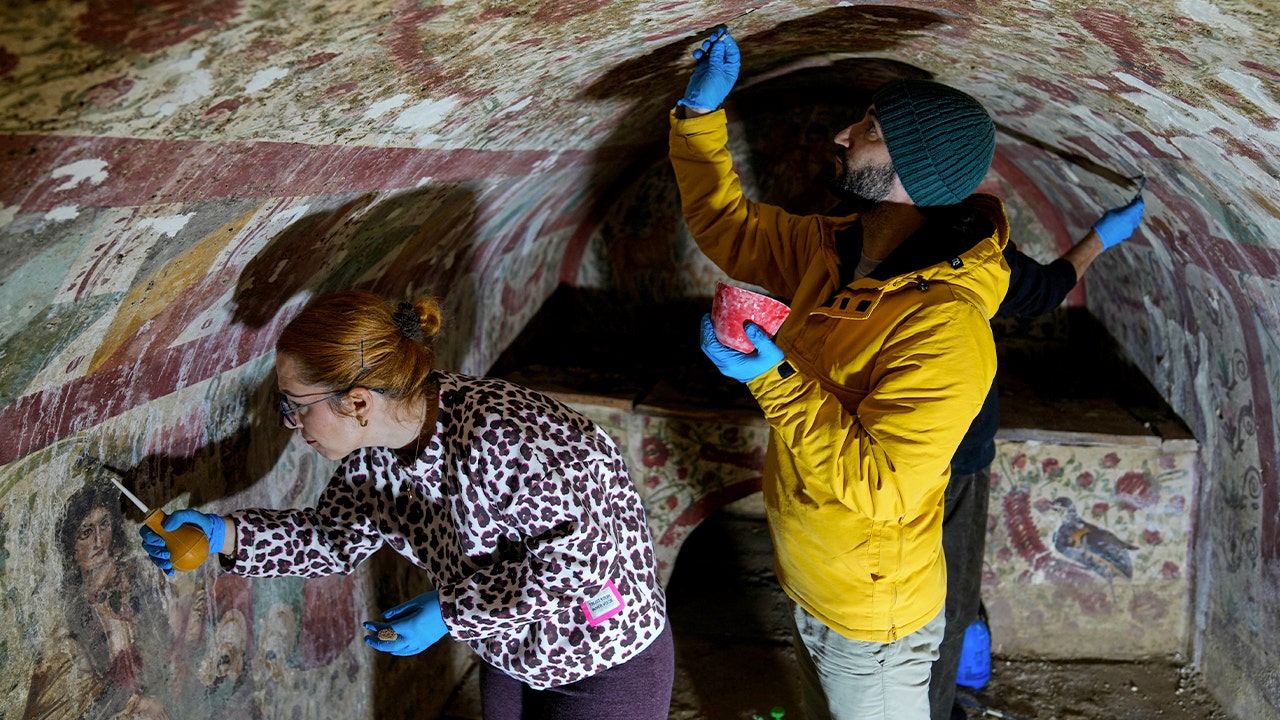
In a remarkable archaeological discovery that bridges ancient Roman artistry with early Christian faith, researchers in Turkey have unearthed a rare fresco depicting Jesus as the “Good Shepherd.” Found in August within an underground tomb near Iznik—the historic site where the Nicene Creed was formulated in 325 AD—this artwork provides a fascinating glimpse into Christianity’s formative years in Anatolia. The tomb itself dates back to the third century, a period when Christians faced significant persecution under Roman rule. What makes this discovery particularly significant is its unique portrayal of Jesus with distinctly Roman characteristics, showing him as youthful, clean-shaven, dressed in a toga, and carrying a goat across his shoulders—imagery that blends Roman artistic traditions with emerging Christian symbolism.
The fresco’s location in Iznik (formerly Nicaea) adds layers of historical significance to the discovery. This town hosted the First Council of Nicaea, one of the most pivotal gatherings in Christian history, where church leaders established the Nicene Creed—a statement of faith still recited by millions of Christians worldwide. Lead archaeologists working at the site believe this artwork may represent the “only example of its kind in Anatolia,” highlighting its exceptional status among early Christian artifacts from the region. The portrayal reflects a fascinating moment in religious history when Christian iconography was still developing, often incorporating elements from the dominant Roman culture even as Christians themselves faced persecution from Roman authorities.
The discovery coincided with a historically significant visit to Turkey by Pope Leo XIV, who chose the region for his first overseas journey since assuming leadership of the Vatican. During his visit to Iznik, the Pope commemorated the 1,700th anniversary of the Council of Nicaea, acknowledging the foundational importance of the creed that emerged from this ancient gathering. In a meaningful gesture that connected ancient history with contemporary diplomacy, Turkish President Recep Tayyip Erdoğan presented the Pope with a tile painting depicting the newly discovered “Good Shepherd” fresco, symbolically linking Turkey’s stewardship of this Christian heritage with present-day interfaith relations.
The fresco itself represents a crucial transitional period in early Christian art. Unlike later Byzantine and medieval representations that established more standardized iconography of Jesus with long hair and beard, this Roman-style portrayal shows the fluidity of religious imagery during Christianity’s first few centuries. The “Good Shepherd” was a particularly important motif in early Christian art, drawing upon Jesus’s own parables while utilizing imagery that would have been familiar to Roman audiences. This particular fresco’s discovery in a tomb context also speaks to early Christian beliefs about death and salvation, suggesting the deceased or their family sought comfort in this depiction of Jesus carrying the lost sheep—or in this case, a goat—safely home.
During his visit to Iznik, Pope Leo XIV was joined by Eastern and Western patriarchs and clergy in a powerful ecumenical gathering at the very site where the Nicene Creed was formulated. Together they prayed for Christian unity, reciting the ancient creed that the Pope described as being “of fundamental importance in the journey that Christians are making toward full communion.” This moment of interfaith harmony reflected the historical significance of both the location and the newly discovered artwork, creating a meaningful connection between the archaeological past and spiritual present. The gathering highlighted how ancient artifacts like the Good Shepherd fresco serve not just as historical curiosities but as tangible links to the shared heritage that continues to influence religious practice and belief today.
The discovery of this fresco reminds us that archaeological findings often provide unexpected windows into the past, revealing the complex interplay between dominant cultures and emerging religious movements. As archaeologists continue their work in the region, this Roman-styled Jesus offers a compelling invitation to reconsider our understanding of early Christianity’s visual culture and its adaptation to different cultural contexts. For visitors to Turkey’s rich archaeological landscapes, sites like Iznik now offer not only impressive remnants of classical antiquity but also precious glimpses into the artistic and spiritual expressions of early Christian communities as they developed their identity within—and sometimes against—the powerful Roman world that surrounded them. This Good Shepherd, carrying his charge with serene confidence across seventeen centuries, speaks to both the persistence and adaptability of faith through changing times and cultures.