




Iran’s Economic Collapse Sparks Nationwide Protests as Trump Voices Support
The streets of Iran have erupted in widespread protests following a historic collapse of the country’s currency, with demonstrations entering their third consecutive day and expanding beyond Tehran’s commercial centers. As the Iranian rial plummeted to approximately 1.45 million per U.S. dollar on the open market, the economic crisis has ignited the frustrations of ordinary Iranians who face crushing inflation and deteriorating living conditions. What began as protests in Tehran’s Grand Bazaar has rapidly spread to multiple provincial cities, with universities emerging as significant hubs of resistance. The unrest represents one of the most serious challenges to the Islamic Republic’s authority in recent years, with protesters openly chanting anti-government slogans despite the risk of violent suppression.
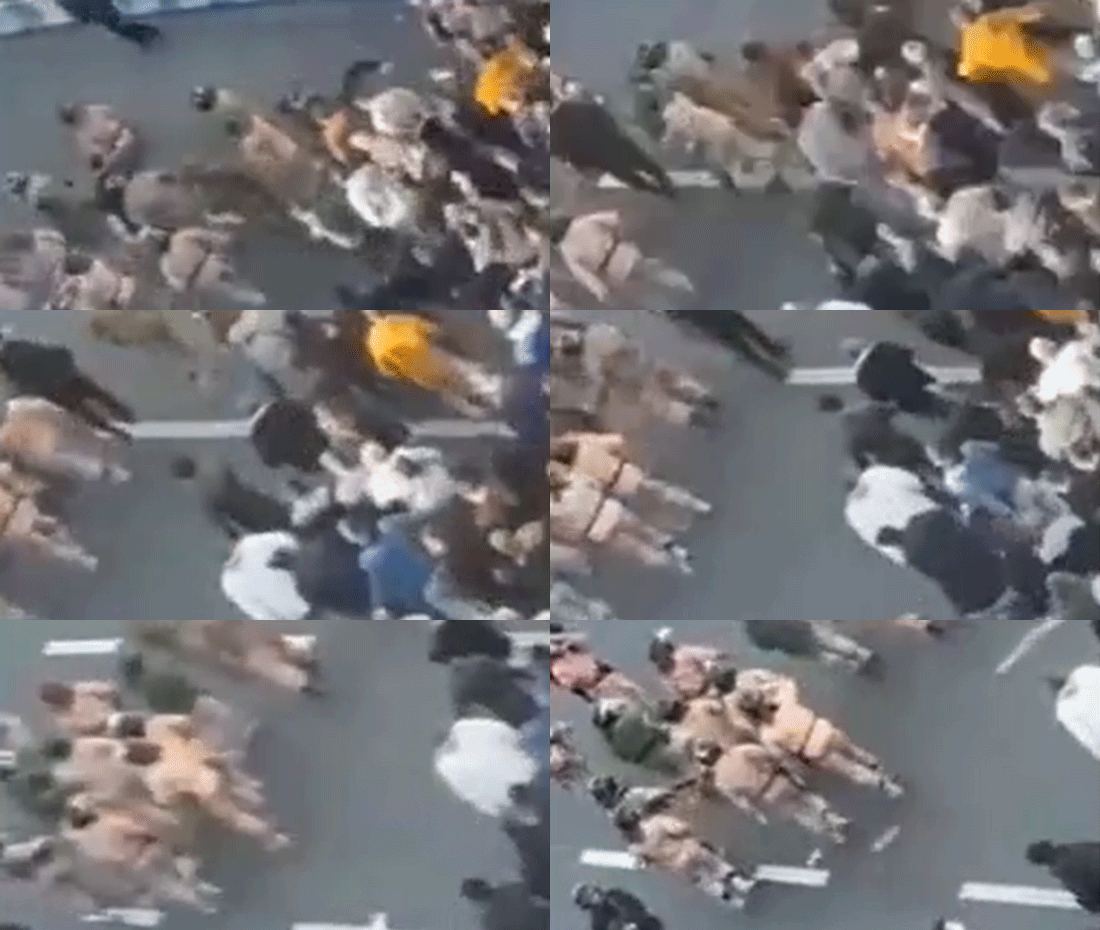
From the halls of Tehran University to the ancient squares of Isfahan, Iranians from diverse backgrounds have joined the movement. Security forces have responded with tear gas in Tehran and Malard, while reports indicate live ammunition may have been used against protesters in Hamadan. Videos obtained by opposition groups show remarkable scenes of demonstrators pushing back security forces in some areas, forcing them to retreat. The National Council of Resistance of Iran (NCRI) reported that strikes have spread across Tehran’s Shoush and Molavi districts, with parts of Tehran’s Grand Bazaar and gold market shutting down in solidarity. Mobile phone traders gathered outside major shopping centers after closing their stores, while nighttime demonstrations stretched from Qeshm Island in the south to Zanjan and Hamadan in the north. What makes these protests particularly significant is the participation of bazaar merchants – traditionally a pillar of regime support – signaling a profound shift in public sentiment and declining confidence in the state’s economic management.
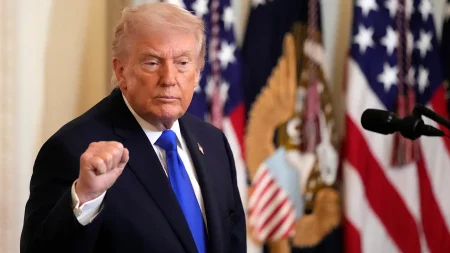
Former U.S. President Donald Trump voiced support for the demonstrators while stopping short of explicitly calling for regime change. Speaking at Mar-a-Lago on Monday, Trump highlighted Iran’s economic collapse and the regime’s violent response to public dissent: “They’ve got tremendous inflation. Their economy is busted, the economy is no good.” He described a pattern of brutal suppression he’s observed for years: “Every time they have a riot or somebody forms a group, little or big, they start shooting people. You know, they kill people. All of a sudden people start getting shot and that group disbanded pretty quickly.” Trump characterized Iran’s leadership as “vicious, vicious people” while noting the “tremendous discontent” he’s witnessed building among the Iranian population during his time in office and beyond.
Other U.S. officials joined in expressing solidarity with the protesters. U.S. Ambassador to the United Nations Mike Waltz issued a direct message of support on social media: “The people of Iran want freedom. We stand with Iranians in the streets of Tehran and across the country as they protest a radical regime that has brought them nothing but economic downturn and war.” The U.S. government’s Persian-language account similarly declared Washington’s support for the Iranian people’s efforts “to make their voices heard,” urging the Islamic Republic to respect fundamental rights rather than suppress protests. This international attention comes at a critical moment when Iran’s internal stability has reached what some analysts call a “critical threshold,” with the convergence of currency collapse, renewed international sanctions, and chronic water and energy shortages creating a perfect storm of public discontent.
Iranian officials have acknowledged the unrest while attempting to project a measured response. Government spokeswoman Fatemeh Mohajerani stated that Tehran recognizes the protests, and officials would establish a mechanism to engage with protest leaders. President Masoud Pezeshkian reportedly directed his interior minister to address protesters’ “legitimate demands” and engage in dialogue with their representatives. However, these conciliatory statements have been accompanied by a significant security presence, with forces tightening entry controls at university campuses and reinforcing offices linked to Supreme Leader Ali Khamenei. The contrast between official rhetoric about dialogue and the reality of security crackdowns highlights the regime’s difficult position as it attempts to contain the growing unrest without making meaningful economic or political concessions.
Independent analysts and opposition leaders see the current protests as reflecting deeper structural problems within the Islamic Republic. Maryam Rajavi, leader of the NCRI, described the demonstrations as reflecting the anger of “tens of millions” of Iranians driven to the breaking point by inflation, corruption, and clerical rule. Cameron Khansarinia of the National Union for Democracy in Iran observed that “Iranians’ desire to be free is increasingly becoming greater than their fear of the regime,” noting the “remarkable bravery” of protesters despite the risks they face. Some reports indicate growing support for Crown Prince Reza Pahlavi among demonstrators, suggesting nostalgia for pre-revolutionary Iran amid the current economic crisis. While verification of casualties and arrests remains limited due to restrictions on access inside Iran, the scale and persistence of the protests underscore mounting pressure on Iran’s leadership as it confronts economic free fall and growing public defiance. As night falls across Iran’s cities and towns, the chants of “death to the dictator” continue to echo, revealing a population increasingly willing to challenge a system that many feel has failed them completely.