






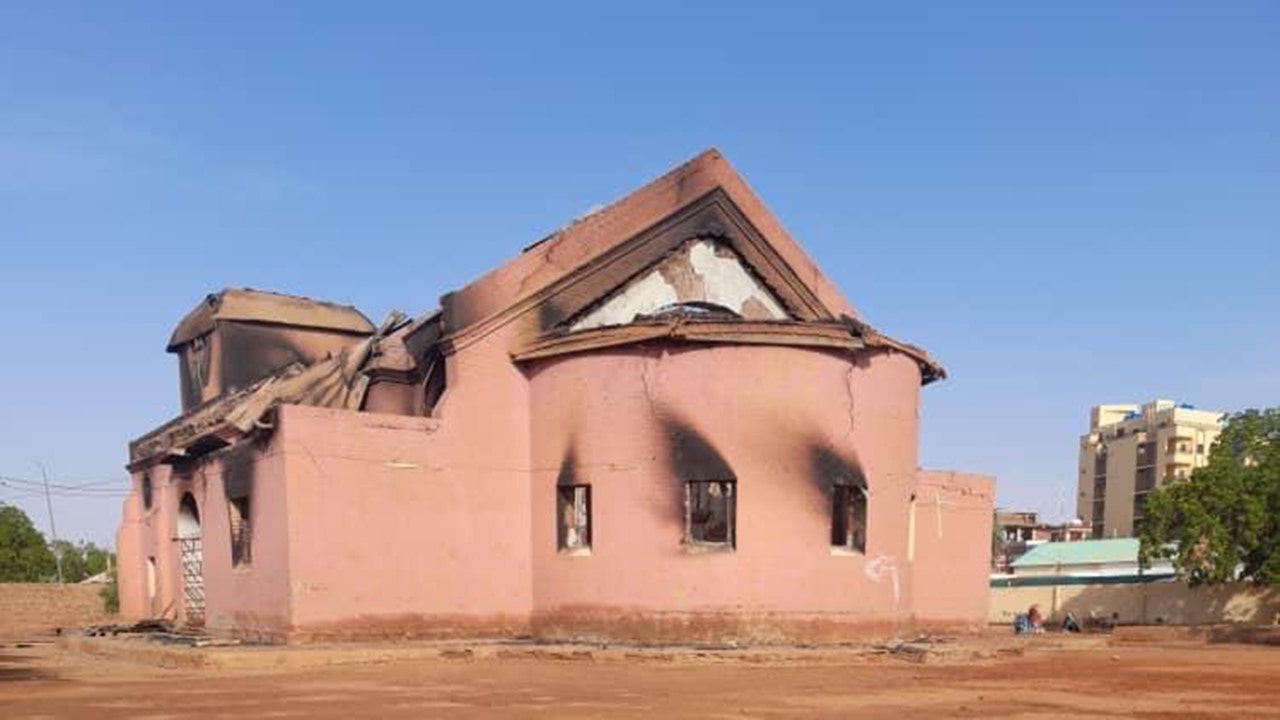
Christians in Sudan Face Growing Persecution Amidst Civil War
In the shadow of Sudan’s devastating civil war, the Christian minority finds itself increasingly targeted as the conflict intensifies. The Open Doors World Watch List for 2026 has ranked Sudan as the fourth worst country globally for Christian persecution, climbing one position from last year’s assessment. Approximately two million Christians call Sudan home, continuing a presence that dates back to the late first century. As the civil war has now surpassed 1,000 days, the human toll is staggering: an estimated 150,000 people killed and more than 13 million displaced. For Christians specifically, the situation has become increasingly dire, with targeted attacks growing more frequent and brutal, particularly in the Nuba Mountains region of Kordofan, where many Christian communities are concentrated.
The plight of Sudan’s Christians was tragically highlighted during the Christmas season when 11 Sudanese Christians were killed by a drone strike while participating in a religious procession. According to reports from MEMRI citing Christian Daily International, the attack was carried out by the government’s Sudanese Armed Forces (SAF), allegedly backed by the Muslim Brotherhood, leaving an additional 18 people injured. Rafat Samir, general secretary of the Sudan Evangelical Alliance, described how Christian communities in the Nuba Mountains have endured relentless bombing campaigns for months, with attacks targeting churches, hospitals, and schools. The situation has deteriorated to such an extent that Christians who were previously reported to be surviving on grass have now lost even that desperate option for sustenance, with Samir grimly noting that “even the grass is gone now.”
The ideological underpinnings of this persecution are particularly troubling. Both warring factions in Sudan’s civil conflict – the government’s Sudanese Armed Forces and the opposing Rapid Support Forces militia – have roots in Islamist movements with little tolerance for religious diversity. Samir explains that within their religious ideology, Christians are viewed as enemies, making violence against them not just permissible but potentially meritorious. “So whoever does something to harm Christians is considered favorable to the law or to Allah,” Samir notes, adding that “the country is getting back to the dark ages.” This religious dimension adds another layer of complexity to an already devastating humanitarian crisis, as Christians face not only the general dangers of civil war but targeted persecution based on their faith.
The conflict shows no signs of abating despite numerous attempted ceasefires. Both the SAF and RSF continue their military campaigns, resulting in civilian casualties across the country but especially in the central region of Kordofan. The United Nations has expressed serious concern about the escalation of violence in this area, with U.N. High Commissioner for Human Rights Volker Türk warning that atrocities previously committed in El Fasher risk being repeated in Kordofan. He described the region as “extremely volatile,” suffering from “relentless military engagements, heavy shelling, drone bombardments and airstrikes causing widespread destruction and collapse of essential services.” The intensification of fighting in areas with significant Christian populations has exacerbated the targeted nature of their suffering, with religious sites and community centers often in the crosshairs.
The United States has positioned itself as committed to ending the conflict, with a State Department spokesperson stating that under President Trump’s leadership, they are “working with our allies and others to facilitate a humanitarian truce and bring an end to external military support to the parties which is fueling the violence.” However, as Mariam Wahba, a research analyst at the Foundation for Defense of Democracies, points out, America’s role remains that of “a facilitator, not an enforcer.” U.S. policy appears focused on convening regional stakeholders and establishing humanitarian corridors rather than direct intervention. Wahba characterizes this approach as reflecting “both constraint and caution,” noting that Sudan offers “few reliable leverage points, no unified opposition partner, and little appetite in Congress or the White House for another open-ended entanglement in a fragmented civil war.”
Despite the bleak circumstances, faith persists among Sudan’s Christian communities. The conflict is not only causing immediate suffering but threatens the erasure of ancient Christian communities and sacred heritage – losses that, as Wahba notes, “will be far harder to reverse than the rebuilding of roads or ministries once the guns fall silent.” Yet amidst this darkness, Samir expresses a resilient hope: “The Holy Spirit is moving and God’s hand is working in our country. I can tell you through this evil, this darkness, the light of love of our God is lighting in many hearts.” Even as Christians in Sudan pray simply to survive another day, they remain committed to their faith, with Samir emphasizing their desire to “live for one day more to proclaim Jesus’s message.” This spirit of endurance offers a powerful testament to the strength of Sudan’s Christian community as they face some of the most challenging circumstances in the world today.