





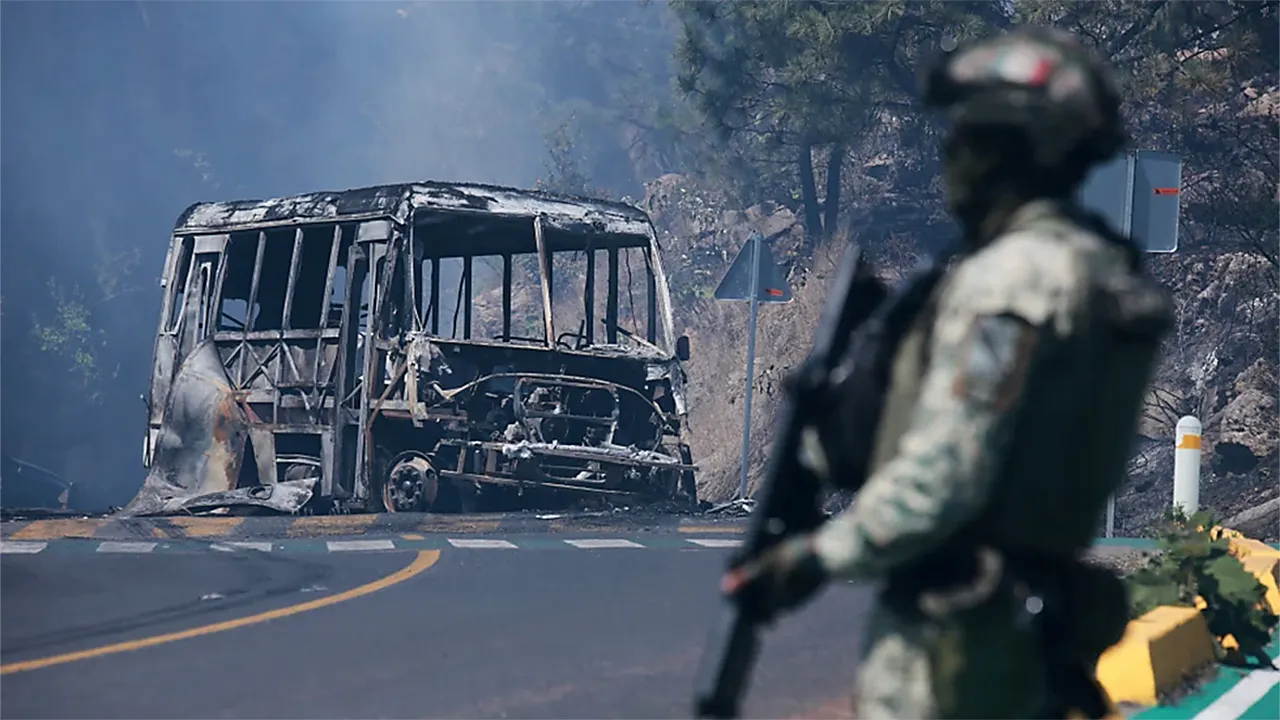
The tragic aftermath of the death of Jalisco New Generation cartel’s boss, Nemesio Oseguera Cervantes, known as “El Mencho,” has unleashed a wave of chaos across parts of Mexico, plunging unsuspecting Americans into terrifying scenes of violence. In the wake of his reported demise, rival criminal groups clashed fiercely with Mexican security forces, sparking coordinated acts of destruction like vehicle burnings and highway blockades. For tourists and residents alike, these outbursts feel like sudden, heart-pounding nightmares—images of gunfire echoing through streets, flames licking at the sky, and roads turned into traps. It’s a reminder of how fragile safety can be in areas reliant on tourism, where families plan dreamy vacations only to find themselves dodging real bullets. As firsthand stories from Americans emerge, they paint a vivid picture of human resilience amid fear, with people like Scott Posilkin from Colorado sharing how an innocent day trip turned into a survival ordeal. The violence, often tied to internal cartel power struggles or law enforcement crackdowns, has left communities reeling, but authorities note that such flare-ups are not unprecedented. For those caught in the middle, like travelers who saw their idyllic beach getaways morph into war zones, the experience is deeply personal and unsettling, raising questions about why such terror persists in a country they love.
One of the most harrowing accounts comes from Scott Posilkin, who was with a group of seven on a shuttle to Puerto Vallarta’s main port when they stumbled into a makeshift blockade. What started as confusion—a bus parked across the road, people fleeing in panic—quickly escalated into a life-or-death standoff. Posilkin recounts the gut-wrenching moment when a gun-wielding man signaled them to reverse course, trapping them between the blockade and a burning car that barred the other direction. Imagine the adrenaline surge, hearts pounding, as families huddle in a vehicle, unsure if they’re about to become collateral damage in someone else’s feud. Instead of escalating, the armed individuals seemed indifferent to the tourists’ presence, allowing them to escape deeper into town. Posilkin describes the surreal panic of watching Puerto Vallarta’s familiar streets transform: flames rising, townsfolk scattering like startled birds. He credits the locals’ instinctual kindness for guiding them to safety—urging them to flee to the water, where they boarded a snorkeling boat and waited out the inferno from the sea. From their vantage point on the ocean, the view was apocalyptic: smoldering buildings and smoke plumes blotting the horizon. As a traveler who’s made Mexico his escape, Posilkin speaks with raw emotion about how the ordeal felt like being yanked from paradise into purgatory, but he also sees the humanity in it—the way strangers rallied without hesitation.
The ordeal etched itself deeper as Posilkin and his group, stranded on the water, faced delays in returning to shore. With no one patrolling the usually bustling beach, they were forced to consider desperate measures like swimming back—a testament to how the chaos disrupted even the simplest routines. Eventually, they flagged down help from a passing tender, landing amid an eerily empty coastline that their boat captain confessed he’d never seen before. Posilkin shares a bizarre, almost cinematic moment: cartel members on motorcycles shouting “Viva Mexico” as they passed, a phrase that felt cryptic—neither purely hostile nor welcoming, just another layer of uncertainty in a day gone awry. This experience has left him reflective, emphasizing the extraordinary compassion of everyday Mexicans who dropped everything to assist foreigners. “Everyone we interacted with went above and beyond,” he says, painting portraits of a shuttle driver and boat captain who, despite their own roots in the region, had never witnessed such brutality. Posilkin’s gratitude is palpable; it humanizes the helpers, showing how trauma can forge unlikely bonds. Yet, beneath the relief, there’s sorrow for the locals—Puerto Vallarta’s tourism lifeline slammed shut, livelihoods evaporating overnight. While Posilkin admits the scare nearly shattered his love for Mexico, he clings to hope, viewing it as a stark reminder of the world’s unpredictability rather than a reason to stop exploring. It’s a story of fear transmuted into empathy, urging us to remember the people whose strength holds communities together in the face of unstoppable forces.
Rodolfo Flores, an American energy sector executive, found himself in a different flashpoint, far from the beaches, in Querétaro. Though his area was less besieged, the eerie sight of a convenience store incinerated by a Molotov cocktail on Sunday morning shattered any illusion of detachment. Driving to Mexico City, Flores encountered more horror—cars and trucks reduced to charred husks, abandoned like discarded tombs along the highway. This wasn’t just random; it was a calculated display of power by groups flexing their muscles in the vacuum left by El Mencho’s fall. Flores expresses indignation, calling out authorities for allowing cartels to fester into “highly effective criminal cells” that can terrorize without repercussion. As someone who traverses these roads for work, he speaks with the weary frustration of someone who’s seen too much vulnerability exploited. Security experts echo his concerns, noting that such violence spikes after leadership vacuums, with blockades and arsons serving as grotesque proofs of dominance. For Flores, it’s not academic—it’s personal, a wake-up call about how these criminal syndicates prey on ordinary lives, turning highways into battlegrounds. His account adds emotional weight, showing how even a single burned-out store can symbolize broader systemic failures, leaving expats feeling exposed and furious at the lack of accountability.
In a chilling tale from Michoacan, an unnamed American—requesting anonymity to protect his safety—described a frantic escape from Coalcoman on Sunday morning as pandemonium erupted. By 11 a.m., he witnessed the descent into madness: vehicles ablaze, armed men dragging people from their cars only to torch them further. The mountainous terrain, usually a scenic escape, became his lifeline as he fled over peaks, dodging checkpoints of burning wreckage and armed figures. Luck played its part; no one halted him, allowing passage to freedom in Colima then Guadalajara. But the reprieve was short-lived—word reached him of escalating atrocities back home: gas stations engulfed in flames, a supermarket torched, the town sealed off like a fortress under siege. Imagine the dread of hearing loved ones trapped in a net of fire and blockades, unable to enter or exit. His voice carries the tremble of near-miss survival, a mix of gratitude for his own escape and agony for those left behind. This story humanizes the unspeakable, turning statistics into lived nightmares where every decision—every mountain traversed—hangs between sanctuary and slaughter. It underscores the arbitrary nature of cartel rule, where innocence offers little shield, yet in his fortitude, there’s a quiet heroism that inspires others to keep fleeing toward safety.
As the unrest begins to wane, with Mexican troops bolstering Puerto Vallarta, a glimmer of normalcy returns, but scars linger. Analysts warn that such post-leadership voids often breed instability, with rival factions scrambling and law enforcement responses sparking retaliatory riots. The U.S. Embassy’s update on Tuesday afternoon lifted the shelter-in-place advisory for Americans, signaling easing tensions, yet it carries a cautious optimism. For those like Posilkin, Flores, and the anonymous Michoacan resident, this period was a brutal education in courage and community. Their stories, woven with fear and kindness, reveal the human cost of turf wars—lost businesses, shattered vacations, and the unspoken gratitude for safe passage home. Mexico, they affirm, isn’t defined by its shadows but by its people’s enduring spirit. In summarizing these experiences, we glimpse a wider truth: in the grip of chaos, it’s the quiet acts of help—from shouting “Viva Mexico” to guiding strangers to boats—that restore our faith in humanity’s light. This isn’t just news; it’s a collective chapter of resilience, urging vigilance and empathy as borders remain porous to both beauty and brutality. Ultimately, these Americans’ voices demand action, not just sympathy, to prevent such ordeals from defining future travels, ensuring Mexico’s allure survives its darkest hours. Their shared pain galvanizes a call for better security, stronger international cooperation, and perhaps most poignantly, a deeper appreciation for the places and people we risk everything to visit. Through it all, the enduring message is one of love for Mexico, tempered by a sobering realism that these violent interludes are temporary storms in an otherwise vibrant land.