




Venezuela After Maduro: A Nation at a Dangerous Crossroads
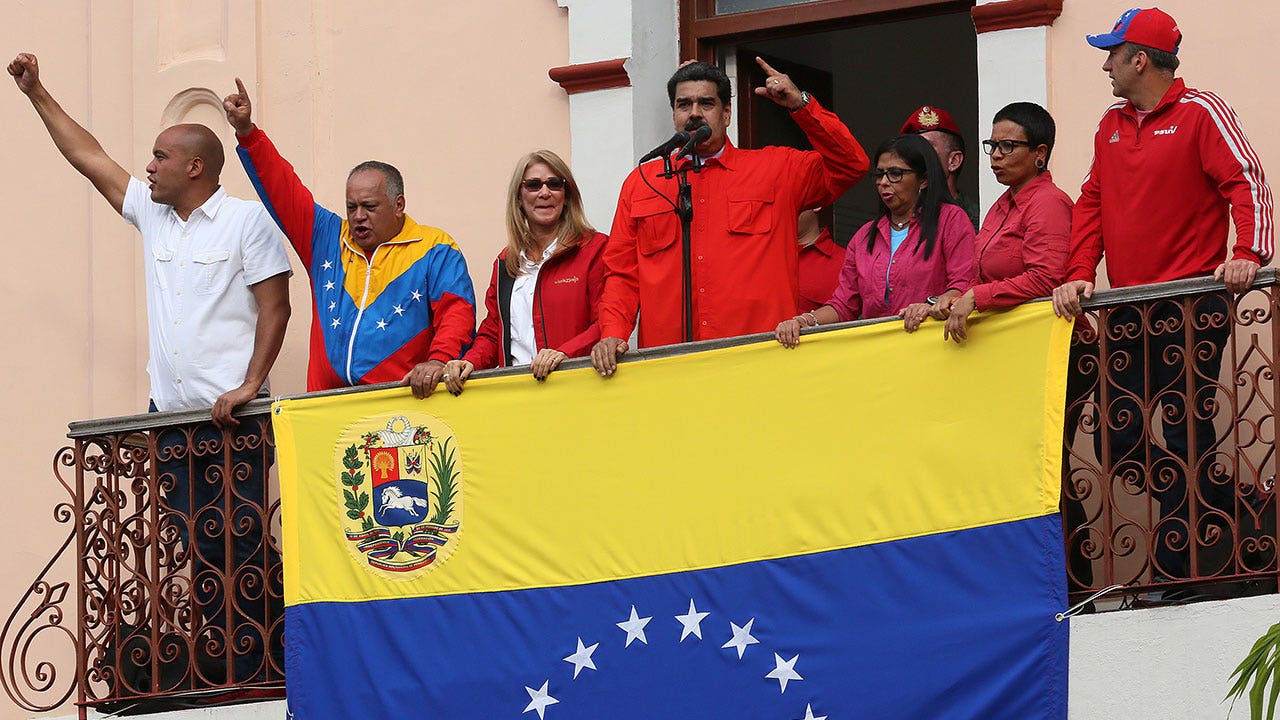
As Venezuela enters the post-Maduro era, the country stands not at the threshold of democracy, but at the edge of what many experts fear could be an even more perilous chapter in its troubled history. The capture of both Nicolás Maduro and his influential wife Cilia Flores—described by former Treasury official Marshall Billingslea as “the brains behind the operation”—has created a power vacuum that various factions within Venezuela’s ruling elite are now scrambling to fill. Far from a clean break with authoritarianism, what we’re witnessing is the fracturing of what Billingslea calls a “loose association” of “mafia bosses,” each with their own center of gravity, now spinning off independently as the system that bound them together collapses. This power struggle threatens to plunge Venezuela into deeper instability, with competing criminal elements vying for control and ordinary Venezuelans caught in the crossfire of what could become a more violent and unpredictable environment than the one they endured under Maduro’s centralized repression.
At the center of this dangerous transition stands Delcy Rodríguez, Maduro’s vice president who was quickly installed as interim leader. Far from representing change, Rodríguez embodies continuity with the Maduro regime. According to former officials, she has deep ties to Cuban intelligence, which helped build Venezuela’s internal security apparatus over the past two decades. Rather than signaling political reform, her immediate focus has been on consolidating control within security institutions. A former Venezuelan official bluntly told Fox News Digital that Rodríguez “hates the West,” suggesting that her limited engagement with U.S. demands may be merely tactical—buying time while she secures loyalty within the regime and neutralizes rival factions. This strategic maneuvering creates uncertainty about how much leverage Washington truly holds over Venezuela’s new leadership, even as the Trump administration pursues what Billingslea describes as a “clear-eyed strategy” to secure U.S. interests while gradually working toward democratic restoration.
The power vacuum has energized several key players within Venezuela’s ruling elite, each controlling different levers of authority. Diosdado Cabello, one of the most feared figures in the country, has been rallying armed colectivos and loyalist groups to reinforce regime authority through intimidation and targeted detentions of opponents. Sanctioned by the U.S. for corruption and alleged drug trafficking ties, Cabello represents the possibility of rule through force rather than institutions. Meanwhile, Jorge Rodríguez—National Assembly president and brother to interim leader Delcy—continues to function as a key political operator, overseeing communications, elections, and internal coordination. Working closely with his sister, he helps maintain the regime’s grip on intelligence and security structures, potentially positioning himself to shape any managed transition that preserves the system Maduro built while offering cosmetic changes to appease international pressure.
Defense Minister Vladimir Padrino López, long considered the backbone of Maduro’s survival, remains a critical but enigmatic figure in this volatile landscape. Though he hasn’t publicly positioned himself as a successor, his control over the armed forces gives him significant influence. However, analysts note that the military is no longer unified behind a single leader, with senior generals split across competing factions. This fragmentation raises the alarming possibility of internal military clashes or a shift toward overt military rule if civilian authority continues to weaken. Beyond these elite power struggles, Venezuela faces the growing danger of enhanced control by criminal syndicates and armed groups that already influence large parts of the country. As centralized authority deteriorates, these actors could exploit the vacuum, expanding their grip over territory and lucrative smuggling routes in ways that make Maduro’s authoritarian rule seem orderly by comparison.
Standing outside this web of regime insiders is opposition leader María Corina Machado, who remains the most popular political figure among Venezuelan voters. Yet popularity alone may prove insufficient to translate into actual power in a system where control of security forces, intelligence agencies, and armed groups determines who rules. As repression intensifies under the interim government and rival factions maneuver behind the scenes, Machado’s ability to convert public support into political authority faces enormous obstacles. The U.S. strategy, according to former officials, recognizes these complex dynamics, aiming to first secure core American interests while working toward a gradual restoration of democracy without deploying American troops. This approach acknowledges the reality that Venezuela’s political transformation will likely be messy and prolonged, requiring patience and strategic pressure rather than expectations of immediate democratic breakthrough.
What makes Venezuela’s current situation particularly dangerous is that Maduro’s fall did not dismantle the power structure he presided over—it merely fractured it into competing centers of influence, each capable of violence and repression. With armed loyalists patrolling the streets, rival factions competing behind closed doors, and an interim leader struggling to assert authority, Venezuelans now face the prospect that what follows Maduro could prove more chaotic and potentially more brutal than what came before. For a population that has already endured economic collapse, humanitarian crisis, and systematic repression, the question is no longer whether Maduro is gone, but whether anything that replaces him will provide the genuine change and relief they desperately seek. As the country navigates this precarious transition, the risk remains that Venezuela could trade one form of authoritarian rule for another—or worse, descend into a period of fractured authority where multiple armed factions compete for power at the expense of an already suffering population.