





Christians in Sub-Saharan Africa Face Persecution Amid Glimmers of International Response
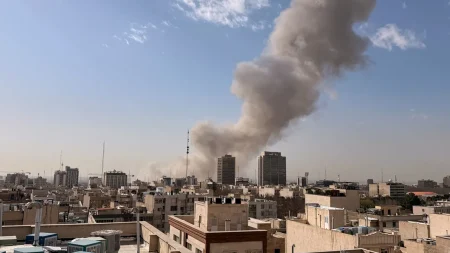
Millions of Christians across Sub-Saharan Africa are celebrating Christmas under the shadow of persecution, facing threats of violence, kidnapping, and death at the hands of Islamist militants. Recent U.S. airstrikes against Islamic State militants in Nigeria have sparked hope that the international community is finally acknowledging their plight. According to reports, an estimated 16 million Christians have been forcibly displaced from their homes throughout the region, creating what many observers call a humanitarian crisis of global proportions. The situation gained significant attention in 2025, with prominent U.S. officials including Senator Ted Cruz and Representative Chris Smith raising awareness, culminating in President Trump’s threat to send American troops into Nigeria to protect Christians under attack. Despite the recent reported release of 130 kidnapped schoolchildren in Nigeria, fear remains pervasive among Christian communities attempting to celebrate their faith during the holiday season.
“The militant Islamist onslaught across Sub-Saharan Africa is a catastrophe of global proportions unfolding before us,” explains Henrietta Blyth, CEO of Open Doors UK & Ireland, a charity supporting persecuted Christians worldwide. The organization has been documenting relentless attacks on Christian communities through their “Arise Africa” campaign, desperately trying to bring public awareness to the ongoing terror. Despite increased international attention, Blyth notes there’s “no sign that this has abated in 2025.” South Africa’s Chief Rabbi Dr. Warren Goldstein offered a stark assessment, calling the situation “a moral disgrace” and suggesting that “black lives do not matter if they are murdered by Islamists in Africa.” He frames the persecution as part of a “multi-continental jihadi war on the ‘infidels'” that stretches from Sudan to Mozambique, connecting it to broader conflicts involving Iran, Hamas, and Hezbollah, with “Israel at the epicenter.”
Nigeria, Africa’s most populous nation, reportedly experienced the worst Christian persecution on the continent in 2025. Open Doors documented “non-stop stories of deadly attacks and kidnappings” across Nigeria’s northern and Middle Belt regions, including villages burned, citizens sexually assaulted, abducted, and murdered. The violence prompted Pope Leo XIV to speak out against killings attributed to Muslim Fulani tribesmen in Nigeria’s Benue State, noting that “some 200 people were murdered, with extraordinary cruelty.” Bishop Wilfred Anagbe, whose Makurdi Diocese in north-central Nigeria is predominantly Christian, testified before Congress in March about the escalating attacks. Upon returning to Nigeria, he reportedly faced threats, and approximately 20 of his parishioners were killed, underscoring the dangers facing those who speak out.
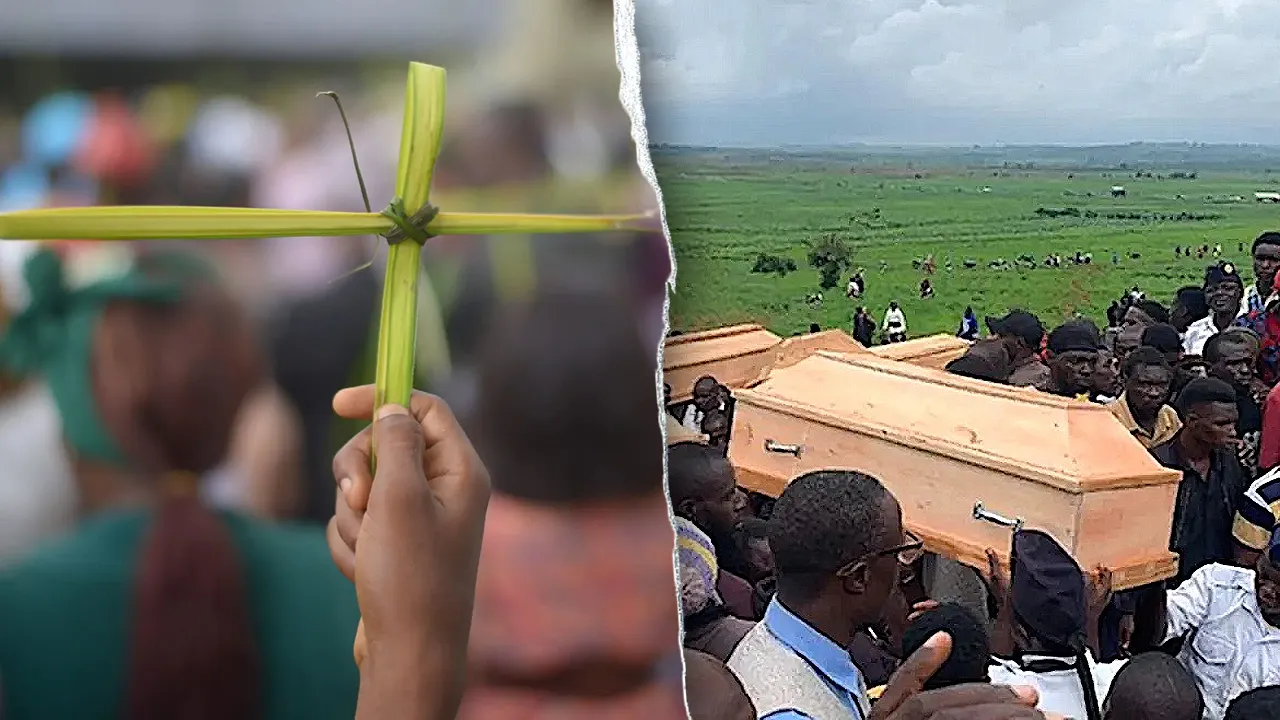
The persecution extends well beyond Nigeria’s borders. In the Democratic Republic of Congo, a nation that is 95% Christian, terrorists linked to the Islamic State allegedly rounded up and beheaded 70 Christians in a church in February. Later in September, at least 89 Christians were reportedly killed by jihadists at a funeral and in surrounding fields. Sudan’s estimated 2 million Christians (about 4% of the population) face not only the horrors of war and chronic food shortages affecting all Sudanese, but also targeted discrimination and persecution from both sides of the conflict. A Sudanese church leader revealed that Christians in Darfur’s El Fasher “are eating animal feed and grass” due to severe food shortages and blockades preventing aid deliveries.
In Cameroon, civil conflict and weak governance have created a vacuum that armed militants exploit. Boko Haram and Islamic State West Africa Province conduct regular overnight raids on villages, particularly in the north, resulting in deaths, abductions, and widespread destruction. One villager named Ali described the relentless nature of these attacks: “It never ends. I want it to end, but it doesn’t. We must sleep in the mountains for safety.” Meanwhile, in Mozambique, where Christians comprise 55% of the population, Islamic State-affiliated groups are wreaking havoc in the northern regions, specifically targeting Christian communities by burning churches and destroying homes. The violence has intensified throughout 2025, forcing thousands to flee, joining more than 1.3 million already displaced persons. In one particularly brutal incident in October, militants reportedly killed 20 Christians and displaced approximately 2,000 people from the village of Napala, with a local pastor describing how four elderly sisters were tied up and burned to death inside a house.
While the recent U.S. military action in Nigeria represents an acknowledgment of the crisis, Open Doors’ Henrietta Blyth cautions that “a military operation like this is not going to provide any sort of quick fix for decades of violence.” She emphasized that lasting solutions require the Nigerian government to ensure “peace, protection of civilians and religious freedom for everyone.” Chief Rabbi Goldstein offered a broader perspective on addressing the situation, concluding that “The West can only win this war if it can find the moral clarity to call it by its name and see all the theaters of war as part of the same fight.” As Christmas celebrations continue across the region, millions of Christians remain vigilant, hoping that increased international attention might finally lead to meaningful protection and the freedom to practice their faith without fear of violent persecution.