





Aaron Judge’s World Baseball Classic Journey: From National Pride to Yankee Dreams
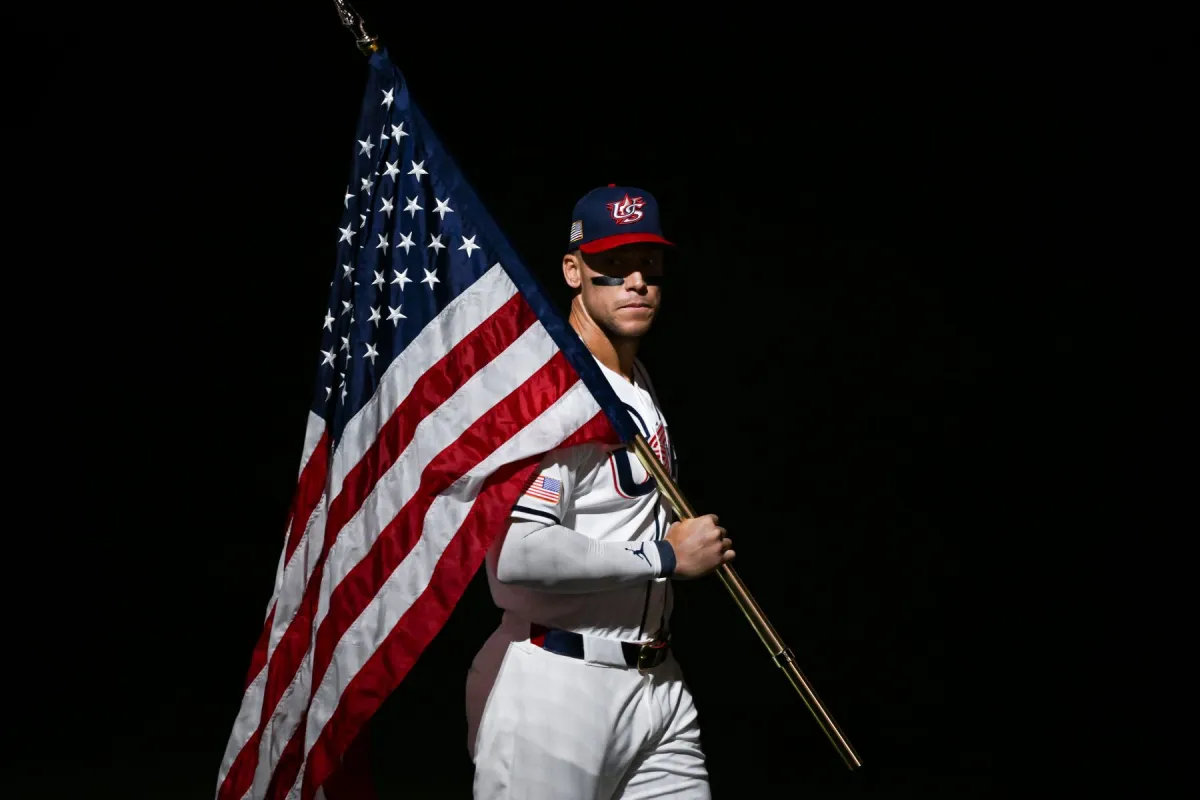
As the dust settled on the Goodyear Ballpark in Arizona, a palpable sense of disappointment hung in the air. The United States, assembled with a roster brimming with All-Stars and stars-in-the-making, had entered the World Baseball Classic as the undeniable favorites. Led by New York Yankees captain Aaron Judge, they navigated through the group stage and semifinals with relative ease, their offense exploding and their pitching silencing opponents. Fans across America had dared to dream of a championship trophy, reclaiming global baseball supremacy after years of coming tantalizingly close. But in the championship final against Venezuela, the dream crumbled. A hard-fought game that went into extra innings ended with Venezuela’s dramatic victory, sparking reflections on what went awry and how one of baseball’s biggest stars processed the sting. Aaron Judge, the towering slugger whose presence on the field commands respect and whose leadership on Team USA symbolized national hope, stood amid the debris of defeat, his mind racing between heartache and resolve. This was no ordinary loss; it was a body blow to a team of heavy hitters who had everything going for them on paper. Judge, with his 6-foot-7 frame and raconteur charm, embodied the spirit of the tournament for many. Born and raised in California, Judge grew up idolizing legends like Derek Jeter and Alex Rodriguez, dreaming of donning the stars and stripes for moments like these. Now, at 32, he was living that dream, yet it tasted bittersweet. As the team exchanged hugs with the victorious Venezuelans, Judge’s broad smile was replaced by furrowed brows, a quiet acknowledgment that perfection had eluded them. The journey began in March 2023 with a buzz of excitement from the moment Judge announced his commitment. He wasn’t just playing; he was rallying the troops. His name alone drew eyeballs and commitments from others like Gerrit Cole, Shohei Ohtani, and Adam Wainwright, turning Team USA into a formidable juggernaut. They dominated pool play, posting a 5-0 record, and advanced to the finals undefeated. But Venezuela, with their gritty underdog narrative fueled by aces like Jose Altuve and Ronald Acuña Jr., played flawlessly when it mattered most. Judge, who had been hitting .300 with power throughout the tournament, went 0-for-4 with three strikeouts in the final, a rare slump that left fans scratching their heads. Was it the pressure? The scouting reports? Or just baseball’s cruel randomness? Either way, it was a human moment for a superstar, reminding everyone that even titans like Judge are subject to the game’s unpredictable whims. Off the field, the atmosphere was electric with patriotism, red, white, and blue everywhere, from the stands to the locker rooms. Judge’s leadership shone in subtle ways—encouraging younger players, sharing stories of his own World Series chases, and keeping morale high through the highs and lows. His podcast appearances and social media posts during the tournament added a personal touch, humanizing the behemoth hitter. But post-loss, as confetti rained down on the wrong team, Judge’s facade cracked just a little, revealing the passion that drives him. He wasn’t just disappointed; he was “pissed,” as he’d later admit in raw, unfiltered interviews, a word that captured the fire in his belly.
Judge’s Raw Emotions: Fired Up Yet Still Pissed
In the immediate aftermath, surrounded by a swarm of reporters and flashing cameras, Aaron Judge didn’t mince words. “I’m always fired up for the Yankees, but I’m still pissed about this,” he told SNY’s Brian Lowry, his voice echoing in a video clip that quickly went viral on X (formerly Twitter). The quote encapsulated the duality of his mindset—a man torn between the sting of international defeat and the adrenaline of his MLB season looming just around the corner. Judge’s eyes, usually vibrant and expressive, betrayed a flicker of frustration as he recounted the game’s final moments. Venezuela’s extra-inning heroics, particularly José Ramírez’s game-changing hit, replayed in his mind like a haunting slideshow. He had envisioned standing on the podium, hoisting the WBC trophy, the underdog story of Team USA etched in history. Instead, he was grappling with questions about what-ifs: What if their bullpen had held? What if their bats had awakened in the late innings? The United States, boasting a lineup that could rival any in history, had scored just three runs in the final, a puzzling underperformance that fueled post-game analysis. Judge, ever the captain, refused to point fingers, instead shouldering his fair share of the blame for those three strikeouts. As a three-time American League MVP and likely Hall of Famer, he knows the spotlight shines brightest in failure. But beneath the toughness was a relatable vulnerability. The man who once hit 62 home runs in a season isn’t immune to slump or sorrow; he’s human, too. His reference to looking “forward to the next time we get a chance to put on the red, white and blue and take care of business” spoke volumes. It wasn’t just talk; it was a promise, a vow to channel this loss into future redemption. For Judge, baseball isn’t just a game—it’s a calling, a way to honor his roots, his teammates, and the fans who see him as a hero. Reflecting on his career, Judge likened this defeat to past heartbreaks, like the Yankees’ Series losses under his watch. Each setback, he believes, forges character. After the 2022 loss to the Fall Phillies, Judge dug deeper, becoming a leader in the clubhouse. Similarly here, amid the WBC wreckage, he was already plotting his revenge—not against Venezuela, but against complacency. His Yankees teammates, watching from afar, knew this meant more focus in spring training. Judge’s passion, often showcased in his on-field intensity or post-game homers, sometimes overshadows his strategic mind. In interviews, he dives into situational hitting, pitch recognition, and team dynamics, rehashing the Venezuela game ad nauseam. “That strikeout in the ninth? I should’ve laid off that fastball,” he’d muse aloud, second-guessing his swing. It’s this self-awareness that makes him endearing; the superstar who analyzes his own game like a scout. Off-duty, Judge unwinds with hobbies like golf or video games, grounding the image of the larger-than-life home run king. But at core, he’s driven by legacy—proving he’s not just a power hitter, but a winner. The WBC experience, though painful, reinforced his global appeal, drawing millions to follow his journey. As he boarded the plane back to New York, the frustration lingered, but so did the fire.
The Commitment That Built Team USA: Judge’s Role and Inspiration
Aaron Judge’s decision to play in the World Baseball Classic wasn’t casual; it was a commitment that reverberated through the baseball world. In an era when stars cash in on rest, Judge stepped up as Team USA’s captain, drawing parallels to historical figures like Babe Ruth representing America abroad. His involvement sparked a domino effect, with superstars like Shohei Ohtani and Luiz Gil volunteering en masse. “When Aaron committed, it became a must-do,” recalled one MLB insider anonymously, highlighting how his presence legitimized the roster. The lineup boasted three reigning Cy Young winners in Corbin Burnes, Gerrit Cole (though underutilized), and Alek Manoah, but it was Judge’s batting prowess that anchored the offense. Hitting.cleanup for much of the tournament, he slashed over .300 in early games, crushing home runs that lit up stadiums and social media feeds. His pet dog, Kamu, even became a mascot of sorts, with Judge sharing playful photos mid-tournament. But the commitment came at a cost. Judge, fresh off a taxing Yankees season, risked burnout, sacrificing personal rest for national duty. Doctors warned of potential strains, yet he powered through, embodying the patriotic ethos. In pre-tournament pressers, he spoke of unity, bridging generations from his Oakland Athletics roots to modern megastars. The pitching staff was elite, with Tarik Skubal (ineligible for full play due to rules) limited to one outing, but arms like Nolan Ohtani dazzled. Yet, the final’s pitching duel favored Venezuela’s relievers, who shut down the U.S. in extras. Judge’s leadership extended beyond stats; he mentored rookies like Yordan Alvarez, sharing stories of his A’s days. One anecdote from training camp: Judge cracking jokes to lighten tensions before tough workouts, turning grueling sessions into bonding moments. He’s not your typical stern captain; he’s approachable, with a goofy side that emerges in karaoke nights. This human touch inspired Team USA, creating camaraderie amidst high stakes. Judge’s agent even noted the rarity—most stars shy from extra games, but Judge saw it as honor. “It’s about representing a country that gave us this platform,” Judge once said in a candid moment, tying into his American dream narrative. His performance justified the hype until the final, where fatigue or pressure might’ve played roles. Analysts debated if Judge’s swing was off due to Venezuela’s shift tactics or if international baseball’s nuances threw him. Regardless, his effort humanized the event, showing vulnerability in a star. The aftermath saw praise flooding in—fans tweeting “Thank you, Judge” for his dedication. But he brushed it off, focusing on tangible wins and lessons learned. In the grand scheme, Judge’s WBC stint elevated Team USA’s profile, promising stronger future squads. It was a selfless act that didn’t yield gold but sowed seeds for pride, reminding fans of baseball’s unifying power.
High Expectations and Past Shortcomings: Judge’s Career Lens
With the World Baseball Classic concluded, Aaron Judge now pivots to the New York Yankees, where expectations are sky-high. As the team’s captain and marquee player, Judge carries the weight of history—he’s one of the most talented hitters alive, possessing a swing that’s both graceful and deadly, capable of launching moonshots that redefine parks. Analysts label him a likely first-ballot Hall of Famer, ranking his career OPS+ and WAR among the elite. But despite his individual brilliance—think those 62 homers in 2022—team success has eluded him in the postseason. Variations like the Yankees’ shocking 2022 World Series collapse against the Phillies linger like bad dreams, fueling debates on his “clutch” performance. Some critics, mostly from rival fans, point to his subpar stats in big games, labeling him a “menu” hitter who rises in cooldowns only to fade when stakes are highest. Judge himself acknowledges these narratives, using them as motivation. His mindset post-WBC mirrors this—pissed at the loss, yet excited for redemption. The Yankees’ roster mimics Team USA’s star power, with pieces like Carlos Stanton and Giancarlo Stanton meshing around Judge. Spring training chatter buzzes with optimism; Judge vows to fine-tune his game, perhaps working on defensive shifts that stymied him in the final. Psychologically, he’s resilient, drawing from childhood setbacks like being cut from his high school team for size concerns. That underdog origin fuels his fire, turning doubters into doubters’ regrets. In the clubhouse, Judge’s presence transforms the atmosphere—he’s the guy organizing prank videos or sharing motivational speeches, blending superstar status with team-first mentality. Off the field, his philanthropy shines, donating millions to causes like autism research, humanizing the power hitter. Yet, the pressure is immense; Yankees’ fans, rabid and demanding, expect a parade after April’s opening day. Judge’s response is pragmatic: Focus on process, not outcomes. In one extended interview, he reminisced about the 2023 WBC semifinal win, where he drilled a walk-off homer— a memory to counteract the final’s gloom. Failure, he notes, is part of the journey. From a career perspective, Judge at 32 is peaking, but age-related declines could alter his narrative. His contracts, totaling over 600 million, secure financial freedom, allowing passion over paychecks. But legacy comes from rings, and thus far, Judge has three MVPs but no hardware. The WBC loss compounds this, a puzzle piece in his story of near-misses. Humanizing him reveals a man navigating fame’s paradoxes—adored yet critiqued, powerful yet pressured. His upcoming season, post-WBC recommitment, could define years. Theory suggests Venezuela’s tactics exposed flaws Judge is now addressing, leading to evolution. Ultimately, Judge’s drive, forged in disappointment, propels him toward glory, making his Yankees tenure a captivating saga.
Broader MLB Echoes: Lessons and Future Prospects
The aftermath of the World Baseball Classic extends beyond Aaron Judge and the United States, rippling through Major League Baseball with lessons for talent evaluation, team chemistry, and international competition. For instance, Venezuela’s victory highlighted the rise of global stars, challenging U.S. dominance Spain came close in 2023, signaling baseball’s democratization. Judge’s frank admission of being “pissed” resonates with athletes worldwide, showcasing the authenticity needed in sports. It contrasts with polished PR responses, drawing fans closer. Pitching stats reveal a trend—tarik Skubal’s limited role begs questions on tournament rules, potentially favoring deeper rosters. Analyst reports suggest revising formats for fairness. Meanwhile, talent migrations echo off-field dramas, like the looming free agent battles. Just before opening day, news broke of the Toronto Blue Jays losing 23-year-old free agent to the Mets, a blow to their rebuilding hopes. Such stories underscore baseball’s volatility, where one offseason decision alters seasons. For Judge, this means renewed focus on rosters, perhaps eyeing trades to bolster Yankees’ depth. His commitment inspired a wave of patriotism, with players from diverse backgrounds embracing representation—think Anthony Volpe, the Yankees’ shortstop prospect, reflecting on Judge’s example. Human elements like mental health surface too; Judge’s post-loss cadence hints at the grind’s toll, pushing for better athlete support. The WBC’s marketing boom—viewership up 20%—benefits MLB, with global revenues soaring. Judge, as ambassador, embodies this appeal, his charismatic interviews bridging generations. Critics debate if U.S. losses signal decline, but positives like Ohtani’s maturation shine. In the future, World Baseball Classics will likely feature hotter talent, with Judge probably returning for 2026. His salary cap revelations? He admitted forfeiting millions for the cause, valuing intangible rewards. Off-court, Judge’s life is balanced—he’s a doting dad, privacy-protecting, dodging tabloid drama. This groundedness adds depth to his public persona. As he shifts to Yankees mode, the correlation between international heartbreaks and MLB resurgences intrigues. Fans ponder if ’24 will bring Judge’s breakthrough. Anecdotes from teammates paint him as relentless, turning losses into fuel. One example: Post-2022 Series fallout, Judge led clubhouse talks, fostering unity. Similarly here, the disappointment will galvanize Yankees’ push. In summation, Judge’s journey humanizes elite sport, where even giants face lows, teaching perseverance.
Wrapping the Journey: From Defeat to Motivation
As Aaron Judge boards the plane eastward, leaving Arizona’s warmth for New York’s spring chill, the World Baseball Classic chapter closes, but his story evolves. The loss to Venezuela, etched in memory by aube failures, serves as a catalyst for growth. Judge, the unflappable captain, transitions from international icon to Yankee warrior, channeling raw emotion into actionable fire. His mindset, oscillating between fury and anticipation, mirrors every athlete’s internal battle—pissed yet passionate. Team USA’s experience, though trophy-less, amplified global baseball’s allure, with Judge’s commitment paving paths for future stars. High expectations blanket his return, but armed with lessons, Judge aims for symmetry. Broader MLB trends, from free agent shifts to pitching paradigms, infuse excitement. Ultimately, Judge’s human side—resilient, relatable— endsures his enduring legacy, inspiring fans to embrace ups and downs. As he steps to the plate this season, the red pinstripes await. Will this be his year? Time will tell, but one thing’s certain: Aaron Judge isn’t done chasing dreams.