






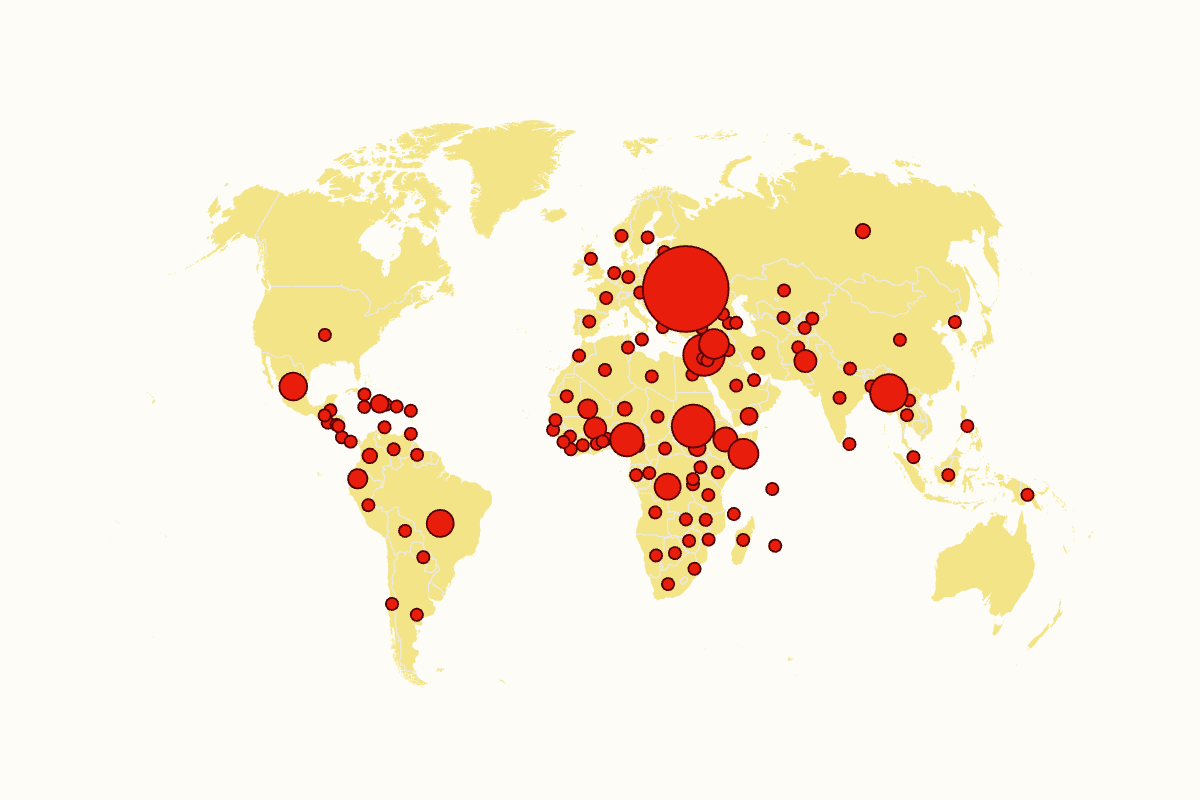
Global Conflict Reaches Alarming “New Normal” in 2025
In a sobering portrait of our world at conflict, the Armed Conflict Location & Event Data Project (ACLED) has documented over 204,000 violent incidents globally from December 2024 to November 2025, resulting in more than 240,000 deaths. The organization’s latest Conflict Index update reveals that approximately six percent of the world’s population lived under the shadow of active conflict during this period. This represents what ACLED’s CEO Clionadh Raleigh describes as a troubling “new normal” – a plateau of extreme violence following years of escalation. “Between 2019 and last year, conflict rates had doubled,” Raleigh explained during a recent briefing, “and this year, they stayed at the same level that we experienced last year.” This stabilization at such elevated levels suggests we’ve reached a concerning threshold of global violence that shows little sign of abating in the coming year.
The shifting nature of these conflicts is perhaps even more alarming than their scale. States have increasingly become primary drivers of violence, deploying sophisticated weaponry against neighbors, domestic opposition groups, and civilian protesters. Air and drone strikes reached unprecedented levels in 2025, supported by swelling defense budgets worldwide. This evolution has created distinct conflict patterns characterized by urban attacks, bombings, and expanded military operations. ACLED Head of Analysis Andrea Carboni highlighted this disturbing trend: “Civilians around the world do not just face more violence, they face more state violence.” The ten regions experiencing “Extreme” conflict severity in 2025 include the Israeli-Palestinian territories, Myanmar, Syria, Mexico, Nigeria, Ecuador, Brazil, Haiti, Sudan, and Pakistan – spanning multiple continents and representing diverse conflict typologies.
Ukraine maintained its grim position as the world’s deadliest conflict zone in 2025, with almost 78,000 fatalities recorded. Russia’s indiscriminate targeting across Ukrainian territory resulted in over 2,000 civilian deaths alone. Meanwhile, the Israeli-Palestinian conflict, while seeing slightly decreased event numbers, remained the most geographically diffuse violent crisis, with incidents reported across nearly 70 percent of Gaza and the West Bank. Together, these two conflicts contributed to over 40 percent of all conflict events worldwide during the year, highlighting how concentrated zones of intense violence can dramatically impact global statistics. The persistence of these conflicts despite international diplomatic efforts underscores the challenge of resolving deeply entrenched hostilities in the current geopolitical climate.
Beyond these headline-dominating conflicts, civil wars in Myanmar and Sudan continued with devastating intensity. Myanmar recorded over 13,700 conflict-related deaths nationwide, while Sudan became Africa’s deadliest conflict for civilians, with more than 17,000 people killed between January and November 2025. ACLED specifically noted that “no group has inflicted more violence against civilians than Sudan’s Rapid Support Forces (RSF),” though the report also indicated that non-state armed groups and mobs account for approximately two-thirds of all violence against civilians globally. Syria, meanwhile, saw conflict-related deaths rise from just over 6,000 to more than 9,000 compared to the previous year, fueled by a toxic mix of political rivalries, sectarian tensions, and continued foreign interference in the long-running civil war.
Latin America emerged as another critical conflict region, with gang-driven violence fueling high levels of conflict that placed Brazil, Ecuador, Haiti, and Mexico among the world’s ten most violent countries. Ecuador’s situation appears particularly volatile, rising to sixth place globally as over 50 armed groups—including nearly 40 distinct gangs—were responsible for more than 2,500 violent events, with over half directly targeting civilians. This proliferation of organized criminal violence presents different challenges than traditional armed conflicts, as these groups often operate within otherwise functioning states, targeting specific populations and undermining governance through corruption and intimidation rather than seeking territorial control or political power through conventional military means.
Looking ahead to 2026, ACLED forecasts that this elevated level of violence will likely continue unabated, potentially exposing even more people to conflict situations. This projection comes despite numerous international peace initiatives and ceasefire attempts throughout 2025, suggesting that current diplomatic and peacekeeping approaches may be insufficient to address the complex drivers of contemporary conflicts. The evolving nature of violence—increasingly state-driven, technologically sophisticated, and often targeting civilian populations—presents profound challenges for conflict resolution and humanitarian response. Without significant changes in international approaches to conflict prevention and peacebuilding, millions of people worldwide face another year of living in danger zones where violence has become normalized and persistent, threatening not just immediate safety but long-term development, governance, and human security.