





From Abandoned to Adored: Finn’s Journey to Finding Joy
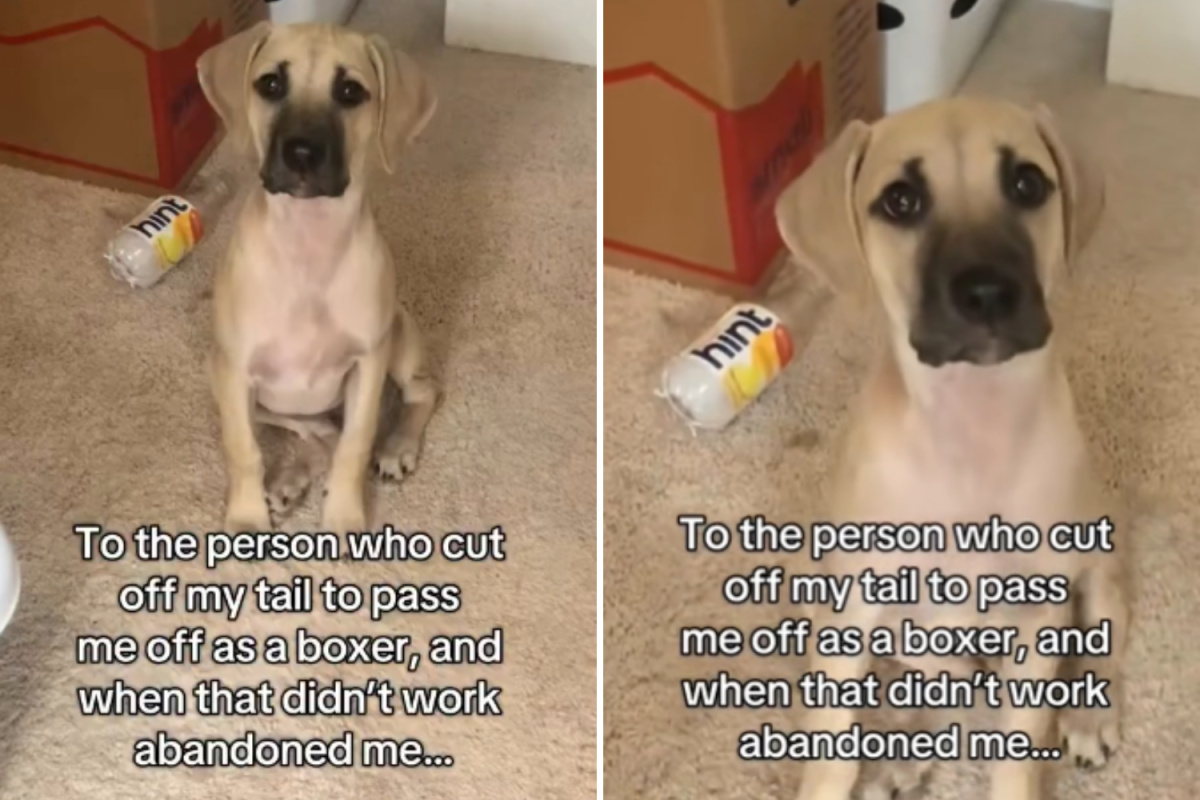
In the sun-soaked waters of Miami, a chocolate-brown rescue dog named Finn splashes happily, attempting to catch fish with adorable determination. Looking at her joyful demeanor today, few would guess the difficult journey this four-year-old pup endured before finding her forever home. Finn’s story recently captured hearts across social media when her owner Maria shared a touching video revealing the dark reality behind her pet’s missing tail—deliberately cut off by backyard breeders attempting to pass her off as a boxer. When that deception failed, Finn was abandoned, becoming one of countless victims of unethical breeding practices. The video, which has garnered over 300,000 views, shows Finn happily swimming while a poignant message to her former owners reads: “To the person who cut off my tail to pass me off as a boxer, and when that didn’t work abandoned me, I’m a fairly unsuccessful fisherman now, but I’m happy.”
Finn’s early life was marked by neglect and cruelty. She was rescued by PAWS Animal Welfare Society in Fort Walton Beach, Florida, after being discovered with her littermates in deplorable conditions—confined to a concrete patio in someone’s backyard where they were kept outdoors with inadequate food and care. According to the shelter’s account, it took the backyard breeders an alarming ten days to even notice the puppies had been rescued, highlighting the severe neglect these animals experienced. While DNA testing would later reveal Finn to be primarily coonhound mixed with other breeds, her previous owners had cruelly altered her appearance in what Maria believes was an attempt to misrepresent her breed for profit. The docking of her tail—performed without veterinary care or medical necessity—represents a troubling example of cosmetic alterations that animal welfare advocates condemn for causing unnecessary pain and potential long-term issues for dogs.
The practice of tail docking exists in a concerning regulatory gray area in the United States. Unlike many European nations including the United Kingdom, Germany, and Italy, which have enacted bans on cosmetic docking except in very specific medical circumstances, no U.S. state completely prohibits this practice. This legal gap allows unethical breeders to continue altering animals’ appearances for profit or to fit arbitrary breed standards, often without proper medical care or pain management. The result is unnecessary suffering for animals like Finn, who bear the physical and sometimes psychological consequences of these cosmetic procedures for life. Such practices are frequently associated with backyard breeding operations, which typically prioritize profit over animal welfare, resulting in dogs being abandoned or surrendered to shelters when they no longer serve their commercial purpose.
Finn’s fortunes changed dramatically when Maria decided to adopt a companion for her first dog. What started as a practical decision quickly blossomed into a deep bond as Maria fell in love with Finn’s gentle personality and surprising enthusiasm for water. Today, Finn’s life bears no resemblance to her challenging beginnings. She shares her Miami home with three other rescue dogs, including her canine friend Goose, and enjoys daily swimming sessions—a favorite activity that has become therapeutic for her. “Her life is amazing now,” Maria shares with evident pride. The transformation from neglected puppy to beloved family member represents the profound difference that responsible adoption can make in an animal’s life, turning trauma into triumph through patience, care, and love.
Beyond Finn’s personal story of resilience lies a broader message about the importance of supporting animal rescue organizations. Maria hopes that by sharing Finn’s journey, she can draw attention to the critical work being done by shelters like PAWS Animal Welfare Society. Despite their dedication to saving animals from situations of abuse and neglect, these organizations often operate with limited resources and space, constantly facing the challenge of helping as many animals as possible while maintaining quality care. The reality of “always packed” shelters underscores the ongoing crisis of animal abandonment and the crucial role that adopters play in creating space for more rescues. By choosing adoption over purchasing from breeders, families like Maria’s directly contribute to breaking the cycle of exploitation that fuels operations like the one that initially harmed Finn.
Finn’s viral moment represents more than just a heartwarming pet story—it’s a testament to the transformative power of second chances. From a concrete patio where she was neglected and physically altered for profit to splashing joyfully in Miami waters as a “fairly unsuccessful fisherman,” Finn’s journey embodies resilience in its purest form. Her story reminds us that animals carry their histories with them but need not be defined by them. Through the simple acts of daily care, affection, and the freedom to express natural behaviors like swimming, Finn has reclaimed her joy. For the thousands who have viewed her story online, she has become a symbol of hope and a gentle reminder of our collective responsibility toward the animals who share our world. As Maria puts it simply and powerfully: Finn may not have her tail anymore, but she has found her happiness—perhaps the most meaningful victory of all.