



A President’s Absence from the Big Game
Picture this: It’s the pinnacle of American football delirium, the Super Bowl, where millions gather not just for touchdowns and tackles, but for the spectacle that blurs lines between sports, entertainment, and politics. But this year, on February 8th, President Donald Trump will be conspicuously absent from Super Bowl LX at Levi’s Stadium in Santa Clara, California. He skipped the event because, in his own words, it’s “just too far away.” But let’s be real—that distance feels like a convenient excuse in the midst of a brewing cultural showdown. Instead, Trump will make a virtual cameo via NBC, where a taped interview from the Oval Office with anchor Tom Llamas will air during the pre-game show. It’s a departure from last year’s Fox interview with Bret Baier, showing how alliances in media can shift as quickly as a quarterback’s decision under pressure. The game pits the New England Patriots against the Seattle Seahawks, kicking off at 6:30 p.m. ET, promising high-stakes action that’s already overshadowed by off-field drama. Trump didn’t mince words in his New York Post interview, calling his reason for staying away firmly tied to his disapproval of the halftime lineup. He slammed Bad Bunny as a “terrible choice” saying it only sows hatred, and threw in Green Day, the pre-game headliners, for good measure. It’s easy to see this as Trump flexing his influence in a post-presidency world, where every public statement still ripples through the headlines. Yet, for many fans, his absence might just mean more room in the stands, allowing the focus to return to the gridiron where it belongs. This Super Bowl isn’t just a game; it’s a microcosm of America’s divides, with Trump’s decision highlighting how one man’s views can cast a shadow over what should be a unifying event. As the pre-game build-up unfolds, viewers tuning in won’t have to guess where Trump’s loyalties lie—he’s not afraid to speak his mind, even if it means sidelining himself.
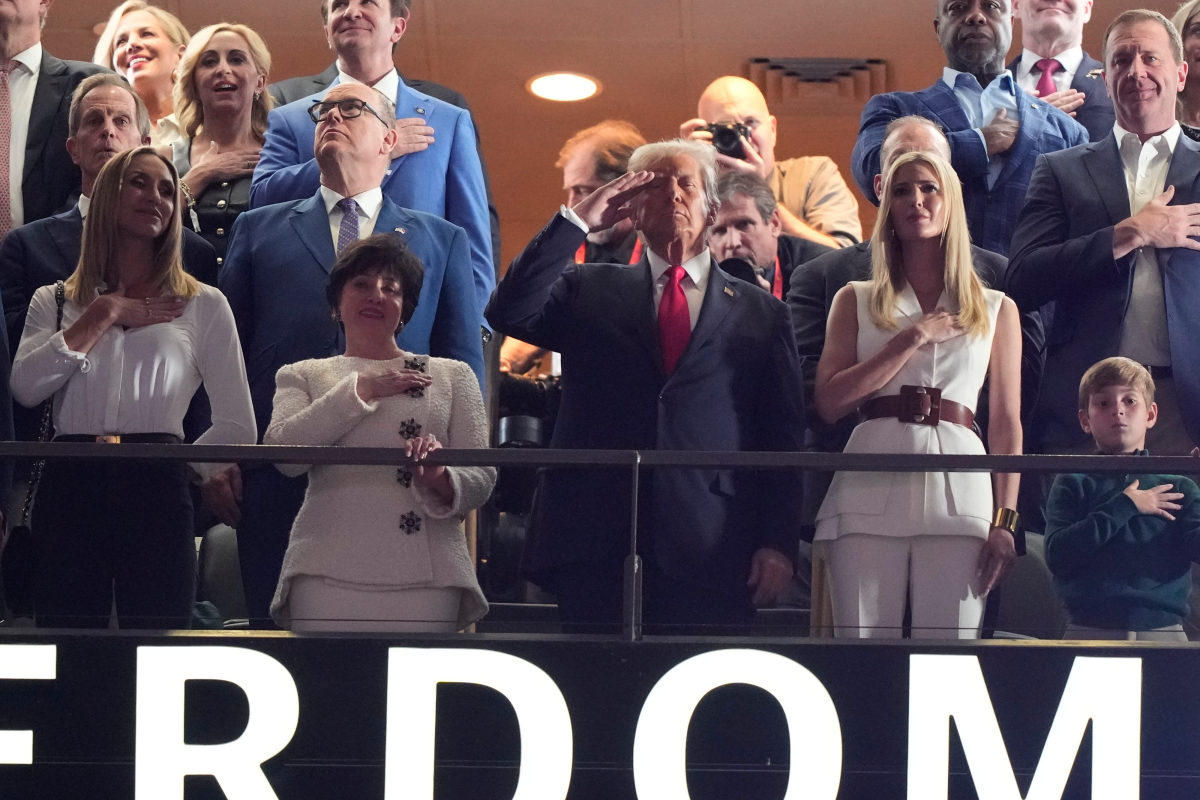
The human side of Trump’s Super Bowl saga emerges when you consider his track record. Last year, he made history as the first sitting president to attend the Super Bowl at the Caesars Superdome in New Orleans, indulging in the festivities and rubbing shoulders with stars. Reports were mixed—some said he was cheered by loyal fans, others claimed boos echoed through the stadium when he entered. It was a spectacle in itself, blending presidential pomp with football frenzy, but this year, he’s opting for the comfort of his Oval Office chair. You can almost picture him settling in with a phone nearby, ready to tweet reactions live, rather than braving the crowds and airport hassles of a coast-to-coast trek. His television appearance on NBC adds a layer of intrigue; it’s like he’s choosing the spotlight without the logistical headache. In a world where leaders are expected to connect with the masses, Trump’s decision feels oddly personal—a man no longer bound by office protocols, freely picking battles that resonate with his base. The New York Post chat revealed his disdain wasn’t just political posturing; it was visceral, as he positioned himself as anti-everything the halftime show represents. For regular folks watching on couches across the country, this might evoke memories of family gatherings where politics sneak in uninvited, turning a fun event into a debate arena. Yet, Trump’s selective attendance underscores a broader theme: how the leader of the free world picks his moments, sometimes choosing virtual presence over physical one, ensuring his voice still echoes loud and clear. It’s a reminder that even in retirement from the White House, figures like Trump remain embedded in the nation’s cultural fabric, influencing public discourse with a tweet or a timed interview segment.
Enter Bad Bunny, the Puerto Rican superstar whose role as halftime performer has ignited this firestorm. Born Benito Antonio Martínez Ocasio, he’s not your typical megastar—he’s a rapper and singer whose music blends reggaeton with social commentary, amassing a global following that’s as diverse as his sound. What started as a professional booking by the NFL has morphed into a political proxy war, with Bad Bunny’s outspoken critiques of Trump’s immigration policies drawing fire from the administration. Trump sees him as emblematic of a divide, accusing the performer and his ilk of fostering division. It’s like Bad Bunny is a sonic bomb, his beats dropping truth bombs that challenge the status quo, from deportation policies to border walls. Fans might recall how artists like him have always used platforms to spotlight injustice—from the days of Bruce Springsteen advocating for workers to Kendrick Lamar naming systemic racism in his verses. Bad Bunny isn’t just performing; he’s embodying the voice of millions who feel alienated by hardline immigration stances. In this clash, Trump’s critique feels like an old-school punch, where the president positions himself as a gatekeeper of patriotism, suggesting that entertainment should unify, not provoke. Yet, for Latinos tuning in, Bad Bunny represents hope and visibility, a man who’s climbed from Puerto Rico’s streets to the world’s biggest stage. Secretary of Homeland Security Kristjen Nielsen’s snarky takedown of the NFL last year—”They suck, and we’ll win”—echoes Trump’s sentiment, but it also highlights the administration’s strategy of turning pop culture into a battlefield. Bad Bunny’s presence at the Super Bowl isn’t just entertainment; it’s a statement, forcing America to confront its own fractures. In the end, Trump’s decision to skip the game feels like a refusal to witness the halftime show as much as the game itself, a personal stand in a nation where every performance carries political weight.
The tension escalated last weekend at the Grammy Awards, where Bad Bunny’s win for Best Música Urbana Album for DeBÍ TiRAR MáS FOToS (which also snagged Album of the Year) turned into a victory lap laced with defiance. Standing on that glittering stage, surrounded by the industry’s elite, he didn’t just thank collaborators or fans—he flipped the script on immigration enforcement. “Before I say thanks to God, I’m gonna say ICE Out,” he declared, the crowd erupting in a mix of cheers and gasps. It was raw, unfiltered, a nod to those chanting against Immigration and Customs Enforcement, affirming humanity over the label of “savage, animal, or alien.” In that moment, Bad Bunny wasn’t just a Grammy winner; he was a protester, channeling the pain of families torn apart by policies that feel inhuman. It humanizes the debate, reminding us that behind the headlines are real people—immigrants whose stories Trump often frames as security threats. The NFL’s choice to keep him as halftime headliner despite the backlash shows the organization’s commitment to broader appeal, especially to the growing Latino audience tuning in to Super Bowl fest. Commissioner Roger Goodell defended it confidently: “We’re confident it’s going to be a great show… [Bad Bunny] understands the platform… it’s going to be exciting and a united moment.” It’s a bold stance, positioning the league as a bridge in a polarized America, where sports can foster connection amid division. Yet, Trump’s camp sees it as validation of their warnings, with the president painting it as a “terrible choice” that breeds hatred rather than harmony. For everyday viewers, this Grammy clash adds emotional depth—Bad Bunny’s speech is personal, evocative, making you think about your own roots or the immigrant stories in your community. It’s not just lyrics; it’s a call to empathy, challenging the dehumanizing rhetoric that has defined parts of Trump’s era. As the Super Bowl looms, that acceptance speech lingers, a preview of the defiance fans might see on the field, blurring the lines between music, politics, and sport.
Despite the furor, the NFL hasn’t backed down, betting on Bad Bunny to captivate audiences far beyond just die-hard fans. ESPN’s take is spot-on: headlining with the Puerto Rican icon is a strategic play to expand the league’s reach internationally, particularly among Latinos whose influence in American culture is undeniable. Goodell’s defense carries the weight of a businessman protecting his brand—views equal revenue, and in a game whose ads command millions, appealing to diverse demographics is key. It’s reminiscent of how the Super Bowl has evolved from a regional pastime to a global event, with halftime shows that have shocked and delighted, from Janet Jackson’s wardrobe malfunction to Lady Gaga’s patriotic anthems. Trump’s criticism cuts deep here; he views Bad Bunny’s act not as art, but as a potential seed of discord, preferring entertainers who rally around his vision of unity—perhaps figures like Kid Rock’s rock-anthem style over protest-laden rap. The league’s patience with the performer contrasts sharply with Trump’s impatience, creating a narrative where corporate America stands firm against executive ire. For families streaming the game, this is where the human element shines through—parents explaining to kids why halftime is charged with more than music, or friends debating if art should stay apolitical. Meanwhile, Turning Point USA’s counter-program, their “All-American Halftime Show” featuring Kid Rock, offers an alternative stream for those aligned with Trump’s views, turning the evening into parallel universes of entertainment. It’s a testament to America’s splintered media landscape, where viewers can curate their reality without crossing ideological lines. As kickoff nears, the Seahawks versus Patriots matchup promises thrills on the field, but the off-field play—NFL vs. Trump administration—steals the show, humanizing how cultural clashes shape our unwritten rule book for what’s permissible on prime-time TV.
In this polarized landscape, where the center often feels like a battleground, the Super Bowl’s controversies like Trump’s no-show and the Bad Bunny conflict invite reflection on our collective drumbeat. It’s a reminder that events meant to unite us can instead expose rifts, much like how a family’s holiday dinner devolves into heated arguments over politics. Newsweek’s ethos of the “Courageous Center”—sharp, challenging ideas grounded in facts, not factions—rings true here, steering clear of petty “both sides” equivalence while seeking truth amid the noise. Trump’s virtual appearance via NBC, his critiques of entertainers, and the NFL’s resolve to feature Bad Bunny all swirl into a narrative that’s less about football and more about identity. For readers craving journalism that’s alive with ideas rather than echo chambers, this story underscores why support matters—ad-free browsing, exclusive insights, and direct dialogs with editors keep the courageous center thriving. In the spirit of human connection, consider how Bad Bunny’s defiance or Trump’s standoff might echo your own experiences: have you ever skipped an event due to principle, or used a platform to voice dissent? These moments humanize the headlines, transforming what could be abstract drama into shared stories. As Super Bowl Sunday arrives, Americans from coast to coast will tune in not just to cheer touchdowns, but to navigate the emotional terrain of post-election America. Supporting outlets like Newsweek ensures voices like these—the challenging, fact-based ones—continue to cut through, fostering understanding in an era where division sells. It’s a call to action, small but significant, helping preserve a space for discourse that’s vibrant and unafraid, because in the end, journalism’s role is to humanize our world’s complexities, one story at a time. If you’re inspired by this blend of sports, politics, and culture, consider joining Newsweek as a member—it’s not just about reading; it’s about championing a center that’s courageous and centered on truth. In the vast arena of public opinion, every contribution helps amplify what’s real and right.