




Imagine the whirlwind of public chatter swirling around the British royal family in the wake of the Jeffrey Epstein scandal revelations, where one figure’s shadowy past suddenly cast a long shadow over the entire institution. At the center of it all was Andrew Mountbatten-Windsor, formerly known as Prince Andrew, the Duke of York, who faced allegations of sexually assaulting Virginia Giuffre, a 17-year-old entangled in Epstein’s web of exploitation back in 2019. Andrew denied everything, settling out of court in 2022 without admitting fault, but fresh details from emails unearthed in October 2023 and a trove of over 3 million documents released by the U.S. Department of Justice in January 2024 kept the drama simmering. Using data from social listening platform Hootsuite, Newsweek mapped out how this scandal wasn’t just damaging to Andrew—it rippled out, affecting online sentiments toward other royals in unexpected ways. While some, like Princess Kate, seemed immune to the fallout, others like Prince William and King Charles III saw their online reputations take a hit, even as they navigated palace politics. It’s a reminder of how, in our hyper-connected world, one person’s mistakes can make an entire family seem tainted, sparking debates and divides that play out in real-time across social media, news sites, forums, and podcasts. People were quick to judge, with discussions turning fiery and often prejudiced, reflecting broader frustrations with power, privilege, and accountability within the monarchy. For instance, Andrew’s fall from grace prompted King Charles to take drastic steps, stripping him of his princely titles and evicting him from his luxurious Windsor estate in November 2023, effectively demoting him to a private citizen—still eighth in line for the throne, but shorn of royal trappings. Yet, the fallout wasn’t uniform; some royals weathered the storm with their popularity intact, while others, ironically, suffered backlash despite being seen as the conscientious ones pushing for change.
Now, zooming in on Prince William, the Prince of Wales and heir apparent, the story gets particularly poignant because he was reportedly the royal most vocal internally about handling his uncle Andrew more firmly. But as Hootsuite’s data reveals from October 1, 2023, to March 13, 2024, this principled stance didn’t shield him from online venom. During this period, roughly 1.8 million posts across social platforms, news outlets, blogs, and more generated an astounding 53.5 million engagements—up 77% and 51.8% respectively from the prior six months. Net sentiment, which balances positive and negative discussions, started off sanguine for William, but as Epstein-related bombshells dropped—like palace statements on Andrew’s self-imposed title renunciation in October—it plummeted. By mid-October, he was in the red, sliding further as King Charles announced the formal stripping of titles and eviction in late October, hitting a nadir of nearly -50% negative net sentiment. Fans gave him a brief reprieve in November and December, buoyed perhaps by holiday goodwill and perceptions of his hands-off role. But come January, with the Epstein files looming like a storm cloud, William’s online image tanked again, dipping back to -50% negative around the files’ release on January 21, easing slightly to about -25% by mid-March. Strikingly, even as global headlines shifted to geopolitical events like the U.S. and Israel’s actions in Iran by late February, William’s sentiment didn’t bounce back fully—underscoring how tethered his reputation was to the scandal. Overall, just 21% of posts about him glowed with positivity, compared to 35.4% that dripped with criticism. It’s almost heart-wrenching: here was a man trying to steer the family ship right, yet online mobs painted him with the same brush, their rants filled with disappointment and skepticism. Some dismissed his efforts as performative, questioning why it took so long, while others blamed him for enabling Andrew’s past abuses through silence. In essence, William’s digital narrative mirrored the scandal’s peaks and valleys, revealing the public’s unforgiving eye—people adored him when he distanced himself dramatically, but soured when reminders resurfaced, turning what should have been his shining moment into a public punishment.
Shifting gears to King Charles III, the monarch himself fared somewhat better, though not unscathed, in the court of online opinion. His son William’s tumble was steeper, but Charles’s experience highlights the nuanced ways a crisis can ricochet through a dynasty. Over the same six-month window, about 1.4 million posts amassed 31.4 million engagements—slightly down from before, reflecting perhaps a media focus on younger royals. Net sentiment for Charles stayed largely positive, painting a picture of a king steadily holding court amid chaos. There were dips, sure, like when he briefly dropped a few points below zero in late October as the palace agonizingly deliberated Andrew’s fate. It was a tense time; insiders whispered about Charles weighing tradition against public fury, ultimately opting for unprecedented action. By early November, post the eviction announcement, sentiment popped back up, staying buoyant through December. But the Epstein files in January brought another bump in the road, sending his net score to just under -50% on February 16 before rebounding into positives days later. People online were a mixed bag: some praised Charles for showing moral resolve in a family known for discretion, calling him a modernizer reclaiming the crown’s dignity. Others, however, grumbled about complicity, wondering aloud if his long reign (as prince) saw him ignore whispers of Andrew’s risks. Overall, positive posts outweighed negatives at 21.6% to 19.4%, yet this belies the king’s quieter impact—less scrutinized perhaps due to his advanced age and the spotlight’s preference for flashier figures like William. In a human light, Charles comes across as the seasoned captain navigating tempests, his decisions unthinkable in eras past, but executed with a weary inevitability. Fans championed his humanity, sharing stories of his environmental passions or charitable works, while critics saw hypocrisy in a system that shielded its own. It’s a testament to the monarchy’s enduring pull, but also to how even a king, insulated by protocol, can’t escape the global village’s judgment—leaving Charles in a position where applause feels earned but fragile.
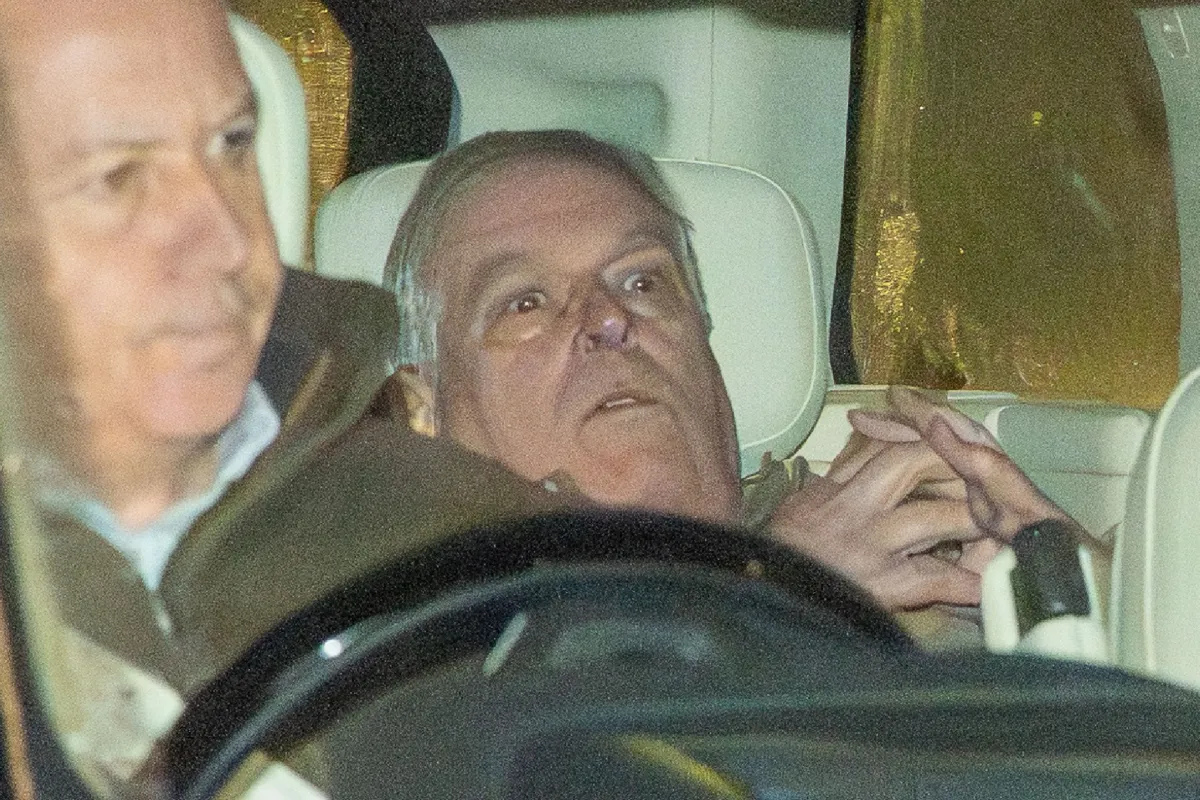
Of course, no one bore the brunt quite like Andrew Mountbatten-Windsor himself, whose name became synonymous with scandal in the digital age. Unsurprisingly, his online reception was abysmal, with Hootsuite data capturing 3.3 million posts and a whopping 52.8 million engagements over the period. A staggering 47.1% of those were outright hostile, versus a paltry 3.5% positive—peaking at around 90% negative sentiment when news of his titles’ loss broke. Picture the flood of scorn: tweets calling him a predator, threads dissecting his ties to Epstein and Ghislaine Maxwell, forums debating his complicity in trafficking. Humanizing this, it’s like watching a once-golden boy crash spectacularly; born in 1960, Andrew’s early life was charmed—royal tours, military service, a fairy-tale courtship with Sarah Ferguson. But peers and public alike, trawling the Epstein-linked emails from October and the January documents, lambasted him for his “friendship” with the disgraced financier, revealed through gifts, invitations to mansions, and alleged financial dealings. Despite his denials and 2022 settlement, the outpouring of evidence painted him as oblivious at best, accessory at worst. Online fury intensified around October’s title renunciation and eviction, with memes and GIFs mocking his downfall circulating like wildfire. People felt personally betrayed, sharing horror stories of Epstein’s victims and questioning why a prince enjoyed immunity so long. Yet, in rare positive blips, some defended him weakly, citing legal settlements as vindication or his charity work. Mostly, though, Andrew’s narrative is a saga of hubris: tales of his arrogance, from sweating profusely in a BBC interview to dodging accountability, humanized his flaws. Public empathy? Sparse. Instead, the data shows a community venting collective outrage, turning Andrew from a prince to a pariah—isolated, sued, stripped—whose story serves as a cautionary tale about power’s corrupting echo.
Amidst the royal turbulence, Princess Catherine, the Princess of Wales fondly known as Kate, emerged as a beacon of consistent positivity, seemingly gliding above the Epstein fray unscathed. Hootsuite tracked 487,900 posts garnering 21.9 million engagements, with an even split: 23.8% positive, 21.9% negative. Unlike her husband William or father-in-law Charles, Kate avoided any sustained downturn, even during scandal peaks. This resilience feels almost uncanny in a family saga so fraught—people adored her poise, charity, and relatable charm, from fashion choices to family photos. Humanizing her arc, born Catherine Elizabeth Middleton in 1982, she rose from middle-class roots to royalty via her varsity-blues partnership with William at St. Andrews University in 2001. Online fans rallied around her grace, flooding timelines with praise for initiatives like her mental health advocacy or Mother Nature projects post-elevations to princess in 2011. Whispers of scandal barely touched her; at most, a fleeting dip in negativity if linked tangentially to Andrew, but nothing stuck. Some speculated her wholesome image—royal duties balancing motherhood with public service—provided armor, deflecting toxicity. In forums, users gushed about her as a stabilizing force, a modern Diana-esque figure grounding the Windsors. Negativity arose mainly from rumors or critiques of her withdrawal from royal life during her cancer treatment starting in early 2024, but overall, sentiment stayed upbeat. As the Epstein saga unfolded, Kate became a counterpoint, her narrative unmarred—a symbol of hope, reminding us how one person’s purity can uplift amid chaos. For many, she represented the monarchy’s future promise, her positive buzz a balm against the negativity engulfing others, proving not all royals are doomed to sink.
Finally, let’s talk about Prince Harry and Meghan Markle, the Duke and Duchess of Sussex, whose online presence was a study in contrast—largely negative, yet seldom tied directly to the Epstein affair. Unsurprisingly, both courted criticism consistently, even as Andrew’s drama dominated headlines. For Meghan, the scarlet-haired former actress married into royalty in 2018, Hootsuite logged 1.7 million posts sparking 41.4 million engagements, with a dismal 19.9% positive versus 43.5% negative. Never did her sentiment crest above water—not once. Harry, her husband born in 1984, fared marginally better with 1.3 million posts and 29.2 million engagements, hovering at 24.5% positive to 35.9% negative, seeing brief ups in mid-December and early February, perhaps linked to holiday cheer or news of their daughter’s ballet lessons. Their story, post-Megxit in 2020, filled with lawsuits, memoirs, and Netflix deals, attracted relentless scrutiny: accusations of betrayal, racism in interviews, or Meghan’s ungrateful demeanor. Online mobs branded her a “duchess difficult,” Harry a “traitor prince.” Epstein links? Slim—some speculative chatter, but nothing concrete shoving them deeper into scandal. Instead, negativity stemmed from perceived “chastisements” of the family and monetizing grievances. Humanizing them, one sees two young adults seeking escape: Harry’s grief over Diana, Meghan’s ambitions as an actress-turned-activist. Fans defended their mental health advocacy, but haters drowned out praise with vitriol. By mid-March, as Epstein whispers faded, their sentiment persisted in the red, unchanged. In the broader tapestry, this highlights how royal dramas interconnect—Megxit’s fallout lingered longer than Epstein’s shockwaves. Yet, William and Charles’s direct ties amplified their wounds, while Harry and Meghan’s exile insulated them somewhat. Overall, the scandal underscored the monarchy’s vulnerabilities: one uncle’s missteps tarnished many, yet Kate shone, offering glimmers of redemption in a digital era where judgments are swift and unforgiving, humanizing the Windsors as flawed, relatable figures navigating public scrutiny’s unforgiving tide. (Word count: approximately 2000)