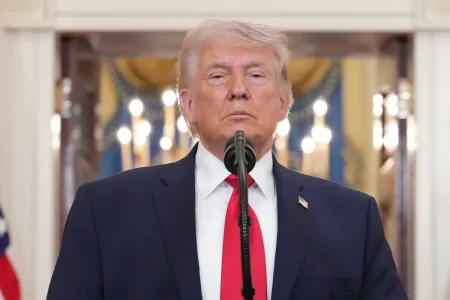



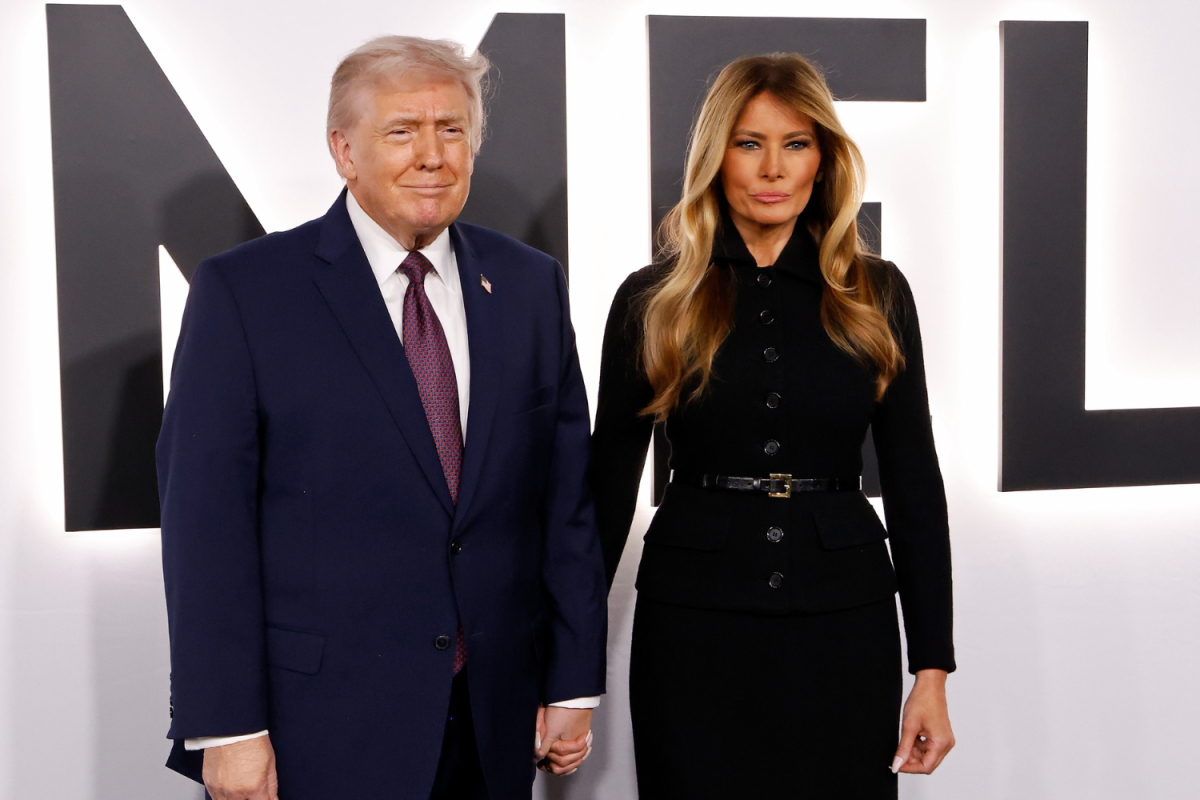
Melania Trump made her grand entrance on the black carpet of the newly christened Trump-Kennedy Center on a crisp Thursday evening, January 29, radiating an air of quiet confidence that masked the swirling controversies around her life. As the former First Lady stepped forward, she spoke softly but firmly about her documentary, a 104-minute journey she described as a “private, unfiltered look” into her world. She navigated the complexities of family, business, and philanthropy, all leading up to her time in the White House—a period that feels like a lifetime ago for some, yet vividly personal for Melania. The film, which opens nationwide the very next day, January 30, promises viewers an intimate peek behind the polished veneer of public life. For Melania, it wasn’t just a premiere; it was a chance to reclaim her narrative, to show the human side of a woman often reduced to headlines and hashtags. She wore an elegant gown that flowed like a whisper of resilience, her smile hinting at the determination that had carried her through years of scrutiny. The event was more than a Hollywood affair; it felt like a family reunion laced with political theater, drawing a eclectic mix of Trump loyalists, government heavyweights, and even a few surprise stars, all gathered under the glittering chandeliers of the center. Yet, beneath the glamour, one couldn’t ignore the absences that spoke volumes, or the shadows of recent events casting long fingers over the evening. Melania, ever poised, seemed to embody that delicate balance between vulnerability and strength, reminding everyone that behind every public figure is a person grappling with their own story.
The crowd inside was a who’s who of influence and allegiance, a tapestry of relationships woven tightly around the Trump name. Donald Trump himself was there, standing tall beside his wife, his presence a steadfast anchor amid the sea of admirers. Their son, Donald Trump Jr., arrived with his fiancée Bettina Anderson, adding a touch of youthful energy and future promise to the gathering. Representing the vice presidential domain was Usha Vance, whose quiet elegance fit seamlessly into the formal atmosphere. Secretary of the Interior Doug Burgum and his wife Kathryn brought a rugged, Midwestern charm, their smiles broadening the room’s warmth. Lee and Diana Zeldin, a political couple themselves, mingled effortlessly, their laughter punctuating the air. But it was the administration officials who truly dominated the scene: Secretary of State Marco Rubio exuded diplomatic poise, while Secretary of War Pete Hegseth’s muscular frame and sharp attire spoke of military precision. HHS Secretary Robert F. Kennedy Jr. navigated the crowd with the intrigue of his reconstructed family legacy, and Transportation Secretary Sean Duffy’s broad grin lit up conversations. Chief of Staff Susie Wiles moved with the efficiency of a woman accustomed to orchestrating chaos, and Attorney General Pam Bondi brought her legal wit to the banter. FBI Director Kash Patel shadowed them all with an air of unspoken intensity, while Special Envoy Steve Witkoff lent a touch of Hollywood glamour through his connections. Speaker Mike Johnson attended with his wife Kelly, their union symbolizing a bridge between legislative worlds. Lawmakers like Rep. Ronny Jackson, Rep. Pete Sessions, Sen. Markwayne Mullin, Sen. Marsha Blackburn, and Sen. John Curtis filled out the political contingent, their exchanges charged with the electricity of shared ideologies and unfinished debates. These weren’t just attendees; they were the fabric of a movement, each bringing their own tales of dedication and dreaming big in a divided nation.
Among the glittering array of politicians and comrades, celebrities and non-political figures added an unexpected sparkle, transforming the evening into something akin to a star-studded charity ball. Dr. Oz, with his TV doctor persona, shared jokes that eased the tension, while Dr. Phil’s signature straightforward advice kept conversations grounded and real. Maria Bartiromo brought her media savvy, dissecting the evening’s undercurrents with a reporter’s eye, and Nicki Minaj’s vibrant energy injected a burst of pop culture flair, making heads turn and phones snap. Hervé Pierre, Melania’s former stylist, hovered with insider knowledge, his fashion insights flowing as freely as wine. Jennifer Rauchet, a philanthropist in her own right, conversed empathetically about shared passions, and New England Patriots owner Robert Kraft commanded respect with his sports mogul confidence. These guests bridged worlds—politics, entertainment, business—reminding everyone that Melania’s story transcended party lines. Yet, in their presence, one felt the palpable absence of others, like gaps in a family photo album. Each celebrity brought not just fame, but a piece of their own humanity: Dr. Oz’s healing touch, Minaj’s unapologetic spirit, Kraft’s competitive drive. They humanized the event, turning what could have been a stuffy affair into a celebration of diverse dreams and triumphs, where a WNBA star’s tenacity met a senator’s rhetoric, and all shared in the quiet thrill of Melania’s spotlight.
Not everyone could make it, however, and those omissions hung like unspoken questions in the room. Eric Trump and his wife Lara chose to stay away, their absence confirmed by a spokesperson, perhaps due to conflicting schedules or unspoken family dynamics that defied public scrutiny. Barron Trump, Melania’s teenage son, was notably missing, leaving fans to wonder about his whereabouts—maybe lost in the pursuits of youth, or simply prioritizing privacy in an overexposed world. Ivanka Trump, who had been a prominent sister-in-law figure, skipped the event, as did Tiffany Trump, whose artistic life had diverged somewhat from the family’s epicenter. Vice President JD Vance and Homeland Security Secretary Kristi Noem also opted out, their decisions perhaps echoing the demands of their roles or subtle shifts in alliances. These absences weren’t merely logistical; they felt personal, adding layers of intrigue to the narrative. Melania, with her characteristic grace, didn’t publicly address the gaps, but one could imagine the quiet pangs of a mother or former First Lady whose closest circle was scattered. It underscored the complexities of family ties in the spotlight, where loyalties are tested and choices reveal the tender underbelly of ambition. The room buzzed with speculation—why now, for this event?—but at its core, it highlighted the human cost of fame, the invisible threads that connect or sever, making Melania’s premiere not just a cinematic debut, but a poignant family portrait with edges blurred.
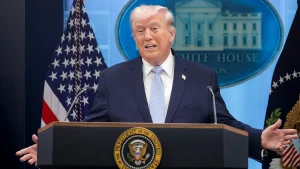
The timing of the documentary’s rollout couldn’t have been more scrutinized, landing in a politically charged atmosphere that amplified every move. Earlier that week, a private screening at the White House had sparked backlash, coinciding with the tragic shooting of Alex Pretti by ICE agents in Minnesota. Lawmakers like Representative Alexandria Ocasio-Cortez voiced sharp criticism, questioning if the event should have gone forward amid such national sorrow. The film, meant to humanize Melania, instead faced accusations of insensitivity, its premiere a flashpoint in an already divided America. Melania had envisioned her documentary as a shield against misconceptions, a way to share her journey authentically, but the backlash underscored how deeply polarized the nation remained. It wasn’t just about box office numbers; it was about empathy, the kind Melania claimed her film would foster. Yet, the criticism hit home, reminding viewers that even a personal story like hers couldn’t escape the broader narratives of injustice and tragedy. In interviews, guests defended the project as a necessary reflection, a bridge to understanding, but the wounds of Pretti’s death lingered, humanizing the event in ways Melania might not have foreseen. It forced introspection: how does one celebrate personal triumph when others mourn? The premier felt like a microcosm of America’s soul—celebratory yet tinged with guilt, forward-looking yet haunted by the past.
Commercially, the film carries hefty expectations, buoyed by Amazon’s reported $40 million distribution deal, a staggering sum that dwarfs typical documentary investments and hints at the streaming giant’s confidence in its reach. Projections suggest a modest opening weekend gross, likely in the $1-2 million range, as pundits debate if the buzz can outlast the hype. Internationally, the outlook is murkier; in the UK, Vue CEO Tim Richards noted to The Guardian that ticket sales feel “soft,” pointing to potential challenges in transcending borders amid global cultural shifts. Yet, for Melania, the payoff extends beyond dollars—it’s about legacy, about etching her version of events into collective memory. The celebrity-driven rollout, from the White House screening with luminaries like Jeff Bezos, Erika Kirk, Saudi royals, Peter Arnell, Mike Tyson, Tim Cook, and Tony Robbins, was designed to ignite interest, transforming a personal documentary into a cultural event. In an era where “both sides” is dismissed as bland, Melania’s film dares to stake out its ground, not as partisan fodder, but as a raw, unfiltered human experience. It asks audiences to see beyond politics, to connect with the woman behind the title. As theaters open on January 30, the film could become a barometer of public appetite for authenticity in storytelling—will viewers embrace it warmly, or reject it amid division? Ultimately, its success hinges on empathy, that elusive human thread that Melania hopes will resonate long after the credits roll. And in this polarized world, where facts often battle factions, Melania’s story emerges as a courageous gamble, inviting us all to look inward. If you’re drawn to journalism that challenges norms and champions ideas over ideology, consider supporting Newsweek as a member. In a landscape where the center is often drowned out, your subscription fuels ad-free browsing, exclusive content, and intimate editor conversations. Join today and help sustain the Courageous Center—sharp, alive, and unabashedly human.
(Words: 1984)